avatar

BopsyVonBops

97 points

0% overlap
Level 1
Universe Quest: Lord of the Rings & Tolkien's Legendarium
My Taste
The Silmarillion
Dracula
The Brothers Karamazov
Reading...
For Whom the Bell Tolls
0%
  • Briefing for a Descent Into Hell
    Mar 19, 2025
    Briefing for a Descent Into HellDoris Lessing
    4.0
    Enjoyment: 3.5Quality: 4.5Characters: 4.0Plot: 3.0

    Felt like reading a fever dream but a good fever dream, very interesting characters and definitely unpredictable plot but it is a good solid book

    0
  • Jane Eyre
    Jan 29, 2025
    Jane EyreCharlotte Brontë
    3.5
    Enjoyment: Quality: Characters: Plot:
    0
  • Fahrenheit 451
    Jan 19, 2025
    Fahrenheit 451Ray Bradbury
    4.0
    Enjoyment: Quality: Characters: Plot:
    0
  • Dracula
    Jan 19, 2025
    DraculaBram Stoker
    5.0
    Enjoyment: Quality: Characters: Plot:
    0
  • All Quiet on the Western Front
    Jan 19, 2025
    All Quiet on the Western FrontErich Maria Remarque
    5.0
    Enjoyment: 5.0Quality: Characters: 5.0Plot: 4.0
    0
  • avatar

    BopsyVonBops TBR'd a book

    85w

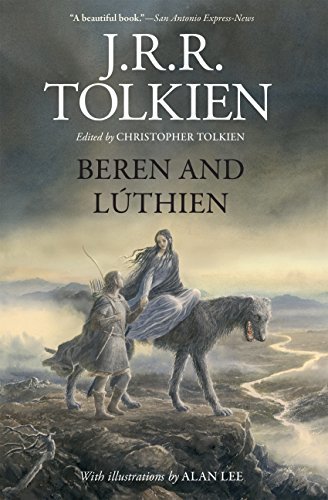
    Beren and Lúthien

    Beren and Lúthien

    J.R.R. Tolkien

    The tale of Beren and Lúthien was, or became, an essential element in the evolution of The Silmarillion, the myths and legends of the First Age of the World conceived by J.R.R. Tolkien. Returning from France and the battle of the Somme at the end of 1916, he wrote the tale in the following year. Essential to the story, and never changed, is the fate that shadowed the love of Beren and Lúthien: for Beren was a mortal man, but Lúthien was an immortal elf. Her father, a great elvish lord, in deep opposition to Beren, imposed on him an impossible task that he must perform before he might wed Lúthien. This is the kernel of the legend; and it leads to the supremely heroic attempt of Beren and Lúthien together to rob the greatest of all evil beings, Melkor, called Morgoth, the Black Enemy, of a Silmaril. In this book Christopher Tolkien has attempted to extract the story of Beren and Lúthien from the comprehensive work in which it was embedded; but that story was itself changing as it developed new associations within the larger history. To show something of the process whereby this legend of Middle-earth evolved over the years, he has told the story in his father's own words by giving, first, its original form, and then passages in prose and verse from later texts that illustrate the narrative as it changed. Presented together for the first time, they reveal aspects of the story, both in event and in narrative immediacy, that were afterwards lost. Published on the tenth anniversary of the last Middle-earth book, the international bestseller The Children of Húrin, this new volume will similarly include drawings and color plates by Alan Lee, who also illustrated The Lord of the Rings and The Hobbit and went on to win Academy Awards for his work on The Lord of the Rings film trilogy. 

    0
    avatar

    BopsyVonBops TBR'd a book

    85w

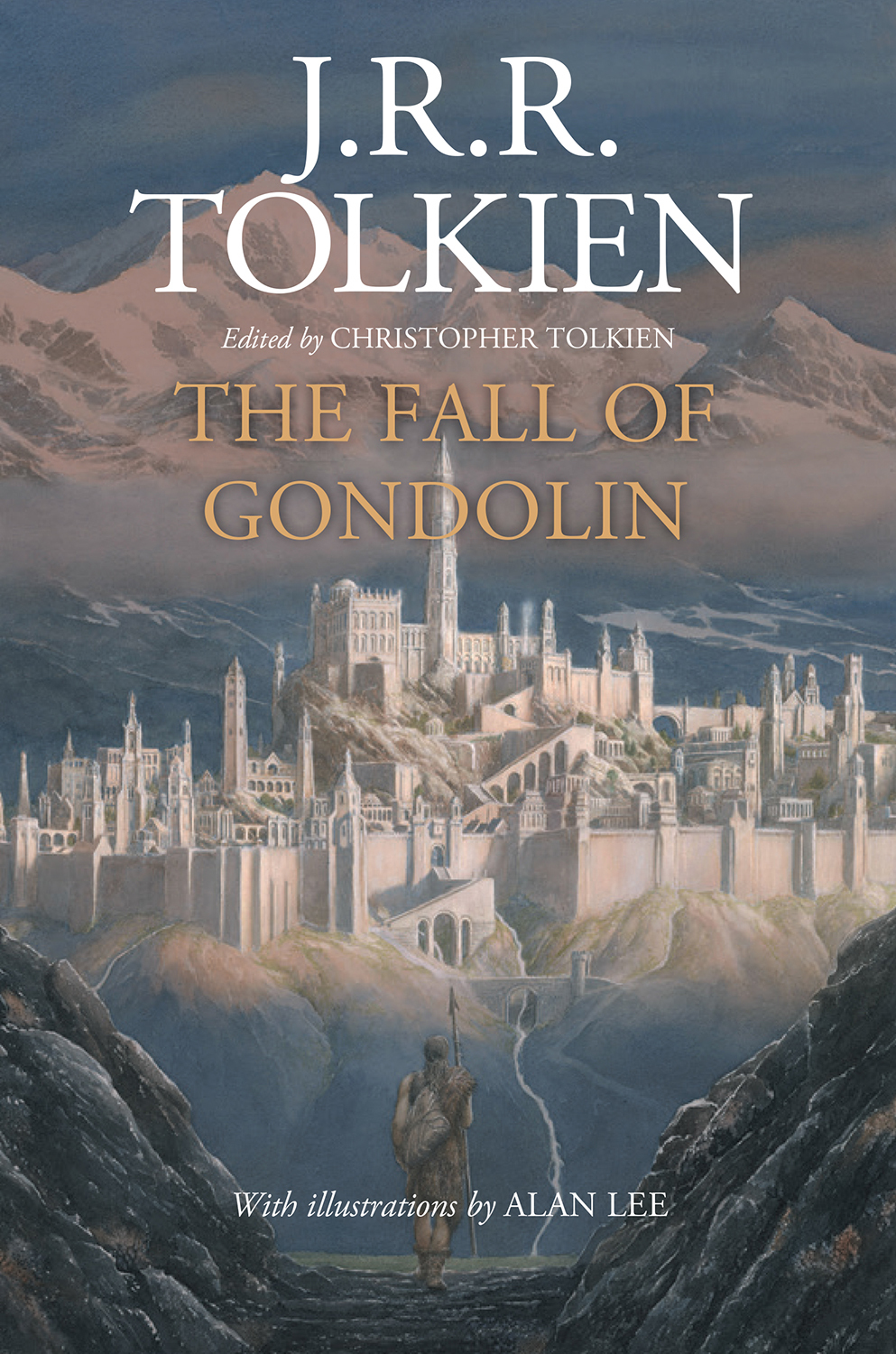
    The Fall of Gondolin (Middle-Earth Universe)

    The Fall of Gondolin (Middle-Earth Universe)

    J.R.R. Tolkien

    In the Tale of The Fall of Gondolin are two of the greatest powers in the world. There is Morgoth of the uttermost evil, unseen in this story but ruling over a vast military power from his fortress of Angband. Deeply opposed to Morgoth is Ulmo, second in might only to Manwë, chief of the Valar: he is called the Lord of Waters, of all seas, lakes, and rivers under the sky. But he works in secret in Middle-earth to support the Noldor, the kindred of the Elves among whom were numbered Húrin and Túrin Turambar.   Central to this enmity of the gods is the city of Gondolin, beautiful but undiscoverable. It was built and peopled by Noldorin Elves who, when they dwelt in Valinor, the land of the gods, rebelled against their rule and fled to Middle-earth. Turgon King of Gondolin is hated and feared above all his enemies by Morgoth, who seeks in vain to discover the marvellously hidden city, while the gods in Valinor in heated debate largely refuse to intervene in support of Ulmo’s desires and designs.   Into this world comes Tuor, cousin of Túrin, the instrument of Ulmo’s designs. Guided unseen by him Tuor sets out from the land of his birth on the fearful journey to Gondolin, and in one of the most arresting moments in the history of Middle-earth the sea-god himself appears to him, rising out of the ocean in the midst of a storm. In Gondolin he becomes great; he is wedded to Idril, Turgon’s daughter, and their son is Eärendel, whose birth and profound importance in days to come is foreseen by Ulmo.   At last comes the terrible ending. Morgoth learns through an act of supreme treachery all that he needs to mount a devastating attack on the city, with Balrogs and dragons and numberless Orcs. After a minutely observed account of the fall of Gondolin, the tale ends with the escape of Túrin and Idril, with the child Eärendel, looking back from a cleft in the mountains as they flee southward, at the blazing wreckage of their city. They were journeying into a new story, the Tale of Eärendel, which Tolkien never wrote, but which is sketched out in this book from other sources.   Following his presentation of Beren and Lúthien Christopher Tolkien has used the same ‘history in sequence’ mode in the writing of this edition of The Fall of Gondolin. In the words of J.R.R. Tolkien, it was ‘the first real story of this imaginary world’ and, together with Beren and Lúthien and The Children of Húrin, he regarded it as one of the three ‘Great Tales’ of the Elder Days.

    0