
hauntwerks
╭─━━ʕ•̫͡•ʕ̫͡ʕ•͓͡•ʔ-̫͡-ʕ•̫͡•ʔ̫͡ʔ-̫͡-ʔ━━─╮ Where classics and collapse intersect. ╰─━━·÷±‡±⎧ᴿᴵᴾ⎫ ±‡±÷·━━─╯ ╰┈➤ previously grvhppr
8807 points






3.15 average · 75 reviews
Click a segment to filter

Fathers and Children is a philosophical novel that examines a phenomenon as old as time minus one generation: offspring disagree with their maker. Perhaps it is this alone that we as humans can point to as the source of strife in our world, why there is unhappiness. After all, we are individuals and therefore unique, however humans are products of our time. Time itself, the time when we are born, shapes our thinking.
In Fathers and Children (or Fathers and Sons), Turgenev pitches two generations against one another as a representation of intellectual ideology overturning, and moreover, he weaves the story around some very important history: the 1848 revolutions of Europe and the 1861 abolition of serfdom in Russian. Note that the novel’s setting is 1859 and so the readers of the time (novel published in 1862) would have known what huge changes were on the horizon in just two years time.
Essentially there are two parties: the older generation (Pavel/Nikolay) and the younger generation (Bazarov/Arkady). Both generations possess some nuance with their ally. Within the older generation Pavel’s perspective caters to aristocratic manners and more conservative political, social, and Western philosophy whereas Nikolay adopts a more practical liberal reforming tone pertaining to his land’s agricultural needs (serfs). Bazarov argues that the petty nuances of older generations and their minute changes are not enough—it all needs to be destroyed before anything can be put into its place (Star Wars’s Sith anyone?).
The first half of the novel holds tightly to the debate when two young men come home from university fully baptized in collegiate waters. Nihilism is their everything, or rather, their nothing 😉:
'Aristocratism, liberalism, progress, principles, Bazarov was saying meanwhile. 'Just think of it, all these foreign, and quite futile, words! They would be of no use as a gift to the ordinary Russian.'
and:
'The motive force behind our actions that which we recognized to be useful,' pronounced Bazarov. 'at the present time the most useful thing is negation — so we deny —'
'Everything?'
'Everything.'
But as the pages turn, so do the minds of both generations as ideology meets real world example and… cough… experience. Perhaps life doesn’t need to be nothing. Perhaps the wheel of time does need to turn.
A character that I love is Anna Sergeyevna Odintsova. I think Turgenev characterizes her as someone who bridges the gap between the two generations because she’s both worldly like the older generation and interested in entertaining Bazarov’s philosophy. But more than that, she simply knows. As a widow she’s rich, independent, and bored; Odintsova carries both youth and experience. In the story, her estate lays between both Arkady’s and Bazarov’s parents’ homes—she is the middle ground both literally and metaphorically. It is at her estate that a story of absolute sides turns from black and white to gray.
'I am very curious to see a man who has the courage to believe in nothing.'
I have spoken not a thing about Turgenev’s prose and its beauty. While I think Fathers and Sons is less pretty than his novella First Love, the book ends with a gorgeous line that speaks for the entire work:
However passionate, sinning, and rebellious the heart hidden in the tomb, the flowers growing over it peep serenely at us with their innocent eyes; they tell us not of eternal peace alone, of that great peace of “indifferent” nature; tell us too of eternal reconciliation and of life without end.

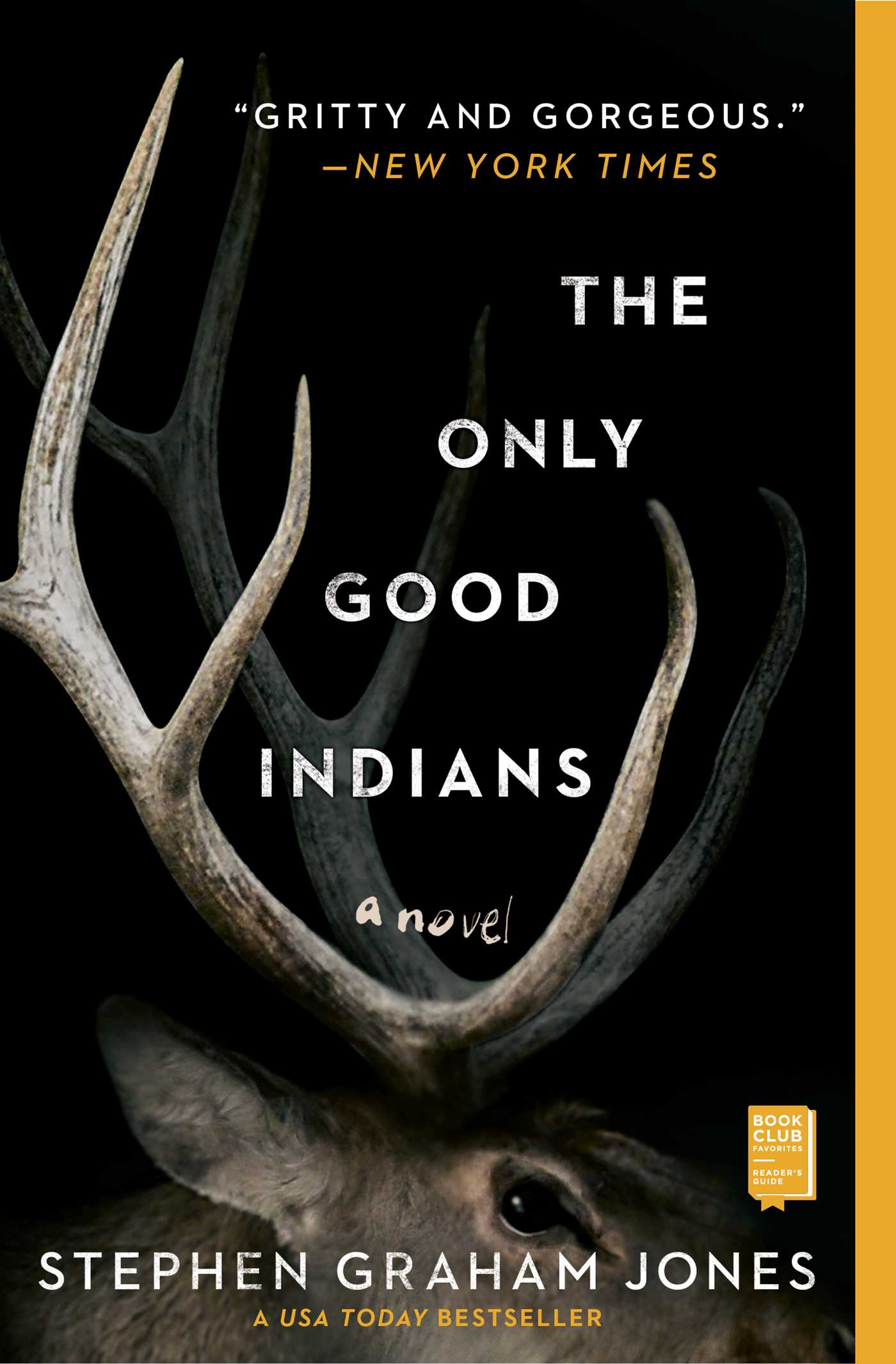
The Only Good Indians
Stephen Graham Jones
I’ve been looking back at my finished reads over the last few years, mostly my star ratings, and looking to see where my tastes really lie. I made the wild decision to erase my ratings and reviews on Pagebound because they comprised of multiple rating system pivots over the years—so much so that I’m unsure what my own stars meant. “Tabula rasa” has been an inexplicable relief and pushed me to think about which books do I really enjoy reading. And that led to… 🥁… literary periods and movements! So I wanted to open up the question to the Boundlings:
⏳🕰️⌚️⌛️
NOTE!!: The list is arranged roughly chronologically, but these categories overlap considerably. Gothic in particular spans multiple periods rather than belonging neatly to one era.
1. Rank them from favorite to least favorite
Feel free to leave out any periods/movements you haven’t read enough to rank or simply don’t want to. I added some books to help guide or spark mental associations.
Classical Literature — c. 800 BCE–500 CE The Iliad · The Odyssey · Oedipus Rex · The Aeneid
Medieval Literature — c. 500–1500 The Canterbury Tales · Sir Gawain and the Green Knight · The Divine Comedy · Beowulf
Renaissance / Early Modern — c. 1500–1660 Hamlet · Don Quixote · The Faerie Queene · Paradise Lost
Enlightenment / Neoclassicism — c. 1660–1800 Gulliver’s Travels · Candide · Robinson Crusoe · The Sorrows of Young Werther
Romanticism — c. 1780–1850 Frankenstein · Wuthering Heights · The Sorrows of Young Werther · The Scarlet Letter
Gothic — c. 1760s–present The Castle of Otranto · The Monk · The Turn of the Screw · Dracula
Victorian Literature — c. 1837–1901 Jane Eyre · The Mayor of Caster Bridge · David Copperfield · The Picture of Dorian Gray
Realism — c. 1830s–1900s Madame Bovary · Anna Karenina · Middlemarch · The House of Mirth
Naturalism — c. 1870s–1910s The Call of the Wild · The Awakening · Maggie: A Girl of the Streets · The Jungle
Modernism — c. 1900–1945 The Metamorphosis · Mrs Dalloway · The Waste Land · The Great Gatsby
Postmodernism — c. 1945–1980s/1990s Slaughterhouse-Five · The Crying of Lot 49 · If on a winter’s night a traveler · One Hundred Years of Solitude
Contemporary Literature — c. 1980s/1990s–present Never Let Me Go · Beloved · The Road · The Handmaid’s Tale
List: Classical Medieval Renaissance/Early Modern Enlightenment/Neoclassicism Romanticism Gothic Victorian Realism Modernism Naturalism Post-modernism Contemporary
brownie points for adding any favorite books within any categories
2. Why is your #1 your favorite?
What draws you to it? The writing style, themes, atmosphere, ideas, historical setting, authors, or something else?
3. Which period or movement do you want to read more of?
Maybe there’s one you’ve barely explored, or one you’ve recently discovered and want to dive deeper into?
4. Which one do you think you’re overlooking?
Is there a period or movement that you haven’t connected with yet, but would like to give another chance, etc.?
⌛️⌚️🕰️⏳
↪️ I will pin my answer in a comment to keep the post clean.

© 2025 Pagebound
hauntwerks commented...
My Ranking: Medieval Gothic Classical Romanticism Renaissance/Early Modern Victorian Modernism Contemporary Post-modernism Realism Naturalism Enlightenment/Neoclassicism
Top Spot: 🐴 Medieval Lit Call it a childhood’s love. Do you remember that children’s nonfiction book series called something like Eyewitness? They were large white hardcover books with a range of topics from Knights to Pirates to Ancient Civilization etc. And I ate up the medieval period books.
Of course, that in itself isn’t Medieval Literature. That came later… like only a few years ago. But the love began with those nonfiction works and then to epic fantasy with stories of empires, knights, and magic. I think it’s from that that I cultivated a desire to see what the people from that time period actually believed. And while I don’t subscribe necessarily to all the tenets of medieval life like “the great chain of being,” Christian belief, or traditional gender roles (and more), I love the beauty, sincerity, and sense of truth that works from this (long) time period. Their appreciation for nature, story, and symbolism cannot be outmatched—even by the Romantics or their Gothic rebels.
One of the things I think draws me so strongly to literature from before Freud is its relationship with symbolism. I sometimes feel that modern interpretations of literature have become too eager to explain symbols psychologically—to reduce the forest, the storm, the darkness, the seasons, or the natural world into representations of something happening within the individual mind. I also rankle with the Enlightenment’s sense of trying to prove exactly why everything works the way it does—thank the gods for the Romantics and their middle fingers.
I prefer when symbolism is allowed to remain mysterious. Nature can be beautiful, terrifying, sacred, or sublime without needing to be translated entirely into psychology. There is something wonderfully sincere about literature in which the natural world, stories, symbols, and the unseen can possess meaning beyond the self.
Perhaps that’s part of what I love about medieval literature in particular. Its symbols often feel as though they belong to a much larger order of existence rather than merely to the individual. I don’t necessarily share the medieval worldview or its beliefs, but I find that sense of a meaningful, symbol-filled universe gorgeous.
There is also something about the structure of medieval life that I find strangely appealing, particularly the centrality of the church within a town or village. Not simply as a place of worship, but as a physical and social center around which community life revolved. The rhythms of the seasons, agriculture, festivals, stories, traditions, and religious calendar all seem to have been woven together into a shared way of life. That shared space is something missing in the contemporary world—at least on the grand scale—and I find that terribly sad.
Alongside medieval religious life, I’m also interested in how earlier seasonal and pagan rhythms influenced later traditions. Even when Christianity became dominant, many older customs were not simply erased. They were sometimes adapted, reinterpreted, or woven into new forms of ritual and storytelling. That layered mix of beliefs and calendars is part of why the period’s symbolism can feel so rich and mult-layered to me.
Perhaps my favorites of medieval literature are:
And some works that I want to read soon:
Want to read more of: Modernism. I feel like there’s a ton here that I’m missing, and one author that I’ve completely ignored to a fault is Virginia Woolf. Every February I saw I’m going to start my journey with A Room of One’s Own and then go through her fiction after that. Orlando and The Waves seem especially juicy to me.
Ignoring: Naturalism. I don’t know… I’m just not sure where to start or how to get into it. I liked Jack London’s works but mostly I prefer to be in nature itself or experience it through the lens of a __R__omantic wordsmith.