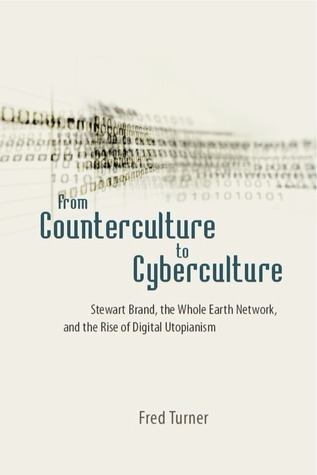
jenniferszhu started reading...

Pachinko
Min Jin Lee
jenniferszhu finished a book

The Nine Cloud Dream
Kim Manjung
jenniferszhu joined a quest
Japanese Literary Fiction 🇯🇵👤💭
🏆 // 2704 joined
Not Joined


From the provocative and challenging to the emotional and quiet, Japanese literary fiction tends to be nuanced, introspective, and minimalistic. These books contain layered cultural commentary and may lean on psychological, surreal, or fantastical elements to convey their message.
jenniferszhu started reading...

The Nine Cloud Dream
Kim Manjung
jenniferszhu wrote a review...
Incredibly rich but also dense. Reading this gave a lot more color to “The Stranger” — I had picked it up looking for a conclusion about the ending of his novel, for some hard philosophical scaffolding but instead came away even more confused. But I think that might be the entire point?? That there is no such thing as concluding or knowing, that there is just repeatedly trying in a life that is absurd? The first half of the book was spent defining the precipice of the absurd, the balance point between the desire for meaning on this earth, what Camus calls “nostalgia”, and a world that is fundamentally empty of meaning. He alludes to many other philosophers as negation, whose beliefs are existential rather than absurd because they transcend the need for meaning or nostalgia through philosophical suicide (religion, love, pure intellectualism).
The section of applied examples I found most confusing — the actor, Don Juan, the conqueror, who I believe is Napoleon? Didn’t successfully follow the quantity > quality argument of absurdism that much, I think it has something to do with squeezing as much as possible out of life before death comes, at any point, but I don’t know if I personally would adopt this philosophy. Is being absurd hating death? Knowing it’s coming and inevitable and actively despising it? Still have a lot of questions here and feel this is one I could come back to repeatedly as I read more of the core texts (Kafka, Kierkegaard, Dostoevsky).
I really enjoyed the meta-section on art under absurdism, the act of repeated creation and how an oeuvre builds across a lifetime of work. It’s a much more earnest and generous definition of art than the one-strike masterpiece. The novelist / artist vs the philosopher, the cheapness of ideas. I also thought the closing chapter about Sisyphus was deeply, deeply beautifully written. The way Camus writes about Kafka makes me want to read more of the both of them. Hard work to get through this but very well worth it and I’m exciting to make it through the “bibliography” of works involved in its building.
jenniferszhu finished a book

The Myth of Sisyphus
Albert Camus
jenniferszhu commented on a post
jenniferszhu wrote a review...
View spoiler
jenniferszhu finished a book

Blowfish
Kyung-ran Jo
jenniferszhu TBR'd a book

Michel the Giant: An African in Greenland
Tété-Michel Kpomassie
jenniferszhu TBR'd a book

Things We Do Not Tell The People We Love
Huma Qureshi
jenniferszhu TBR'd a book

A Little Luck
Claudia Piñeiro
jenniferszhu TBR'd a book

Tongue
Kyung-ran Jo
jenniferszhu started reading...

Blowfish
Kyung-ran Jo
jenniferszhu TBR'd a book

Nowhere to Be Found
Bae Suah
jenniferszhu TBR'd a book

I'm Waiting for You and Other Stories
Kim Bo-young
jenniferszhu TBR'd a book

The Square: A Novel (Library of Korean Literature, 13)
In-hun Choi
jenniferszhu TBR'd a book

One Hundred Shadows
Hwang Jungeun
jenniferszhu finished a book

Paradise Logic
Sophie Kemp