avatar

warmlight

I love litfic, classics, translated fiction, lyric and creative nonfiction, poetry, and the occasional tension-filled romance/fantasy

833 points

0% overlap
Quiet Novels
British & Irish Classic Literature
Supporting* Women's Wrongs
My Taste
Near to the Wild Heart
Martyr!
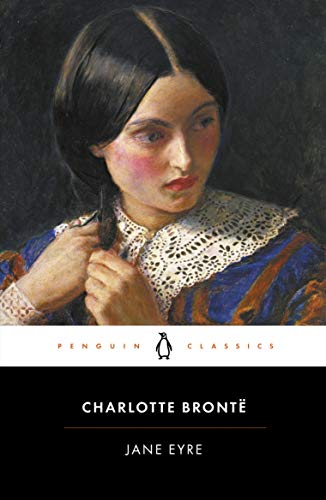
Jane Eyre
Bluets
The Idiot
Reading...
Whidbey
0%
Inferno
0%
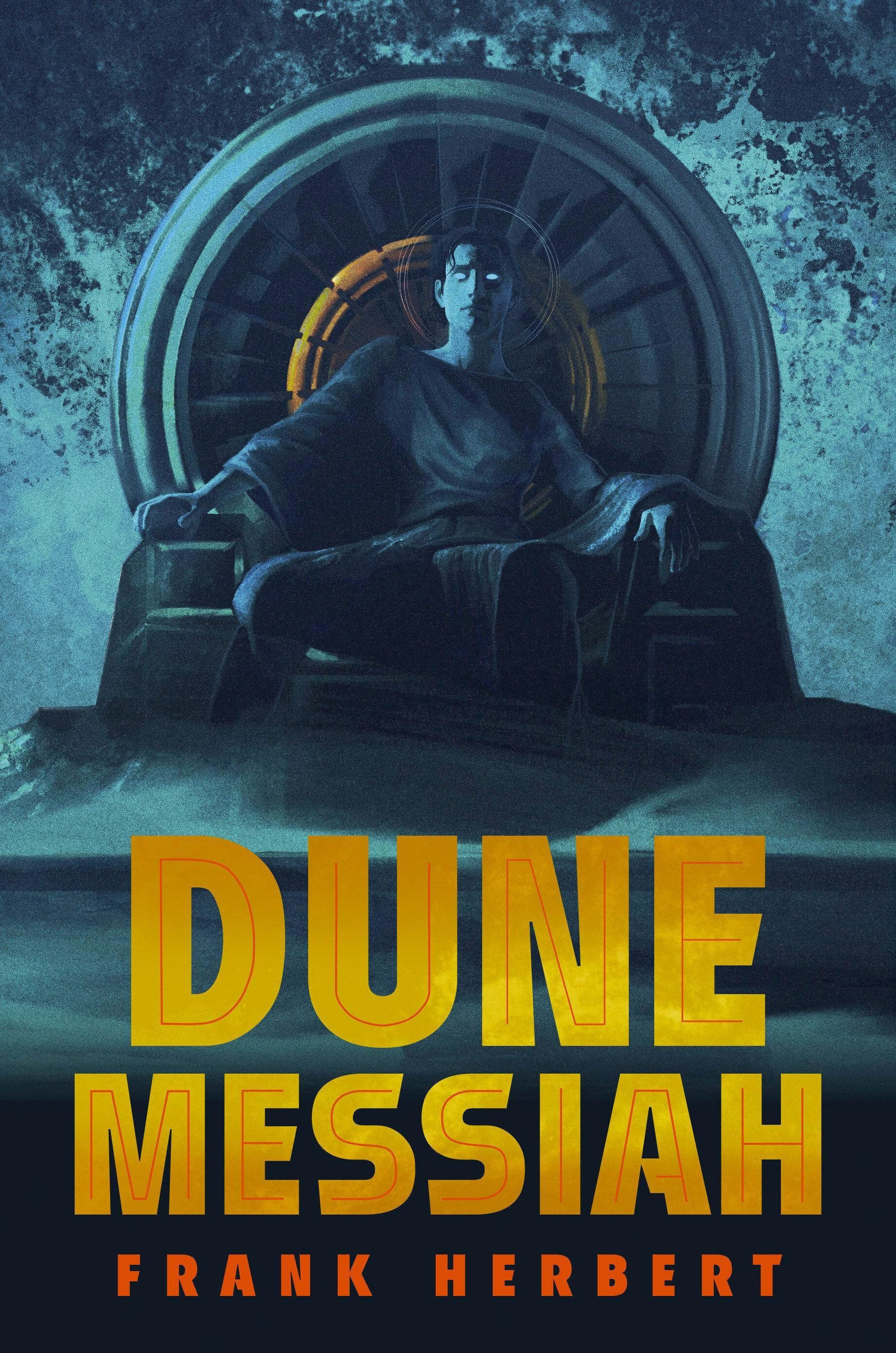
Dune
8%
Reflections in a Golden Eye
0%
War and Peace
0%

warmlight started reading...

2h
Whidbey

Whidbey

T Kira Madden

0
0
Reply

warmlight made progress on...

1w
The True True Story of Raja the Gullible (and His Mother)

The True True Story of Raja the Gullible (and His Mother)

Rabih Alameddine

37%
0
0
Reply

warmlight made progress on...

1w
Dune

Dune

Frank Herbert

8%
0
0
Reply

warmlight made progress on...

1w
We Have Always Lived in the Castle

We Have Always Lived in the Castle

Shirley Jackson

50%
0
0
Reply

warmlight made progress on...

1w
Madame Bovary

Madame Bovary

Gustave Flaubert

15%
0
0
Reply

warmlight commented on slanderbender's review of Wide Sargasso Sea

1w
  • Wide Sargasso Sea
    slanderbender
    Jul 29, 2026
    Wide Sargasso Sea
    5.0
    Enjoyment: 5.0Quality: 5.0Characters: 4.0Plot: 4.0

    I picked up Wide Sargasso Sea because my theatre professor told us it would change the way we view Jane Eyre. As I was already in a "Bronte vibe", having just seen the Charlotte Bronte exhibit at the Morgan Library (if you live close to New York I highly recommend it), it felt like the prrfect time to revisit that universe.
    It has surprised me that this book has received so many negative reviews. Even if only language and writing style were being taken into account, I would still expect it to make the five star cut in most ratings. There are so many song-like passages in it, so much of a heavy nothingness. The rain knows everything, it sings to me.
    Maybe the source of its polarity is the same as in the book: the European folk just don't know anything about this place. But, as a product of colonialism and coffee beans, I can tell you this book's description of the tropics is quite accurate.
    Wide Sargasso Sea completes, admirably, the almost impossible task it sets upon itself to achieve: one. to equate emotional distance to geographic,
    and two. to portray the ambiguity of state of the white men's offspring in latin america. By the way, this is the beginning of the history of the ridiculous term "latino", used for people of different races who come from the same place. It's expanded racism, it's xenophobia- it is about peoples. Except that we were already all too fragmented to be a people. It doesn't matter what colour you are, to outsiders you are a cockroach.
    Reporting the struggle of the colonizer in America would have been ridiculous in anyone else's hand. But Rhys doesn't deny the bad and she doesn't deny the worst. She just goes on to show the ways through which prejudice can expand itself, and come to affect the ones who had been free of it. You are white, but not white like them. Moreover, Rhys very cleverly demonstrates how Rochester the Englishman could have been in the same positions as he himself is nothing more than a colonizer, to Antoinette and his servants, despite his talk of justice. All through the book we learn how ill-equipped he is to dwell in the unknown, having by chance been born where he was born.
    Sure, there are some tropes in use which I'm not fond of. Christophine, with all her spunk and bravery, fits into the wise black woman trope, who practices obeah and is there to prophetize the evil to fall upon them. She is also the only one smart enough to spell it out to Rochester; how it is and how it has been. Yes, Christophine puts Rochester in his place, even if he won't stay there for long; she will speak her mind. As a result of that and other demonstrations of how crucial a part she plays in the narrative, I'd like to believe she is way way more than a trope. Furthermore, Christophine sometimes is also the voice of the Reader (at least I should hope so as I have seen some people defend Rhys' Rochester), and of the writer, and the one who holds "the secret" Rochester is so scared of discovering but at the same time longs for forever.
    Rhys' Rochester is a different Rochester, of course. He's an arrogant colonizer who is there to take the magic away from places. One is not to complain, however, about him not being able to tell his side of the story. As I have grown to hate, hate, hate Rhys' Rochester, I came to wonder whether I could ever read Jane Eyre the same again; and- mostly- if I wanted Jane Eyre to change, for Jane Eyre is one of my favourite worlds to inhabit.
    What I realised is a running theme in Wide Sargasso Sea is displacement. Rhys often, when putting things into perspective, gives them a spacial existence. We see everything as a place, just like I see Jane Eyre as a place. In Wide Sargasso Sea, places are being portrayed as memories, or memories of the future. When Thornfield is not England, for it doesn't fit, and Antoinette is not herself but Bertha- when Coulibri is lost forever, lost to a bad memory and a hurricane, it is not so different from what this book does to Bronte's.
    It is all about the wide, wide sea going through our veins, closer than you think, for we all carry places whithin ourselves, and that is why we cannot leave.
    I don't have to hate JE's Rochester just because I hate this one. Nevertheless, even the most critical of readers should feel a pinch of weariness next time they pick up Jane Eyre- not because your view of "the canon" is changed, not because you are thinking of Bertha.
    Simply I hope one has in mind when reading it again that Bronte was quite unaware of other types of humans. That she used Antoinette as a plot device; a mythical creature, almost. Obviously, that is not her fault (the times, the times). "The woman in the attic" was a void for us to fill, it was the unknown. Finally, Antoinette, too, was the secret; the secret Mr. Rochester didn't want to know, and is to ruin (almost) Jane's life. Many symbolisms in Jane Eyre, in fact, are present in this book. For starters, one couldn't help but draw a parallel between the women's trajectories. Unhappy childhoods and unhappy existences and a happy ending.
    What is most impressive in this book is that it could work as a novel completely independent ofJane Eyre. There are no exagerated references or namedropping or careless foreshadowing- sure, there is the fire, but that representation is so clear it could hardly be classified within the normalized practice of displaying one's foreshadowing, casually, in bold. The fire in the beginning and the fire in the end better fit with the tradition of the Romantic movement. Had Rhys fallen into the morbidly obese redundance that passes for subtlety these days, she would have ended up having Antoinette describe every single feature of Jane Eyre, or she'd have copied Rochester's description from Bronte, or casually remark that Rochester seemed to have taken a like to the new governess etc. I see readers getting mad about the fact that there isn't much about her time in Thornfield, but missing the point that this is not supposed to be Jane Eyre. Rhys didn't set herself up to write a third, more deficient, point of view concerning the events of that book. She simply found a loose string and chose to follow it, all the way back. Anyone who finds this book at a library without having read Jane Eyre first would not have the slightest problem reading it.

    You know, I used to think fanfiction was not art and could never be art. But, like just about anything in the world, it just takes someone to do it right. So there you have it. Jane Rhys has presented us with the world's most gloriously written fanfic.


    1
    comments 1
    Reply