
SpookyLucy
🔍 My Taste books change about once a month 🔍 In September / October I showcase books by Finnish authors that are not classics (yet) that I have read and loved 💙🤍💙🤍💙🤍
7407 points











3.46 average · 1075 reviews
Click a segment to filter

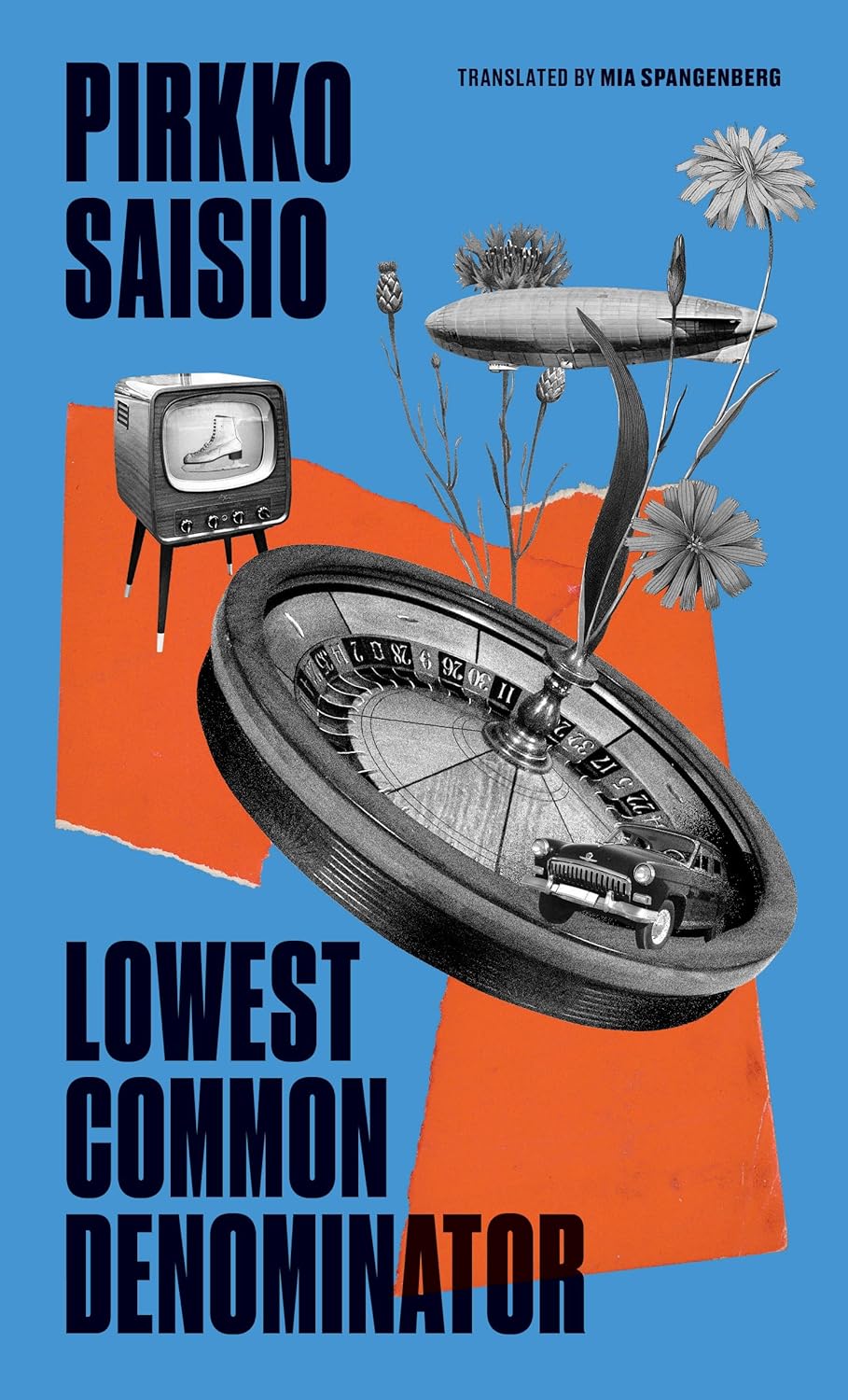
tl;dr: this book is genuinely ingenious in its themes, plotting, and writing.
What was the Booker Prize committee thinking, leaving this off the longlist?
The book weaves together a range of topics: snail science, the bride trade industry, the occupation of Donbas, and several others I won’t mention to avoid spoilers.
The writing style is satirical and sharp-eyed. It’s a witty exploration of, well, a bit of everything. I didn’t pick it up from my TBR list for a long time, even though it was winning accolades left, right, and center, because I mistakenly assumed it would be dull and heavy.
WRONG.
Three Ukrainian women are at the center of the story: Yeva, a snail scientist; Nastia, who is listed as a bride with an agency; and her sister Sol, who works as a translator. The story begins when a minivan full of wealthy American men arrives at a bride gala to choose their dates.
I'm advising the reader to trust the author and surrender to the narrative. Almost every chapter is a mini-mystery: at first, it can feel a little confusing. Events or characters may seem unrelated to what’s going on. However, by the end of each chapter, these ideas come together and become part of the larger story, which operates not only on a character level but on a geopolitical one as well.
Endling is wise, funny, intelligent, and deeply entertaining. It’s full of sharp one-liners, occasionally goes meta, and is, honestly, just an incredibly good book.
Reva pushes us to see beyond stereotypes, and reminds us of the paradigm of the "perfect victim."

tl;dr: Many books claim to be dark and atmospheric, but here we have the real deal.
My soul is nourished. Apologies for such a pompous start, but this book is pretty much all I ask for when I read. The writing, the setting, the atmosphere, the characters, it's all there.
The book deals with elements of isolation, hunger, power, and magic.
The setting is Norfolk, 990: a nunnery in a remote location, near the mere. A young boy goes missing, and there the story begins. Is it something natural that's happening, or is it the actual devil? Hilda has lived in the convent all her life under the steely guidance of the abbess Sigeburg and she's the healer in the community. Hilda is disturbed by the disappearance.
Their faith in the Christian god is unwavering, but alongside it are many ancient skills and practices that are equally important.
The prose is beyond gorgeous; it's scrumptious. I'm allergic to overly flowery writing, but this is just right. It's dreamy, slow, claustrophobic, and so very accomplished. It's hard to believe that this is the author's first book. By the way, she has a book coming out in the summer, and I cannot wait.
Here's some words and structures that are like catnip for me:
- marsh
- realm
- for she is...
- and then — and then —
"What of your mother? A scrap of land, a fiefdom, and a lifetime called a whore for it. Or worse."
The mere has fingers. Clever fingers to reach through the marsh and wrap around little ankles. Strong arms to pull poor sinners downwards. And a great gaping belly that can never be filled .
If you like atmospheric, well-written slow burns, this is for you. This book deserves lots of readers.
I could recommend two gorgeous books: The Essex Serpent by Sarah Perry and Helm by Sarah Hall. And look at that cover illustrated by Joe McLaren. I mean it's swoon-worthy, right! The audio is expertly read by Kate Walsh.
I'm a pathological over-explainer so: Here's how I write reviews.
What I love most, besides reading, is reviewing. It's how I organise my thoughts, not only about the book but about the world.
-
I write reviews for the reader. I don't take into consideration the feelings of the author or the publisher.
-
No spoilers. Rarely even a plot summary. Normally, I'll only give the premise. For spoiler-avoidance reasons I don't give trigger warnings either.
-
I'm a fairly demanding reader. I read to enjoy of course. It's just that I need quite a lot to truly enjoy the book. I've been reading for a long time. And let's face it; there are bad books. If I don't like one, I will give my reasons.
-
But equally, when I fall, I fall hard.
-
My thing is the writing itself. I'll forgive a lot for good prose. Of course it's partially subjective, but not entirely! To earn five stars, a book needs a solid plot, a fantastic ending and often some kind of grand feeling.
-
So five stars are a bit of an occasion.
-
I DNF easily. Life's too short. So any book that makes it to the end, well done I say.
-
No matter how I express my feelings about a book, you are always welcome to comment, hold an opposing view and express it freely, debate or whatever takes your fancy. I can be a bit harsh about the book sometimes, but never ever about your opinions whether you agree with me or not.
-
I love comments on my reviews.
💬 Welcome friend 💬


I love this quest and americana is one of my all time favourite genres. I'm one short of platinum and here lies my petty problem. I love the gold badge most and have collected gold and bronze badges for my profile. To read one more or not to read? 😁🤔

When We Lost Our Heads
Heather O'Neill
Me when I was young:
The larger the novel she read, the more she was able to disappear from the world, and all the people in it. Each novel was like a voyage she embarked on. She specifically looked for enormous books. Then she would be gone for a longer period of time. She might disappear for an entire winter.
SpookyLucy commented...
1⭐ doesn't exist, I have dnf'd (I usually explain why I dnf'd) 2 ⭐ pretty bad honestly (my review will mostly talk about what was wrong with the book) 2.5 ⭐ it wasn't worth my time (as above) 3 ⭐ distinctingly average (review will have positive and negative points) 3.5 ⭐ pretty good (mostly positive review) 4 ⭐ good! I really appreciate this book (pretty exclusively positive review) 4.5 ⭐ really really good, near perfect (glowing review) 5 ⭐ one for the ages, never forget, absolutely everything works, I give fives rarely (will not shut up about it, will try to make everyone read the book)
I edited with the stuff in the brackets

With the new showcase view on people's profiles I have noticed that quite a lot of people's average review scores are higher than mine, so I am just curious how people are either reading or scoring.
For content, I have quite a few 3-3.5 start reads this year, not because I didn't enjoy them, or wouldn't read them again, but because they were simple, easy, cosy reads without complex story lines so they didn't have the depth of a 4 or 5 star read, but they were what I was wanting at the time. Granted there are some more complex Or deep reads that got lower score because I just didn't enjoy them as much, but this is reflected in the breakdown section of reviews.
Are people scoring higher for enjoyment even with more simple books, or are you guys reading chonkier, more complex stories as your everyday reads?
I am not concerned about my average being lower, I am happy with my reading list, I'm just interested

© 2025 Pagebound