
alkaios
they/them
3440 points






— average · 18 reviews
Click a segment to filter

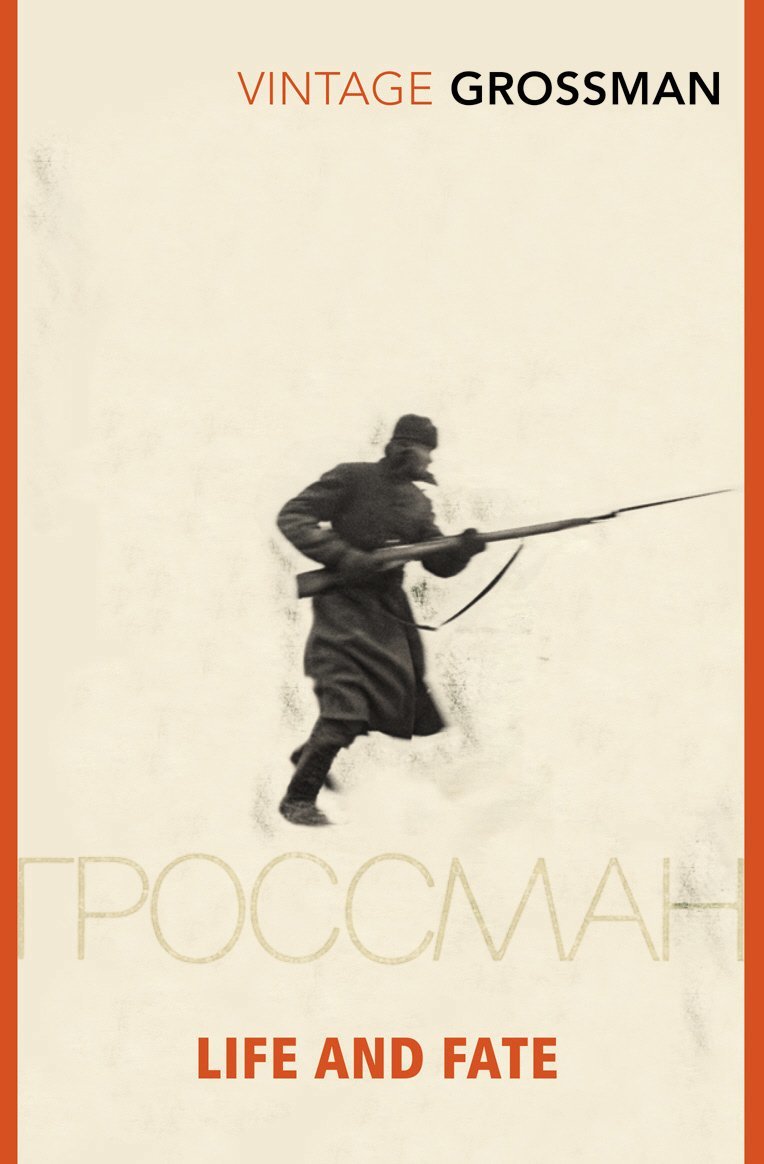
This novel is about war, fascism, and totalitarianism. Through his characters, Grossman masterfully weaves his views about what he witnessed and experienced during and after the war into a narrative that explores vast facets of society. His characters feel very authentic, each touched by the war and regimes but affected in unique ways. The perspectives are written in such a way that characters are not actively condenmed by the text (though may be by other characters), instead their actions (ranging from the philanthropic to the absolutely horrific) are left to speak for themselves - trust is put in the reader to understand the weight of the subject. The text is beautifully written (and, I must assume, translated) each section carrying a weight and the ability to move the reader - making them feel tension, sadness, horror. It is clear that Grossman is drawing from his own personal experiences and feelings as well as those of people he knew. Some parts are, very clearly, extremely personal and important to the author. This is neither a happy nor a light novel but, like life, there are small moments of reprieve throughout. I believe this makes it feel all the more real. I loved this book. After, first, reading "Stalingrad" it was immediately clear how much less censored "Life and Fate" is - and the novel is better for it. I only wish that, going into it I had studied a bit more about the revolutionary and post-revolutionary USSR, I think I would have gained more from the work if I had done so. Hopefully, I can do so in the future and then come back and reread.


The Summer Hikaru Died, Vol. 1
Mokumokuren
I love this scene of Yoshiki at the supermarket checkout. The way the cashier's speech bubbles crowd the panel, how full they are, and how they have more jagged, erratic outlines really demonstrates how fast she's taking and how overwhelming Yoshiki finds it - especially when you compare them to Yoshiki's significantly smaller, smoothly outlined speech bubbles, which are just visually much quieter. Additionally, the fact she wears glasses means that the close up of her face focuses on her mouth, not her eyes, which really emphasises that the focus is on her voice - that panel amplifies the overwhelming effect of her speech. Also, also, the panel showing Yoshiki has no background whatsoever (not even a gradient), which I think also makes his presence feel smaller - it's definitely less commanding on the page. I don't think this page is meant to be the most plot significant, it doesn't seem so compared to the rest of the chapter, but it feels masterfully composed and I wanted to highlight it. I really like this page.
alkaios commented...


I've just finished the first of the three plays contained in this book, "Antigone", so I thought I'd share my thoughts so far!
I really enjoyed Antigone, I found it super easy and interesting to read and a fascinating look at what a play from over a thousand years ago was like. I have read a few newer plays and a decent amount of Shakespeare, and I find it really cool to compare how the writing styles and genre have evolved over time.
The story itself is very interesting, tragic, and beautiful. I don't want to put any spoilers since I'm saving my actual analysis for my final review at the end of the book, but I found the way that the female characters are written (Antigone herself in particular) to be incredibly complex and engaging. I've read books from the last 20 years with less respectful and nuanced portrayals of women (which says more about some contemporary authors than it does ancient greece to be fair), and Sophocles has quickly become a feminist writing icon in my eyes lol. The plot is fast-paced but easy to follow, and as the characters' actions lead to their inevitable consequences, I found myself unable to stop reading.
Overall I just really really liked it! I'm wondering if there's anyone who knows a little more than I do about the historical context of when this play was written? I'm interested in how this portrayal of the women in the story compares to social norms of the time, and if I'm reading more feminism into the text than is actually intended to be present or not. Either way I want to learn any info I can! Looking forward to the next two plays, and can't wait to get to the end so I can write a full review.

© 2025 Pagebound