
geothedude
I'm a librarian irl and I read lots of ARCs
1322 points



geothedude commented on a post
geothedude TBR'd a book
Dinner Date
Veronica Meredith
 0
0geothedude commented on a post
geothedude started reading...
Rooted
Leopoldo Gout
0geothedude wrote a review...
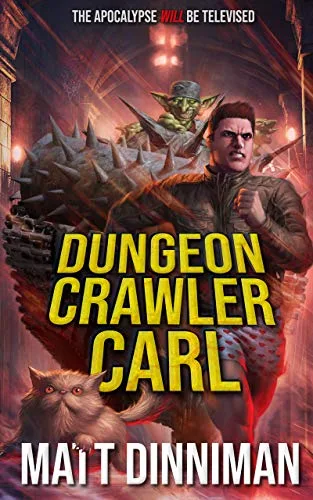
I'm glad these books exist. While I am sure there are a million Tolstoy, Woolf and Steinbeck readers who read and enjoy this series, the target audience for this book is most definitely the kind of person who doesn't read much, ONLY reads sci-fi/fantasy, or only reads the next big thing. And that's good: books should be made for people who don't read much. And who knows? Someone might read this and find that Christopher Moore writes in a similar vein. And then they'll find that John Scalzi is a lot like Moore. And then they'll find that T. Kingfisher is a lot like Scalzi. And suddenly, that person is a "reader."
Unfortunately, I flat out hated this. And it took me a long time to come to terms with it because I wanted so very badly to like it. I have enjoyed plenty of jokey books -including some that like this one, never actually made me laugh out loud- and with the incredible heat this series has on it right now, the last thing I wanted was to read this and find that I didn't like it. But that's where we are.
Still, I had some fun here and there. The RPG aspects are by far the best aspects. I enjoyed finding out what kind of loot people were getting and how the game works. It was fun. But then Dinniman would make sure we understood that the women of color were obese and unappealing, that his girlfriend was cheating on him with three or four different people, and the overall 12 year old boy level of humor just left me uncomfortable in a way that was less "oh man, this book is not afraid to go there" and more "this kid is shouting shit ass fart fuck in the aisle at Target for attention and now I've decided I don't really need Tide Pods this week just to avoid dealing with that shit."
From charting some of my journey through this first book on Pagebound and the responses I've gotten from people or read on other threads, I gather that the casual misogyny and reliance on stereotypes gets significantly better by book four as Dinniman received criticism and actually self-reflected and took it to heart and did better. That is very commendable, but unless books four through the end are the greatest pieces of literature guaranteed to change my life forever, I cannot fathom reading three books of this. I can't believe this is as popular with heavy book readers as it is. I can't believe a simple talking cat and sub-Deadpool level "amirite fellas?" style humor is enough for so many people to suffer the tedium.
For what its worth, when it's not being awful, I enjoyed the LitRPG aspect of the books. The mechanics of the game were interesting to learn about, the world-building sounds like it could get genuinely more interesting in further books, and while very little of it landed for me, there is some interesting work put in to how various monsters might be normal humans who were transformed and what their fate might be and why. Unfortunately, I can't overlook the lowest common denominator humor, the pandering wish-fulfillment of the main character (I'm just a regular schmoe whose girlfriend cheats on me with 3 different dudes and a woman, but she's probably dead and I'm a 6'3, former military, uber-mensch who's going to save the world by being good at video games) and the kind of casual misogyny that believes it's actually being progressive because all the women we're disparaging are ethnically diverse.
0geothedude finished a book
Dungeon Crawler Carl (Dungeon Crawler Carl, #1)
Matt Dinniman
0geothedude commented on a post
I am invested enough to finish this book but I almost certainly won't be continuing the series. I think I am going to get to the end of the book and see that overall, I did not enjoy this.
Every time I kinda start letting myself have fun, the author includes a weird detail or thought process about something and it makes me go "yeesh" and I have to work at relaxing a bit all over again.
The most similar thing to this I've ever read -and enjoyed- was John Dies at the End. But where JDatE struck a strong balance in tone where the irreverence of the humor heightened the insanity of the plot and allowed the real heavy stuff to shine through (even if it occasionally overstayed its welcome), DCC just isn't finding that balance.
It seems to want me to feel things for people even as it denigrates them, indulges in stereotypes, and gives you just enough 12-year-old boy humor to make me mildly uncomfortable. The LitRPG aspect is by far the strongest, but I don't think I've chuckled once throughout.
It's very disappointing as I really wanted to like this, but this just really isn't for me.
2geothedude made progress on...
Dungeon Crawler Carl (Dungeon Crawler Carl, #1)
Matt Dinniman
0geothedude commented on a post
View spoiler
9Post from the Dungeon Crawler Carl (Dungeon Crawler Carl, #1) forum
I am invested enough to finish this book but I almost certainly won't be continuing the series. I think I am going to get to the end of the book and see that overall, I did not enjoy this.
Every time I kinda start letting myself have fun, the author includes a weird detail or thought process about something and it makes me go "yeesh" and I have to work at relaxing a bit all over again.
The most similar thing to this I've ever read -and enjoyed- was John Dies at the End. But where JDatE struck a strong balance in tone where the irreverence of the humor heightened the insanity of the plot and allowed the real heavy stuff to shine through (even if it occasionally overstayed its welcome), DCC just isn't finding that balance.
It seems to want me to feel things for people even as it denigrates them, indulges in stereotypes, and gives you just enough 12-year-old boy humor to make me mildly uncomfortable. The LitRPG aspect is by far the strongest, but I don't think I've chuckled once throughout.
It's very disappointing as I really wanted to like this, but this just really isn't for me.
2geothedude wrote a review...
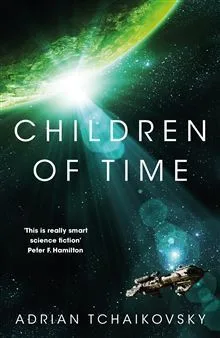
Stream of consciousness because I don't want to spoil too much. This was fantastic and best absorbed as fresh and unspoiled as possible.
Tchaikovsky truly is a master of portraying non-human thinking in print. From Service Model to Green City Wars, he just seems to really love finding inhuman ways to think and making them sympathetic and relatable.
This is a complicated narrative. While the plot itself is fairly straightforward, its themes, and character motivations are layered and nuanced.
Dr. Avrana Kern is an incredible character that I'll be interested to see what more can be done with in future installments.
0geothedude finished a book
Children of Time (Children of Time, #1)
Adrian Tchaikovsky
0geothedude made progress on...
Dungeon Crawler Carl (Dungeon Crawler Carl, #1)
Matt Dinniman
0geothedude made progress on...
Children of Time (Children of Time, #1)
Adrian Tchaikovsky
0geothedude commented on a post
Post from the Children of Time (Children of Time, #1) forum
geothedude commented on a post
Okay. I'm going to have to adjust if I'm going to survive this. My mans has said he doesn't do drama two or three times already in 13 pages. I guess I knew that the tone was going to read like it was written by Deadpool, but now that I'm in it, it's already exhausting me. I guess it's good that there is an apparently very good and fun book series out there written for guys who unironically start stories with "no shit there I was..." but it is certainly not my cup of tea. Still, I enjoyed John Dies at the End well enough, I'm sure once I get deep enough into it, the "amirite fellas?" style of humor will stop grating on me.
5Post from the Dungeon Crawler Carl (Dungeon Crawler Carl, #1) forum
Okay. I'm going to have to adjust if I'm going to survive this. My mans has said he doesn't do drama two or three times already in 13 pages. I guess I knew that the tone was going to read like it was written by Deadpool, but now that I'm in it, it's already exhausting me. I guess it's good that there is an apparently very good and fun book series out there written for guys who unironically start stories with "no shit there I was..." but it is certainly not my cup of tea. Still, I enjoyed John Dies at the End well enough, I'm sure once I get deep enough into it, the "amirite fellas?" style of humor will stop grating on me.
5geothedude started reading...
Dungeon Crawler Carl (Dungeon Crawler Carl, #1)
Matt Dinniman
0geothedude commented on a post
I have enjoyed several Tchaikovsky books now (Service Model, One Day This Will All Be Yours, Green City Wars, etc.), and I kept seeing that Children of Time was considered his magnum opus. I decided that clearly I liked his style, so I should check out what is considered his greatest work and didn't even look up a synopsis or blurb or review.
The first three chapters blew. My. Mind. Jaw fairly agog, I am IN IT. Excited to see where things go from here and just a little sad that I'm a bit late to the bandwagon.
2