liberacesgreatesthit
lower-middle class, upper-middle brow
365 points



liberacesgreatesthit started reading...
Murder in the Cathedral
T.S. Eliot
 0
0liberacesgreatesthit created a list
Ulysses, Yet Again
Stories where Ulysses, or Odysseus, makes an appearance
0


liberacesgreatesthit left a rating...

Some years ago I was hosting family visiting from Colombia. While showing them around the city, we stopped at a park known for hosting free productions for Shakespeare. Ignorantly, I assumed because of the language barrier, they wouldn’t be interested in returning that night for a performance of Cymbeline . It hadn’t dawned on me that even native English speakers struggle with Shakespeare when they haven’t had enough exposure to Early Modern English. Nor had it occurred to me that our city’s premiere opera company, another stop on our tour, draws in thousands of annual subscribers who, I’m willing to bet, aren’t fluent in the Italian or German the operas are performed in.
Seeing Shakespeare played is different from Shakespeare being read. With text, the uninitiated will fumble with footnotes and annotations. Seeing it staged, the actors do the interpreting for you. Though you may not understand each individual word, you can fill in the gaps through context and visual signifiers. Similarly, opera is able to shatter the language barrier on the strength of its sheer emotionality alone, even if our Italian word-stock starts and stops with the names for differently shaped noodles. They would have no issue with a staging of Shakespeare in English, nor would I with a Spanish production. Though since that summer, I’ve wondered how different our experiences would be in reading ostensibly the same text in different languages. That’s why I was thrilled to receive this ARC from NetGalley and the publisher! Finally, an answer!
It turns out the “how” is not so easy to explain. Each language has its own structure, syntax, conventions and culture it exists in and belongs to. Hahn consults a dozen different translators specializing in languages from German to Swahili to Japanese to Bangla. The topics discussed in each chapter are as diverse as the languages covered: naming conventions, pronouns, syntax, etymology, wordplay, punctuation are all analyzed here.
As Hahn explains, translating is a series of choices that must be made. In order to make decisions regarding the work you’re translating, you have to understand the reason the original author made their choices in the first place. By breaking down “hows” and “whys" of Shakespeare's mechanics and structure, Hahn gives us a masterclass in deconstructing Shakespeare. In doing so, Hahn not only gives us insight into the process of translation, but incredible textual and literary analysis of the plays themselves. As Hahn says, “Nobody reads more closely than a translator.”
If that sounds off-putting, it's not. What could easily be an impenetrably academic book on the mechanics of linguistics is instead accessible, and every bit as fun as it is informative and insightful. This book is seriously funny! Don’t skip the footnotes or you’ll miss out on a lot of the humor. It’s like an all-in-one masterclass on etymology, linguistics, poetic form, Early Modern literature and theatre presided over by an incredibly charming professor.
Admirers of Shakespeare, grammar nerds, lovers of language and linguistics, bilinguals (honestly, just about anyone) will find If This Be Magic to not only be a captivating and insightful read, but a wonderful reference book.
0liberacesgreatesthit finished a book
If This Be Magic: The Unlikely Art of Shakespeare in Translation
Daniel Hahn
0liberacesgreatesthit completed their yearly reading goal of 50 books!
liberacesgreatesthit's 2026 Reading Challenge


 0
0liberacesgreatesthit made progress on...
If This Be Magic: The Unlikely Art of Shakespeare in Translation
Daniel Hahn
0liberacesgreatesthit made progress on...
If This Be Magic: The Unlikely Art of Shakespeare in Translation
Daniel Hahn
0liberacesgreatesthit started reading...
If This Be Magic: The Unlikely Art of Shakespeare in Translation
Daniel Hahn
0liberacesgreatesthit wrote a review...

“There was a time to be a lady, and a time to be a bitch.”
I rate behind-the-scenes books for films I love based on how compelled I am to put the book down and watch the movie instead. I found this entry in the genre to be as intriguing and engrossing as the famously, deliciously catty, rapid fire film it’s about. I couldn’t put it down.
Unlike many “The Making of…” tell-alls, Douglas doesn’t use traditional “…and then this happened” linear structure. Instead, she very cleverly duplicates the structure of the film.
Before there was The Women, the 1939 motion picture, there was The Women, the 1936 Broadway play. One of the first things we see in The Women (1939) is the title card, which praises the play, touting its “triumphant run at the Ethel Barrymore Theatre.” A following intertitle credits the playwright, Clare Boothe Luce. Likewise, Jungle Red! begins with an “opening credits” sequence of its own, starting with a sort of prologue, giving due credit to the playwright and the original Broadway production.
Then we meet the cast of characters (in descending billing order!) Each of the players gets their own vignette of backstory, setting the stage, ratcheting the tension, raising the personal stakes and creating a compounding list of complications. Any lover of the history of Hollywood’s Golden Age will love Jungle Red! from the strength of these chapters alone! It’s a true compendium of Old Hollywood gossip and scandal—it’s Hollywood Babylon, but reputable. Film fans will also love the behind-the-scenes stills and press and production photos throughout!
Halfway through The Women, as Crystal and Mary are careening towards a head-on collision, the plot breaks for a ten minute, technicolor fashion show sequence. Similarly, at the midpoint of Jungle Red!, with the cast assembled and ready to convene on set, we break for biography and backstory of the “The Illusionists,” the film’s designers (including Adrian, whose designs are on display in the aforementioned fashion show). Here we’re given insight as to how their artistry influenced the world these women inhabit.
The final third of Jungle Red! mirrors the film’s finale, where the women assemble in the powder room of a swanky New York club and long simmering tensions and resentments boil over, exploding into chaos, calamity and outright, delicious bitchiness. This is the point in Jungle Red! where filming begins, the cast’s storylines converge and the claws come out!
But to praise this as nothing more than a chronicle of a mythic catfight would be to undermine it. Douglas gives insightful analysis and observations of the film as well as historical context of the culture it was created in. But if you’re only interested in salacious and scandalous stories from Hollywood of yore, you won’t be disappointed.
Thanks to the publisher and NetGalley for the ARC!
0liberacesgreatesthit wrote a review...
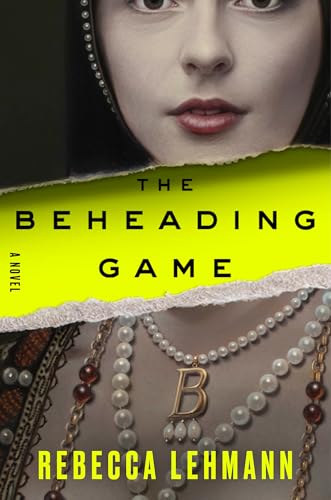
I’m usually wary of modern retellings of Anne Boleyn. Modern writers seem desperate to redefine her legacy and reclaim her as a sort of proto-feminist icon. Or worse, as a doe-eyed innocent, naive to the Machiavellian machinations of the Tudor court. In doing so they inadvertently strip her of her autonomy and agency. But the idea of Anne waking up from her execution, sewing her head back on and lighting out on a vengeful murder quest was too macabre and original to pass up. Almost immediately I realized by prejudice was wrong. Lehmann isn’t reclaiming Anne, she’s mythologizing her.
Medieval mysticism, Arthurian legends, tales of king slayers (Henry Bolingbroke, Henry Tudor) are tentpoles of the English mythic tradition and historical lore. The Green Man, Gawain and the Green Knight, King Arthur and the Lady of the Lake are all accounted for here, directly lifted from and referenced by name. The only one noticeably absent and not referenced explicitly by name is Robin Hood. Though you could argue for his inclusion as well. (Anne is never shown to be generous or altruistic but she does commit theft twice to pay off her impoverished accomplice and learns that life among the lower class can be idyllic). To be clear, I thought the idea of Anne as the hero of her own legend rather than a woman history happened to was clever and refreshing. I also don’t mind that the majority of the plot and imagery is directly influenced by other legends. That’s how mythology and legends work, by borrowing from and building upon tales that have been passed down for generations. I just wish the references hadn’t been so directly spelled out. It felt like the author (let’s be honestly, most likely the publisher) didn’t trust the reader to draw the connections without being told so directly.
0liberacesgreatesthit wrote a review...

Fran Lebowitz put forth the idea that talent is the only truly democratic force on Earth. “You cannot learn it, you cannot inherit it,” she argues. That talent cannot be bought or learned, I’ll concede. But that talent is not hereditary, I’ll push back against. If talent is not, at least occasionally, genetic, how have there been so many great theatrical families like the Barrymores or the Redgraves or the lineage of Richard Rodgers, whose daughter, Mary Rodgers, and grandson, Adam Guettel, are all Broadway luminaries in their own right? Star quality, or “It” quality (what Elinoir Glyn defined as “a rare, inescapable magnetism of the mind and body that draws others in”) is far more singular and uninheritable. That cocktail of charisma, talent, and the indescribable, indefinable“it” is more enigmatic and “democratic.” It’s not that talent cannot exist amongst families, but rather that the wattage of one’s star quality throws those around them, talented or otherwise, into its shadow and obscures them.
In Relative Failures, Sturgis exhumes the lives and work of three would-be greats in the periphery of greatness: Willie Wilde (brother of Oscar Wilde), Mabel Beardsley (sister of Aubrey), and Howard Sturgis (friend of Wilde’s an author in his own right). The most intriguing entries are those of the two siblings in proximity to stardom.
Willie comes across every bit as witty and brilliant, although considerably less ambitious, than his brother. A particularly charming passage in his biography shows Willie, on the cusp of financial ruin and licking his wounds after a failed attempt at a legal career, languishing around the house and calling out, “Oh for some good friend to open champagne. There are dozens of it in the cellar, and I’m too lazy to fetch it up, and…[I am] so thirsty.”
Willie is not without his successes, though. He is able to parlay his own wit and writing talents, as well as the familial penchant for theatre, culture, and the arts, into a career as a drama critic. It’s from this post from which he, at least initially, bolsters his brother’s work and becomes something of an architect to the “myth around his brother as the embodiment of Aestheticism.” In championing his brother’s writing, he unwittingly helped ensure that it would eventually eclipse his own.
Sturgis traces Willie’s diminishing career (as well as his squandering of talent, increasing use of drink and decreasing use of discernment in decision making) against the meteoric rise of his brother’s career until the chasm between their celebrity becomes so great that Willie stops being “William Wilde” and starts becoming “Oscar Wilde’s brother,” which becomes a source of tension.
Aubrey Beardsley was an artist and illustrator considered, in his time, a genius and a darling of the London avante-garde. Mabel was an actress of middling success in touring productions, though there were triumphs and legitimate success on the West End. After Aubrey’s death, Mabel finds her career stalling out a redirects her passion to sustaining her brother’s legacy—working on keeping reissues of his work in print and, in the days immediately following his death, dressing in monochromatic black-and-white to present herself as one of his illustrations brought to life. Willie laments, “It seems I am doomed to the unflattering fate of being myself.” Mabel relishes being “a living representative of Aubrey” after he’s gone. Upon her death, her gravestone reads: “Mabel Beardsley….sister of Aubrey Beardsley.”
It’s an intriguing look at those whose lives and legacies are overshadowed by someone else’s brilliance. Sturgis shines the spotlight on the overlooked and brings their dynamic and dazzling personalities to life and gives them a second chance at greatness in their own right.
Thanks to the publisher and NetGalley for this ARC!
0liberacesgreatesthit wrote a review...
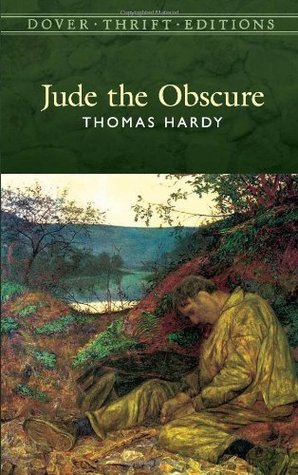
There's a passage early in Part First where Jude is reading from the Greek and Latin books he's coveted and, finding them harder to translate than he originally anticipated, throws the books across the room in frustration. It reminded me of when I tried to read Paradise Lost without footnotes or annotations and was immediately humbled.
Without exposing too much of my psyche, there's a lot I related to in Jude. His frustration with his failed ambitions for a life in academia, for example. I'm also sympathetic to his tendency towards misery and melancholy--to a point. Somewhere around Part Fourth I started to find the self-pity pretty irksome.
Actually, around that same point, I started to get frustrated with the novel altogether. I felt like my empathy was being tested and I was failing. Almost every character is unlikeable. Everything that could conceivably go wrong does. It's profoundly bleak and pessimistic. But for reason, I kept finding myself picking it up again even. Perhaps the optimist in me was hoping that at some point at least one of the characters would make a good decision or that it might end with even a glimmer of hope for a happy ending.
0liberacesgreatesthit finished a book
Jude the Obscure
Thomas Hardy
0liberacesgreatesthit wrote a review...

Using this as a reference in a project I’m working on about the sexist husband-wife dynamics in The Merry Wives of Windsor . With sections including “Patient Wives” and “Cuckholds,” I can overstate what an invaluable resource this had been.
0liberacesgreatesthit wrote a review...
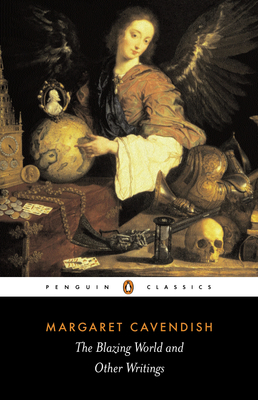
This isn’t a spoiler if you read the preface (which I didn’t), but half way through the author writes herself into the story. And I don’t mean a transparent self-insert character like you see in so many mediocre fanfics. Margaret Cavendish, Duchess of Newcastle, writes a character named the Duchess of Newcastle into the plot. It was so odd and unexpected for what is basically a 17th century philosophical treatise that I, quite literally, squealed with glee.
This is an entry into a very niche genre of fiction that is more concerned with orations about the ideal ordering and organization of society than anything resembling a plot. Like similar novels (Herland or Flatland), the bulk of the text is lists. But in final few pages the plot opens up and is so much more bizarre (complementary) than any other title in the genre.
If you can make it through the author’s odd rants about their distrust of microscopes as well as endless lists and commas and colons and semicolons, you’re rewarded with a prolonged action sequence where the animal-human hybrid inhabitants of the blazing world to enact sci-fi technological warfare on their enemies.
0liberacesgreatesthit finished a book
The Blazing World and Other Writings
Margaret Cavendish
0liberacesgreatesthit left a rating...

I’m rating this higher than I probably should, but I’m rating on a bias. I love books that layout the ideal way for society to be organized and ordered, especially a satirical one.
In the first half, the exposition is driven by the men prodding questions to find some sort of critical fault in the ideology of Herland rather than genuine curosity. Occasionally the women will ask questions of the men, to see how Herland compares to the real world, and upon being answered they always recoil in disgust at how barbaric and archaic yhe patriarcal real work is.
I thought it was clever to included an outright chauvinist character. I liked the running gag of Terry becoming more defensive and emmasculated the more utopian and idyllic Herland proves itself to be.
Some may find this slow (or even boring) and it’s definitely dated, but it’s a fun thought expiriment of imagine what a matriarchy utopia might look like.
0liberacesgreatesthit made progress on...
The Blazing World and Other Writings
Margaret Cavendish
0liberacesgreatesthit started reading...
The Blazing World and Other Writings
Margaret Cavendish
0liberacesgreatesthit finished a book
Herland
Charlotte Perkins Gilman
0