
maxlackz
I read sometimes
378 points



This book has becoming increasingly relevant in todays political climate, specifically speaking as an American. While utilizing historical references as well as regional examples of fascist politics, this book covers the tactics and explains how they all work. Fascist priorities are highlighted, overall goals, and other aspects you wouldn’t consider as someone with an empathetic existence. Chapters organized by tactics include: mythic past, propaganda, anti-intellectual, unreality, hierarchy, victimhood, law and order, sexual anxiety, demonization of cities, and “work shall make you free”. As someone intrested in recognizing fascist talking points with little background knowledge in politics, this was a very easy read. I haven’t been into nonfiction outside of my own research work so this was a great introduction to that. I highly recommend if you want to be aware of what’s happening in modern times. This is not a fear mongering book, it’s to prepare you to navigate this evolving society by recognizing when things are leading towards fascism.
maxlackz finished a book
6h
How Fascism Works: The Politics of Us and Them
Jason F. Stanley
“With unsettling insight and disturbing clarity, How Fascism Works is an essential guidebook to our current national dilemma of democracy vs. authoritarianism.”—Jelani Cobb, New Yorker staff writer “No single book is as relevant to the present moment.”—Claudia Rankine, author of Citizen NEW YORK TIMES BOOK REVIEW EDITORS’ CHOICE • With a new preface • A Yale philosopher identifies the ten pillars of fascist politics, and charts their horrifying rise and deep history. As the child of refugees of World War II Europe and a renowned philosopher and scholar of propaganda, Jason Stanley has a deep understanding of how democratic societies can be vulnerable to fascism: Nations don’t have to be fascist to suffer from fascist politics. In fact, fascism’s roots have been present in the United States long before Donald Trump. Alarmed by the pervasive rise of fascist tactics both at home and around the globe, Stanley focuses here on the structures that unite them, laying out and analyzing the ten pillars of fascist politics—the language and beliefs that separate people into an “us” and a “them.” He knits together reflections on history, philosophy, sociology, and critical race theory with stories from contemporary Hungary, Poland, India, Myanmar, and the United States, among other nations. He makes clear the immense danger of underestimating the cumulative power of these tactics, which include • exploiting a mythic version of a nation’s past • propaganda that twists the language of democratic ideals against themselves • anti-intellectualism directed against universities and experts • law and order politics predicated on the assumption that members of minority groups are criminals • fierce attacks on labor groups and welfare These mechanisms all build on one another, creating and reinforcing divisions and shaping a society vulnerable to the appeals of authoritarian leadership. By uncovering disturbing patterns that are as prevalent today as ever, Stanley reveals that the stuff of politics—charged by rhetoric and myth—can quickly become policy and reality. Only by recognizing fascists politics, he argues, may we resist its most harmful effects and return to democratic ideals.
maxlackz is interested in reading...
8h
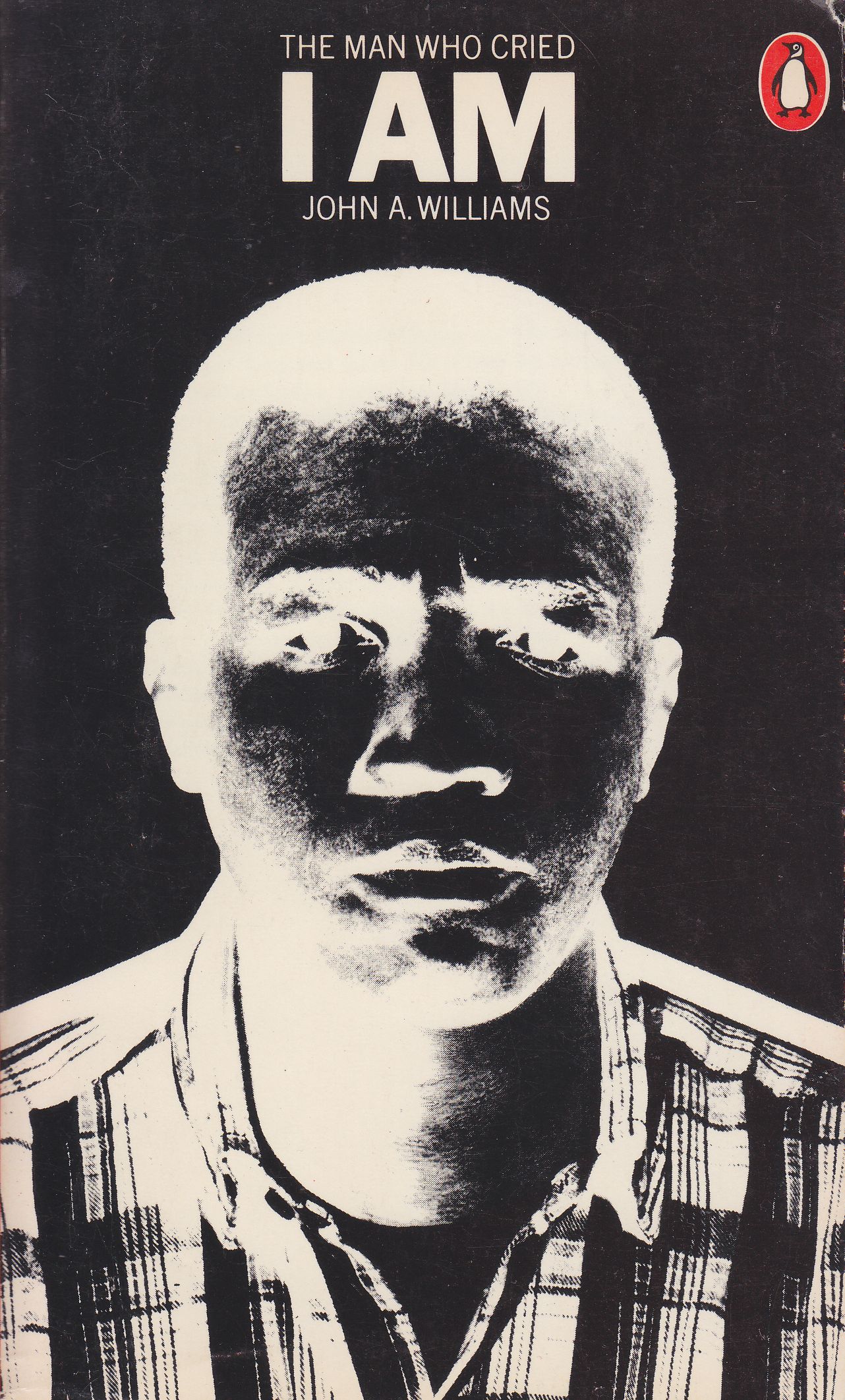
The Man Who Cried I Am
John A. Williams
Generally recognized as one of the most important novels of the tumultuous 1960s, The Man Who Cried I Am vividly evokes the harsh era of segregation that presaged the expatriation of African-American intellectuals. Through the eyes of journalist Max Reddick, and with penetrating fictional portraits of Richard Wright and James Baldwin, among other historical figures, John A Williams reveals the hope, courage, and bitter disappointment of the civil-rights era. Infused with powerful artistry, searing anger, as well as insight, humanity, and vision, The Man Who Cried I Am is a classic of postwar American literature.
maxlackz joined a quest
8h
Southern Gothic Fiction
🪕👻🏚️
Side Quest 💎 // 1482 joined

A selection of contemporary titles exploring the decay, despair, and trauma of the reconstructed American South. Come for the atmospheric settings, stay for the commentary on the legacy of the South's oft-romanticized past.

maxlackz is interested in reading...
17h

Notes of a Crocodile
Qiu Miaojin
Set in the post-martial-law era of late 1980s Taipei, Notes of a Crocodile depicts the coming-of-age of a group of queer misfits discovering love, friendship, and artistic affinity while hardly studying at Taiwan's most prestigious university. Told through the eyes of an anonymous lesbian narrator nicknamed Lazi, Qiu Miaojin's cult classic novel is a postmodern pastiche of diaries, vignettes, mash notes, aphorisms, exegesis, and satire by an incisive prose stylist and countercultural icon. Afflicted by her fatalistic attraction to Shui Ling, an older woman, Lazi turns for support to a circle of friends that includes a rich kid turned criminal and his troubled, self-destructive gay lover, as well as a bored, mischievous overachiever and her alluring slacker artist girlfriend. Illustrating a process of liberation from the strictures of gender through radical self-inquiry, Notes of a Crocodile is a poignant masterpiece of social defiance by a singular voice in contemporary Chinese literature.
maxlackz is interested in reading...
17h

Stoner
John Williams
William Stoner is born at the end of the nineteenth century into a dirt-poor Missouri farming family. Sent to the state university to study agronomy, he instead falls in love with English literature and embraces a scholar’s life, so different from the hardscrabble existence he has known. And yet as the years pass, Stoner encounters a succession of disappointments: marriage into a “proper” family estranges him from his parents; his career is stymied; his wife and daughter turn coldly away from him; a transforming experience of new love ends under threat of scandal. Driven ever deeper within himself, Stoner rediscovers the stoic silence of his forebears and confronts an essential solitude. John Williams’s luminous and deeply moving novel is a work of quiet perfection. William Stoner emerges from it not only as an archetypal American, but as an unlikely existential hero, standing, like a figure in a painting by Edward Hopper, in stark relief against an unforgiving world.
maxlackz finished a book
2d
Babel
R.F. Kuang
From award-winning author R. F. Kuang comes Babel, a thematic response to The Secret History and a tonal retort to Jonathan Strange & Mr. Norrell in this unforgettable work of dark academia that grapples with student revolutions, colonial resistance, and the use of language and translation as the dominating tool of the British empire. Traduttore, traditore: An act of translation is always an act of betrayal. 1828. Robin Swift, orphaned by cholera in Canton, is brought to London by the mysterious Professor Lovell. There, he trains for years in Latin, Ancient Greek, and Chinese, all in preparation for the day he’ll enroll in Oxford University’s prestigious Royal Institute of Translation—also known as Babel. Babel is the world's center for translation and, more importantly, magic. The unique magic system of silver working—the art of manifesting the meaning lost in translation using enchanted silver bars—has made the British unparalleled in power, as its knowledge serves the Empire’s quest for colonization. For Robin, Oxford is a utopia dedicated to the pursuit of knowledge. But knowledge obeys power, and as a Chinese boy raised in Britain, Robin realizes serving Babel means betraying his motherland. As his studies progress, Robin finds himself caught between Babel and the shadowy Hermes Society, a secret society dedicated to stopping imperial expansion. When Britain pursues an unjust war with China over silver and opium, Robin must decide… Can powerful institutions be changed from within, or does revolution always require violence?
maxlackz unpaused...
1w
Babel
R.F. Kuang
From award-winning author R. F. Kuang comes Babel, a thematic response to The Secret History and a tonal retort to Jonathan Strange & Mr. Norrell in this unforgettable work of dark academia that grapples with student revolutions, colonial resistance, and the use of language and translation as the dominating tool of the British empire. Traduttore, traditore: An act of translation is always an act of betrayal. 1828. Robin Swift, orphaned by cholera in Canton, is brought to London by the mysterious Professor Lovell. There, he trains for years in Latin, Ancient Greek, and Chinese, all in preparation for the day he’ll enroll in Oxford University’s prestigious Royal Institute of Translation—also known as Babel. Babel is the world's center for translation and, more importantly, magic. The unique magic system of silver working—the art of manifesting the meaning lost in translation using enchanted silver bars—has made the British unparalleled in power, as its knowledge serves the Empire’s quest for colonization. For Robin, Oxford is a utopia dedicated to the pursuit of knowledge. But knowledge obeys power, and as a Chinese boy raised in Britain, Robin realizes serving Babel means betraying his motherland. As his studies progress, Robin finds himself caught between Babel and the shadowy Hermes Society, a secret society dedicated to stopping imperial expansion. When Britain pursues an unjust war with China over silver and opium, Robin must decide… Can powerful institutions be changed from within, or does revolution always require violence?

maxlackz is interested in reading...
1w

Black Reconstruction in America (The Oxford W. E. B. Du Bois): An Essay Toward a History of the Part Which Black Folk Played in the Attempt to Reconstruct Democracy in America, 1860-1880
W.E.B. Du Bois
W. E. B. Du Bois was a public intellectual, sociologist, and activist on behalf of the African American community. He profoundly shaped black political culture in the United States through his founding role in the NAACP, as well as internationally through the Pan-African movement. Du Bois's sociological and historical research on African-American communities and culture broke ground in many areas, including the history of the post-Civil War Reconstruction period. Du Bois was also a prolific author of novels, autobiographical accounts, innumerable editorials and journalistic pieces, and several works of history. Black Reconstruction in America tells and interprets the story of the twenty years of Reconstruction from the point of view of newly liberated African Americans. Though lambasted by critics at the time of its publication in 1935, Black Reconstruction has only grown in historical and literary importance. In the 1960s it joined the canon of the most influential revisionist historical works. Its greatest achievement is weaving a credible, lyrical historical narrative of the hostile and politically fraught years of 1860-1880 with a powerful critical analysis of the harmful effects of democracy, including Jim Crow laws and other injustices. With a series introduction by editor Henry Louis Gates, Jr., and an introduction by David Levering Lewis, this edition is essential for anyone interested in African American history.