mrsrumbles
1717 points






mrsrumbles commented on mrsrumbles's update
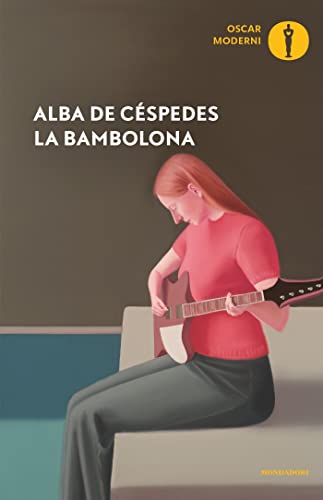
mrsrumbles started reading...
La bambolona
Alba de Céspedes
 1
1mrsrumbles started reading...
La bambolona
Alba de Céspedes
1mrsrumbles is interested in reading...

Dèy
Edwidge Danticat
0mrsrumbles commented on yeliuxi's update

mrsrumbles commented on mrsrumbles's update
mrsrumbles made progress on...
Marxism for Our Times C. L. R. James on Revolutionary Organization
C. L. R. James
1mrsrumbles made progress on...
Marxism for Our Times C. L. R. James on Revolutionary Organization
C. L. R. James
1mrsrumbles commented on ratpop's update

mrsrumbles wrote a review...

So when you ask where my past is, ask instead what yours is without mine?
A strong collection of poems that are mostly rebuttals against popular misconceptions. Misconceptions about women, Muslims, Britain, immigration, etc. etc.
Something about these did not work for me - I think this is largely to do with the fact that the author is a slam poet, and some of these are those poems written down. I just don’t think this change of medium works - spoken word poetry can have any cadence you want, but the written versions come off a bit awkward, and unfortunately, directed towards a white audience. So I would definitely recommend searching this author’s performances on YouTube to get a feel for her work, a lot of which is printed here.
There is a poem here called Bacon, Banknotes, Benjamins that I thought missed the mark in a really careless way. In Manzoor-Khan’s attempt to critique hip-hop culture, presumably from an anti-capitalist standpoint (too many lyrics have to do with procuring capital, I guess), she ends up sounding incredibly racist towards black American rappers, and also doesn’t seem to actually understand hip-hop or the culture at all. Have a bone to pick with Jay-Z or whatever all you want, but to dismiss the entire rap scene as superficial is just… blows raspberry.
0mrsrumbles finished a book
Postcolonial Banter
Suhaiymah Manzoor-Khan
0mrsrumbles started reading...
Postcolonial Banter
Suhaiymah Manzoor-Khan
0mrsrumbles started reading...
Marxism for Our Times C. L. R. James on Revolutionary Organization
C. L. R. James
0mrsrumbles commented on mrsrumbles's review of Ten Incarnations of Rebellion

View spoiler
3mrsrumbles wrote a review...

If this was marketed more explicitly as a romance I would've at least been prepared, but the synopsis tries to sell this as lit fic, which is a bit of an overstatement. I think it is a realistic romance about finding out how to love again after loss, but it wasn't really for me. There was a push for a "traditional family" in this book even while being a lesbian romance - as in, their relationship carved a path towards marriage, then motherhood. The last 100 pages were really overwhelming in terms of how much trauma is dumped on the reader, and when the HEA came, it shattered my suspension of belief, and ended up making me uncomfortable with how it panned out. This is mainly due to the fact that the autistic character, the son, is used as a conflict (and a cockblock) throughout the book. I just did not understand why there was a push to make Ellie's character so committed to being another maternal figure to him, and what happened in those last 50ish pages made no sense narratively. In general, this is a tonally confusing book - you will get whiplash from the range of triggering topics to the romance (and its gratuitous smut). I don't think any of this is that bad if you're into a dramatic book, but it really makes you uneasy and anxious as a reader.
Now, while the author might be well-intentioned about their dedication to diversity in this book, it slips over into actually being racist. Ellie is Mexican, and it is very fiestaaaa, salsaaaa, quinceañeraaaaa. The cringe Spanglish sections were so fucking bad man. And P.S. you don't use corto for someone's height! Her ABUELA is magical and her mother """""puts a curse""""" on everyone's relationships. Also, she has two other Mexican friends: one works on an oil rig (?) and the other works for the U.S. Army (??). (Page 222 gave me the biggest laugh I've gotten out of a book in awhile, where this character says: Being career military was always my passion. And I mean a big belly laugh. Are you out of your fucking mind.) The Italian NONNA makes sure to always have ESPRESSO and BISCOTTI ready, the Greek friend always has Greek curse words to mutter under her breath, and there is a random Muslim couple that literally holds no narrative weight other than to show that """""immigrants find each other"""""" (and where does this Muslim couple come from? The Muslim Country?). The problem with making diversity written like a checklist is that I'm obviously going to be looking for which ones you exclude... such as, why is there not a single black character in a story that takes place in CHICAGO? All this to say: if you're going to have a diverse cast of characters, you need to write them as having personalities beyond their ethnicity. Otherwise it's a big side eye.
P.S. Not even in a lesbian romance is a woman allowed to have a period on page :/
0mrsrumbles finished a book
Beyond Any Experience
Anne E. Terpstra
0mrsrumbles commented on mrsrumbles's review of The Ballad of Ronan McCoy

If Colin Morgan is not a bad writer, then he's not a particularly interesting one.
I was nervous going into this book, as there were a few early reviews that used the word "sentimental" in their acclaim - as if that was a good thing. It’s marketed as “coming of age”, and it probably would’ve benefited with “young adult” or even “middle grade” following that. But as it doesn’t, this review reflects on it standing amongst its supposed “literature” peers.
An absolutely amateur and embarrassing debut. The writing style is not only juvenile but corny. The pacing is dogshit. The characters and their conflicts either make no sense (Kevin?) or are wrapped up without much tension. The plot is almost entirely dialogue driven. We can’t even get a clear setting from the author, just vaguely Northern Ireland, and without reading the synopsis beforehand, you wouldn’t even know what year it takes place in until page 230. Any woman is either described as matronly or cold, and must include the crucial detail of whether or not she is wearing makeup. I’m more of a jeans girl (141), our protagonist’s love interest says, making sure the audience knows she’s special and a “weirdo”.
For those who comment that the sensitive topic is handled with care - how? Morgan implements the exploitative device of writing a disabled character as the foil for the protagonist's self-actualization. This isn't much of a spoiler as it's the first few chapters, but when Brendan sees Ronan after his accident for the first time, he repeatedly refers to Ronan as "it". (22) "Oh, but that's a realistic reaction from Brendan!" So you agree? That this book uses Ronan's disabled body as a lesson, a conflict to overcome? What about this on page 162: And if [Ronan] had been going to the formal I knew I probably wouldn’t have; he was the one who did things and I was the one who watched. What does this imply other than Ronan’s disability being a necessary stepping stone for Brendan’s growth? Goodness, poor Ronan. (222) Yup! This is the only depth we can offer Ronan’s character.
So, in true ableist fashion, we have a disabled character where only one of two things can happen to them: they either get better, or die. Guess which direction our brave author takes?
TLDR; when ur goat is washed????🤪🤪🤪🤪🤪❌❌❌❌❌❌❌❌
2mrsrumbles commented on paigedelan's update
paigedelan completed their yearly reading goal of 25 books!
paigedelan's 2026 Reading Challenge


 1
1mrsrumbles commented on harrowtheninth's review of The Ballad of Ronan McCoy
View spoiler
2mrsrumbles started reading...
Beyond Any Experience
Anne E. Terpstra
0mrsrumbles wrote a review...
If Colin Morgan is not a bad writer, then he's not a particularly interesting one.
I was nervous going into this book, as there were a few early reviews that used the word "sentimental" in their acclaim - as if that was a good thing. It’s marketed as “coming of age”, and it probably would’ve benefited with “young adult” or even “middle grade” following that. But as it doesn’t, this review reflects on it standing amongst its supposed “literature” peers.
An absolutely amateur and embarrassing debut. The writing style is not only juvenile but corny. The pacing is dogshit. The characters and their conflicts either make no sense (Kevin?) or are wrapped up without much tension. The plot is almost entirely dialogue driven. We can’t even get a clear setting from the author, just vaguely Northern Ireland, and without reading the synopsis beforehand, you wouldn’t even know what year it takes place in until page 230. Any woman is either described as matronly or cold, and must include the crucial detail of whether or not she is wearing makeup. I’m more of a jeans girl (141), our protagonist’s love interest says, making sure the audience knows she’s special and a “weirdo”.
For those who comment that the sensitive topic is handled with care - how? Morgan implements the exploitative device of writing a disabled character as the foil for the protagonist's self-actualization. This isn't much of a spoiler as it's the first few chapters, but when Brendan sees Ronan after his accident for the first time, he repeatedly refers to Ronan as "it". (22) "Oh, but that's a realistic reaction from Brendan!" So you agree? That this book uses Ronan's disabled body as a lesson, a conflict to overcome? What about this on page 162: And if [Ronan] had been going to the formal I knew I probably wouldn’t have; he was the one who did things and I was the one who watched. What does this imply other than Ronan’s disability being a necessary stepping stone for Brendan’s growth? Goodness, poor Ronan. (222) Yup! This is the only depth we can offer Ronan’s character.
So, in true ableist fashion, we have a disabled character where only one of two things can happen to them: they either get better, or die. Guess which direction our brave author takes?
TLDR; when ur goat is washed????🤪🤪🤪🤪🤪❌❌❌❌❌❌❌❌
2