unabellaguerra's Book Journey

unabellaguerra is interested in reading...
30w

We Will Be Jaguars: A Memoir of My People
Nemonte Nenquimo
From a book in your library
We Will Be Jaguars: A Memoir of My People
Nemonte Nenquimo
I feel like getting this out of my system before I start - ngl I'm excited and nervous.
This is the first time I finally get to read an Ecuadorian book of over 300 pages (even if the language is in English and not in Spanish).
I'm half Ecuadorian and for the longest time I didn't manage to connect with my culture. Sure, my dad tried to teach us Spanish, and we're familiar with Ecuadorian dishes Abuelita loves to cook for us when she's visiting and vice versa. But other than that, it's super difficult to find a South American community in a small, (back then) Austrian-only town.
Even then, when I start looking back at my roots, Ecuador was the least prioritised. I'm part Korean too, and since the pandemic I delved arms deep into Asian philosophy, history, and literature. Despite not knowing any Korean nor Chinese (where my love for danmei and baihe comes from).
What also counts is how rare I get to vist Ecuador and my family here. I briefly know the Ecuadorian history of the Incan empire and its downfall at the hands of the Spanish conquistadores, just scraps of modern history, and close to nothing at all on politics. When I got interested in activism, I mainly heard from environmental activists figures like Greta Thunberg in the Nothern Hemisphere.
So yeah... I'm planning on changing that. On my last trip to Ecuador this summer, I focuses on finding the beauty of little things which I appreciate (I adore the tiendas in every city and the small community it makes; the mountainous landscapes near Quito, the borders of the rainforests in Mindo, the dark-sand & touristic beaches in Manta). I've gathered some famous Ecuadorian literature books (in Spanish!), passed down from my relatives. And Social Media decided to be kind and inform of the successes of Ecuadorian environmental activists in the Indigenous communities.
Enough of this chit-chat - just here to say I'm so excited to finally have my hands on this book. So far it's just a PDF copy and I'll buy a proper physical copy after I finished & enjoyed it.

We Will Be Jaguars: A Memoir of My People
Nemonte Nenquimo
From a book in your library
We Will Be Jaguars: A Memoir of My People
Nemonte Nenquimo
Mindblowing and breathtaking!
Even if the writing style appears simplistic and too direct, it fits perfectly to what Nemonte Nenquimo wants to convey.
This is an important piece of calling for all of us to read - one of the newer, historically significant books of Indigenous/native communities to make their voices hears and pioneer their rights.
I expected the story to hit me close to home, and it did not fail in that regard. This side of Ecuador was so unfamiliar to me for countless reasons (pointing at the public knowledge of the Waorani people), and at the same time familiar. The beauty of the nature, the strong-knit communities, evidence of the government abandoning those in need in favour for corrupting profit, and fighting against the historic long battle of colonialism.
Everyone should read this book, at least make this a start into environmental and indigenous literature, and the meaning behind being politically active.
From a book in your library
We Will Be Jaguars: A Memoir of My People
Nemonte Nenquimo
The devil had bushy eyebrows, a squat nose, and thick lips. He was dark-skinned and hairy. In fact, he looked exactly like my mom’s father, Donasco.
Several days later, while I was splashing in the shallows of the river, I saw Grandpa Donasco appear around the bend, poling slowly up the current. “Devil!” I shouted. “The devil is coming!”
Religious trauma and Christian missionaries as part of colonialism runs deep in Ecuadorian history and it pains me (but I'm not surprised) that Nemonte experienced this first hand as a child. I'd like to delve deeper into that to show what Rachel has done is just the tip of the iceberg. Lemme give a quick history lesson. Content warning: colonial history, execution, religious trauma
The Spanish conquistadores under Pizzaro showed up during a time when there was tension amidst the Incan empire (capital cities in Peru and Ecuador) which is brewing into a civil war. They exploit the situation by allying themselves with the Incan emperor, Atahualpa, under the guise of securing his claim to the throne in return to access to the Incan cities and, of course, their wealth. After much fighting, and destroying multiple civilizations with their diseases like small pox, the conquistadores achieved their goals and thus held Atahualpa hostage. After he converted to Christianity, the conquistadores strangled Atahualpa to death, thus marking the end of Incan rule (Atahualpa had successors iirc, yet it's agreed that with Atahualpa, the reign of the Incas and their native civilizations began to decrease in number, succumbing to colonial-run haciendas and Spanish-led governments.
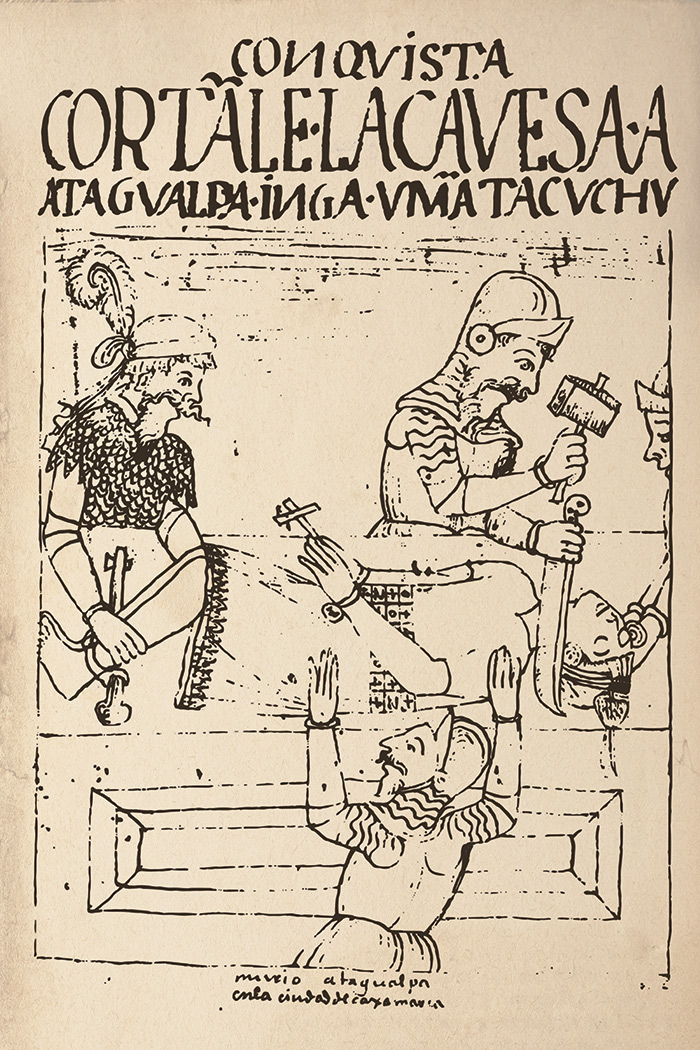
Click here to see image of Atahualpa's execution if the image stops showing on PB

There is an Ecuadorian legend that Atahualpa promised the conquistadores whole halls filled with gold, which would disappear as soon as Atahualpa was executed. It's said that the messengers and carriers dumped the gold into the river, or that they were buried under a hall so that the conquistadores couldn't find them. To this day, no one knows whether the story is true and where the gold could be found.
In colonial Quito, around the 16th century, many Catholic orders rushed to be the first to build their churches and make converts of the native populations. These included the Franciscans, the Augustinians, the Jesuits, and the Dominicans. Their conversion style is identical to Rachel's - there is only one God, if you join us you will be treated humanely, and you will burn in hell if you refuse to convert. One of the famous surviving depictions of this can be found in the Jesuit church, La Compania. This beautiful church is built with the blood of the native Incan/Ecuadorian populations. The interior is decorated with gold that was stolen by the Spanish, and that's not even a quarter of the wealth that they had stolen - the rest was shipped to Spain and Rome, which would be used to decorate St. Peter's Cathedral in the Vatican City.
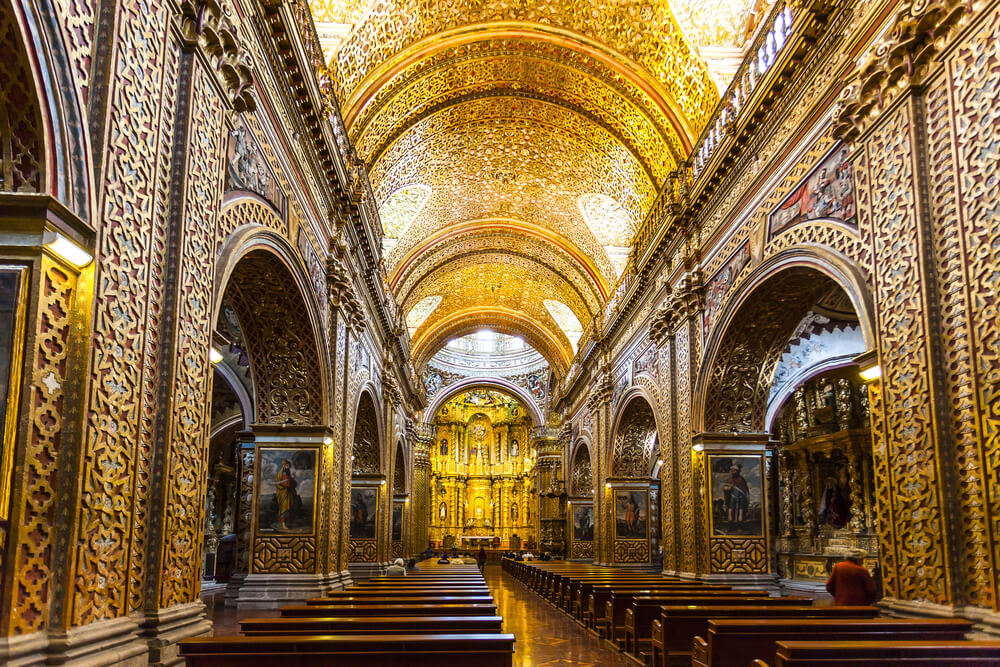
Click this website if picture of La Compania doesn't show up

Inside that church, one of the largest painting they host is the depiction of hell. Many other paintings show the Christian saints residing in heaven and the native Ecuadorians burning in hell, but the painting El Infierno is pretty on the nose with their religious threat.
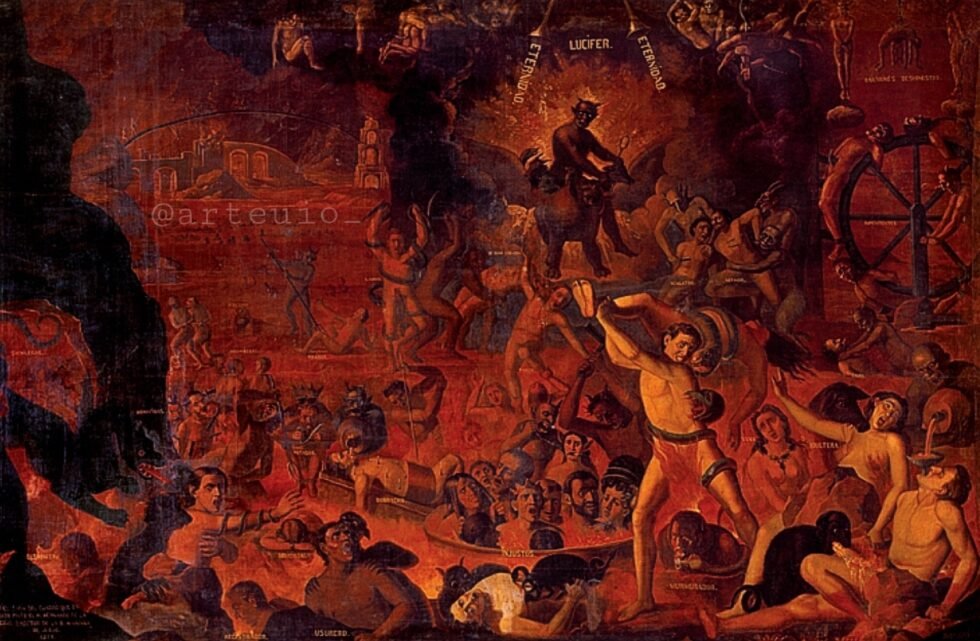
Click if you want to see the hell painting
In conclusion, seeing Rachel committing the first steps of colonial and religious violence against Nemonte's family and herself has me constantly thinking how the entire Ecuadorian nation succumbed to Christian trauma and conversion. And then, the mestizo continued the crimes of their own colonizers when they learned that religion and money held so much power.
unabellaguerra commented...
2w
I could only get access to a PDF, so I'm so excited to get my hands on a physical copy someday!
Mindblowing and breathtaking!
Even if the writing style appears simplistic and too direct, it fits perfectly to what Nemonte Nenquimo wants to convey.
This is an important piece of calling for all of us to read - one of the newer, historically significant books of Indigenous/native communities to make their voices hears and pioneer their rights.
I expected the story to hit me close to home, and it did not fail in that regard. This side of Ecuador was so unfamiliar to me for countless reasons (pointing at the public knowledge of the Waorani people), and at the same time familiar. The beauty of the nature, the strong-knit communities, evidence of the government abandoning those in need in favour for corrupting profit, and fighting against the historic long battle of colonialism.
Everyone should read this book, at least make this a start into environmental and indigenous literature, and the meaning behind being politically active.
unabellaguerra commented...
2w
We Will Be Jaguars: A Memoir of My People
Nemonte Nenquimo
The devil had bushy eyebrows, a squat nose, and thick lips. He was dark-skinned and hairy. In fact, he looked exactly like my mom’s father, Donasco.
Several days later, while I was splashing in the shallows of the river, I saw Grandpa Donasco appear around the bend, poling slowly up the current. “Devil!” I shouted. “The devil is coming!”
Religious trauma and Christian missionaries as part of colonialism runs deep in Ecuadorian history and it pains me (but I'm not surprised) that Nemonte experienced this first hand as a child. I'd like to delve deeper into that to show what Rachel has done is just the tip of the iceberg. Lemme give a quick history lesson. Content warning: colonial history, execution, religious trauma
The Spanish conquistadores under Pizzaro showed up during a time when there was tension amidst the Incan empire (capital cities in Peru and Ecuador) which is brewing into a civil war. They exploit the situation by allying themselves with the Incan emperor, Atahualpa, under the guise of securing his claim to the throne in return to access to the Incan cities and, of course, their wealth. After much fighting, and destroying multiple civilizations with their diseases like small pox, the conquistadores achieved their goals and thus held Atahualpa hostage. After he converted to Christianity, the conquistadores strangled Atahualpa to death, thus marking the end of Incan rule (Atahualpa had successors iirc, yet it's agreed that with Atahualpa, the reign of the Incas and their native civilizations began to decrease in number, succumbing to colonial-run haciendas and Spanish-led governments.
Click here to see image of Atahualpa's execution if the image stops showing on PB
There is an Ecuadorian legend that Atahualpa promised the conquistadores whole halls filled with gold, which would disappear as soon as Atahualpa was executed. It's said that the messengers and carriers dumped the gold into the river, or that they were buried under a hall so that the conquistadores couldn't find them. To this day, no one knows whether the story is true and where the gold could be found.
In colonial Quito, around the 16th century, many Catholic orders rushed to be the first to build their churches and make converts of the native populations. These included the Franciscans, the Augustinians, the Jesuits, and the Dominicans. Their conversion style is identical to Rachel's - there is only one God, if you join us you will be treated humanely, and you will burn in hell if you refuse to convert. One of the famous surviving depictions of this can be found in the Jesuit church, La Compania. This beautiful church is built with the blood of the native Incan/Ecuadorian populations. The interior is decorated with gold that was stolen by the Spanish, and that's not even a quarter of the wealth that they had stolen - the rest was shipped to Spain and Rome, which would be used to decorate St. Peter's Cathedral in the Vatican City.
Click this website if picture of La Compania doesn't show up
Inside that church, one of the largest painting they host is the depiction of hell. Many other paintings show the Christian saints residing in heaven and the native Ecuadorians burning in hell, but the painting El Infierno is pretty on the nose with their religious threat.
Click if you want to see the hell painting
In conclusion, seeing Rachel committing the first steps of colonial and religious violence against Nemonte's family and herself has me constantly thinking how the entire Ecuadorian nation succumbed to Christian trauma and conversion. And then, the mestizo continued the crimes of their own colonizers when they learned that religion and money held so much power.
unabellaguerra commented...
2w
We Will Be Jaguars: A Memoir of My People
Nemonte Nenquimo

© 2025 Pagebound
unabellaguerra commented...
3w
It's a very one-sided transaction (very typical of colonialism) and it's driving me furious. I'm shaking with anger as I read through the chapters. Why this hypocrisy? Why sent these missionaries as representatives of God when they fo more harm than good? And the thing that sucks is that I already know the answer: power, specifically access to land resources. So indoctrination starts so no one bats an eye when white people tear their home apart in the name of god/duty/profit.