
Aphellirus
interested in the slow kind of rot.
301 points







Aphellirus commented on Aphellirus's review of The Tell-Tale Heart
View spoiler
 2
2Aphellirus finished reading and wrote a review...
View spoiler
2Aphellirus finished reading and left a rating...
 0
0Aphellirus earned a badge
Winter 2026 Readalong
Read at least 1 book in the Winter 2026 Readalong.
0Aphellirus commented on a post
Aphellirus commented on Aphellirus's review of The Serviceberry: Abundance and Reciprocity in the Natural World

It’s really more an essay than a book, stretched out to 105 pages through generous spacing, illustrations, and very small pages. At its core, this text is an essential reckoning: the way our modern world is built upon a self-fulfilling prophecy of scarcity. Food does not in fact need to be scarce, there’s enough for everyone, it just isn’t fairly distributed. It attempts to unspool this through the generosity of the natural world, symbolized by the Serviceberry and the way it just offers its fruit.
Yet, this message, for all its poetic depth, feels structurally hollowed out. It points so clearly to the ways small-scale locals transactions often honor the principle of the gift, the idea that something of worth should be freely offered and reciprocated, but when it comes to facing down the wider world, the systemic, global lie of scarcity that governs us all, the text backs away. It's weakened by not really citing sources beyond a couple of personal interviews, and if we are playing in the realm of imagination, of envisioning a completely different way to organize ourselves, can’t we be a little bolder? It points to the possibility of abundance but never commits to it, it’s all so vague and general, and then it is soon over.
13Aphellirus commented on Aphellirus's update
Aphellirus commented on Aphellirus's review of Pachinko
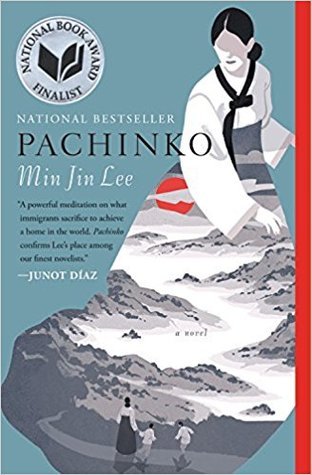
I genuinely have no words for this book. I kept putting it off because it looked huge and I assumed it would be one of those novels you slog through, but the second I actually started reading, everything else stopped existing. I got attached to everyone way faster than I was prepared for. The way Min Jin Lee builds a person from the ground up and lets you sit with them as they change is incredible. You watch them grow, mess up, age, and you still feel like you’re learning who they are every time they return to the page. It turned into a surprisingly introspective read, making me realize how much I probably don’t know or understand about the people in my life and the earlier versions of them. Including my own.
The historical parts never felt like background noise either. I ended up learning more than I expected about the occupation, the war, the split between North and South, and how Koreans in Japan were pushed to the margins for decades. Everything felt lived-in and heavy in a way that never pulled me out of the story. Sunja especially stayed with me from beginning to end. Watching her move from childhood into old age without the narrative losing momentum was one of my favorite parts.
The deaths in this book hit me harder than I wanted to admit, mostly because they kept happening to the characters I loved most. If I could change anything, I’d ask for more time with Hoonie and Noa, they never stopped feeling important, even when they weren’t on the page.
2Aphellirus commented on alienshe's review of Frankenstein
Frankenstein is a classic that continues to show its timelessness. During this era of increased conservatism in our culture, this story teaches us much about cruelty, capitalism, and colonialism. Shelley uses beautiful language to give voice to the “creature.” This creature may also be the symbolic voice of the oppressed.
The scientist, the colonizer, is himself a navel gazer. It’s all about him, so to speak. His trauma. His experiences that he created. He “made.”
This is a book where you get something different out of it each time. A yearly read for me
4Aphellirus commented on Aphellirus's review of The Serviceberry: Abundance and Reciprocity in the Natural World
It’s really more an essay than a book, stretched out to 105 pages through generous spacing, illustrations, and very small pages. At its core, this text is an essential reckoning: the way our modern world is built upon a self-fulfilling prophecy of scarcity. Food does not in fact need to be scarce, there’s enough for everyone, it just isn’t fairly distributed. It attempts to unspool this through the generosity of the natural world, symbolized by the Serviceberry and the way it just offers its fruit.
Yet, this message, for all its poetic depth, feels structurally hollowed out. It points so clearly to the ways small-scale locals transactions often honor the principle of the gift, the idea that something of worth should be freely offered and reciprocated, but when it comes to facing down the wider world, the systemic, global lie of scarcity that governs us all, the text backs away. It's weakened by not really citing sources beyond a couple of personal interviews, and if we are playing in the realm of imagination, of envisioning a completely different way to organize ourselves, can’t we be a little bolder? It points to the possibility of abundance but never commits to it, it’s all so vague and general, and then it is soon over.
13Aphellirus finished reading and wrote a review...
It’s really more an essay than a book, stretched out to 105 pages through generous spacing, illustrations, and very small pages. At its core, this text is an essential reckoning: the way our modern world is built upon a self-fulfilling prophecy of scarcity. Food does not in fact need to be scarce, there’s enough for everyone, it just isn’t fairly distributed. It attempts to unspool this through the generosity of the natural world, symbolized by the Serviceberry and the way it just offers its fruit.
Yet, this message, for all its poetic depth, feels structurally hollowed out. It points so clearly to the ways small-scale locals transactions often honor the principle of the gift, the idea that something of worth should be freely offered and reciprocated, but when it comes to facing down the wider world, the systemic, global lie of scarcity that governs us all, the text backs away. It's weakened by not really citing sources beyond a couple of personal interviews, and if we are playing in the realm of imagination, of envisioning a completely different way to organize ourselves, can’t we be a little bolder? It points to the possibility of abundance but never commits to it, it’s all so vague and general, and then it is soon over.
13Aphellirus set their yearly reading goal to 80
Aphellirus's 2026 Reading Challenge
0Aphellirus finished reading and wrote a review...
I genuinely have no words for this book. I kept putting it off because it looked huge and I assumed it would be one of those novels you slog through, but the second I actually started reading, everything else stopped existing. I got attached to everyone way faster than I was prepared for. The way Min Jin Lee builds a person from the ground up and lets you sit with them as they change is incredible. You watch them grow, mess up, age, and you still feel like you’re learning who they are every time they return to the page. It turned into a surprisingly introspective read, making me realize how much I probably don’t know or understand about the people in my life and the earlier versions of them. Including my own.
The historical parts never felt like background noise either. I ended up learning more than I expected about the occupation, the war, the split between North and South, and how Koreans in Japan were pushed to the margins for decades. Everything felt lived-in and heavy in a way that never pulled me out of the story. Sunja especially stayed with me from beginning to end. Watching her move from childhood into old age without the narrative losing momentum was one of my favorite parts.
The deaths in this book hit me harder than I wanted to admit, mostly because they kept happening to the characters I loved most. If I could change anything, I’d ask for more time with Hoonie and Noa, they never stopped feeling important, even when they weren’t on the page.
2Aphellirus finished reading and left a rating...

The story does not unfold so much as it bleeds through the pages. A collection of paper scraps, diaries, letters, and the jagged log of a doomed ship testify to a darkness the rational mind refuses to accept.
The narrative captures the torment of knowing the monster’s name while the victims only know the symptoms. It is a tale of intimacy... a tale of invasion. The horror here is in the silence between the telegrams, the frantic scratching of pens against paper in a desperate bid to leave a record before the darkness wins.
It is grotesque and it is beautiful, peeling back Victorian modesty to expose the raw pulse of desire and fear beneath it. A reminder, whispered from the grave, that the dead do not linger; they come for us.
0Aphellirus finished reading and wrote a review...

I went into this book totally blind and ended up weirdly attached to this girl and her strange, stripped-down world. The writing isn’t flowery at all, but that almost made the emotional parts hit harder for me. I kept noticing how different she was from the other women, not in an exaggerated way, just in the small habits and reactions that only make sense when you realise she never had a real life before the bunker. Watching her try to build some sort of identity out of basically nothing made the whole thing feel tense and sad at the same time.
I liked how she moved through the world with this combination of curiosity and stubbornness, like she was teaching herself how to exist. Each new thing she figured out felt important, even when it was tiny. And when the loneliness started getting to her, it didn’t feel dramatic, just a slow shift that made sense for someone who never had a place in anything.
The ending shredded me to pieces. The only critiques i would have upon this book, is how much some of the women associate the idea of living and happiness with men. Though, i guess that can be expected as every human has different emotions and being held captive for so many years without touch or affection leads to such conclusions.
0Aphellirus commented on Aphellirus's update

Aphellirus finished reading and wrote a review...
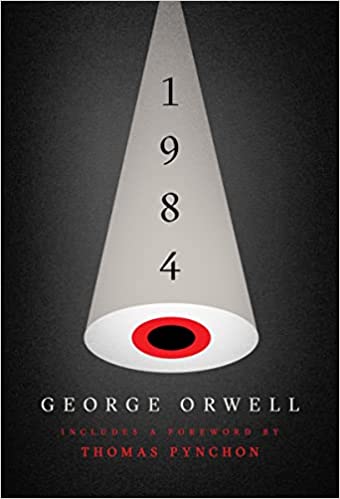
Even though it was written over 70 years ago, it’s still very relevant today as we’re told what to say, how to be, and how to think. We’re all expected to perform the same approved version of "normal". Yet, somehow, miraculously, stubbornly, we still cling to our messy, inconvenient, gloriously unapproved selves.
0