CarnuSaga
Marc (he/him), college professor and infrequent writer/editor. I enjoy classic literature, literary fiction, graphic novels, and cultural history (especially literature, comics, and cinema)
5274 points






3.33 average · 1726 reviews
Click a segment to filter
 Edited13w
Hello, Classic US Literature readers!
I've been looking over and thinking about the list of books in this Quest for a few days, and decided to submit the following recommended additions.
A little background: I have a Master's and a PhD in literary studies, specifically in 20th-century American literature & culture (and, more specifically than that, in critical race studies, narratives of war & veteranship, and film). I also was managing editor for an academic journal (of scholarship on modern/contemporary literature) for five years, so I have a good idea of what's still being talked about and still having an active literary influence today. I don't mean any of that as a boast (it's literally my job to know these things), I just wanted to give a sense of what's informing these recommendations!
The recommendations contain a mixture of "canonical," dead-white-guy authors and voices from underrepresented communities. As far as the dead white guys go, I've only included works that were extremely important to a literary movement and/or concern themselves directly with issues of difference, inequality, etc. Pretty much all of these you could reasonably expect to see covered in a survey class on American literature and/or included in series like the Norton Anthology of American Literature or the Library of America.
As far as the "underrepresented community" authors go, all the ones recommended can still be considered "canonical" (granted, some more newly than others) and have active scholarly communities around them!
I've broken the recommendations up into categories to hopefully make the process of adopting (or not adopting) individual books easier. I know some may be an easier "sell" to the Pagebound community than others, given their content and authorship, which is totally fine. I'm not here to represent anyone's literary reputation or backlist sales (especially if they're dead). If more clarification or discussion would be helpful for any of the recommendations, let's talk about it!
Okay, enough preamble. On to the recommendations! (Books are generally listed in alphabetical order by author's last name, with a few exceptions.)
Early American Literature There isn't much in the Quest from the earliest days of American literature. I recommend these: • Wieland by Charles Brockden Brown -- the first major American novel! • The Legend of Sleepy Hollow by Washington Irving • Rip Van Winkle by Washington Irving -- a historian and biographer, Irving was among the first to notice a lack of distinctly American myths and mythology; so, he sought to create some. And he was largely successful, since pretty much everyone knows these two stories today! • Common Sense by Thomas Paine -- important work of political philosophy that influenced the writing of America's founding documents.
Slave Narratives Autobiographical writing by formerly enslaved people. Two of the most enduring examples are: • Narrative of the Life of Frederick Douglass by Frederick Douglass • Incidents in the Life of a Slave Girl by Harriet Jacobs
Transcendentalism Alongside Walden and Leaves of Grass, there are two other really influential works of Transcendental literature. Neither are mammoth tomes, just extended essays (which a lot of Americans probably read in high school): • Self-Reliance by Ralph Waldo Emerson • Civil Disobedience Henry David Thoreau
Realism Realism and Naturalism are the two biggest blind spots I see in the Quest, so I'm going to devote a little more space to explaining this section. Literary realism is a movement that began in the late 1800s, with The Rise of Silas Lapham by William Dean Howells (the first American realist novel). The realists were focused on portraying the drama of everyday life, without a focus on flowery or poetic language. A few second- and third-generation realists are represented in the Quest currently (including Steinbeck, who frankly is overrepresented on the list, with three entries!), but -- aside from Mark Twain, who was affiliated with the realists but not really one of them -- the major foundational voices aren't represented.
• The Rise of Silas Lapham by William Dean Howells -- the first realist novel. • An American Tragedy by Theodore Dreiser -- archetypal story, adapted countless times. • Daisy Miller and/or The Portrait of a Lady by Henry James -- perceptive indictments of high society in 19th-century America. • The Turn of the Screw by Henry James -- a ghost story (and work of psychological realism) whose influence really can't be overstated. • The Jungle by Upton Sinclair -- widely taught for nearly a century; also had a profound legislative influence.
Naturalism Naturalism was a literary movement that grew out of literary realism; its philosophical position was that free will is meaningless, as the larger universe is indifferent to human life. The two most essential voices here are Stephen Crane and Jack London (already represented in the Quest, although his story "To Build a Fire" is another important and widely anthologized example of naturalism).
• "The Open Boat" by Stephen Crane -- this short story, if permitted for inclusion, is the paradigmatic example of literary naturalism. • Maggie: A Girl of the Streets by Stephen Crane -- naturalism expanded to the scope of a novella; about the rise and fall of a New York City sex worker in the 1890s. • McTeague by Frank Norris -- novel-length naturalism. Incredibly, darkly funny. Not for readers afraid of the dentist. • Native Son by Richard Wright -- widely considered the last naturalist novel. Also a landmark in African American literature; arguably the biggest omission in the Quest currently.
Regionalism / Local Color Another outgrowth from literary realism -- this one less nihilistic than naturalism -- was regionalism, sometimes called "local color" writing. Much of Mark Twain's writing falls into this mode, but here are a few more major landmarks: • Winesburg, Ohio by Sherwood Anderson • My Ántonia by Willa Cather • The Country of the Pointed Firs by Sarah Orne Jewett -- regionalism as post-Civil War national allegory, although like Twain, it can be read for pure lyrical enjoyment as well. • The Conjure Woman and Other Tales by Charles W. Chesnutt -- southern Black regionalism! Plays with the stereotypes advanced by Uncle Tom's Cabin (and similar works) to make the case for Black equality. • The Marrow of Tradition by Charles W. Chesnutt -- if Conjure Woman is too controversial (its portrayal of racial stereotypes, though intended as satire, may still be too much for some readers), I think it's still important to get Chesnutt on the list. This novel is also widely acclaimed, and recounts a fictionalized version of a race riot in which white supremacists killed as many as several hundred Black people.
Modernism If eligible, the short stories "Barn Burning" by William Faulkner and "A Good Man Is Hard to Find" by Flannery O'Connor should be considered. (If "Good Man" is ineligible because it's a short story, then how about The Complete Stories by O'Connor? She really needs to be included!) Also, these novels: • Light in August by William Faulkner -- modernist allegory of a mixed-race man living in the American South. • Absalom, Absalom! by William Faulkner -- a moral reckoning with the legacies of slavery and the Civil War. Also arguably the turning point from modernism to postmodernism. • Three Lives by Gertrude Stein -- major figure of the American expatriate movement in Paris, who influenced Hemingway, Fitzgerald, and many more. This is an intense work of both modernism and psychological realism, exploring female and mixed-race subjectivities. • Nightwood by Djuna Barnes -- radical lesbian modernism! This has had a major critical rediscovery in the last 15-20 years and is now considered a major work.
Black Modernism I'm separating this out from the previous "Modernism" section (all white folks), mostly to focus on the Harlem Renaissance since that's little covered in the Quest currently. • The Souls of Black Folk by W. E. B. Du Bois -- "The problem of the 20th century is the problem of the color line." Published in 1900, if you can believe it. Essential! • Go Tell It on the Mountain by James Baldwin -- his first novel. More influential than Giovanni's Room, although I can see why that makes the list as well. • Passing by Nella Larsen • Quicksand by Nella Larsen -- these two short (and beautiful) novels by Larsen are themed around interracial mixing and racial passing in the early 20th century. • Home to Harlem by Claude McKay • Cane by Jean Toomer -- radical work on Black experience, combining prose, poetry, and drama.
Midcentury Realists Carrying on the tradition of both the early realists and the modernists, these were some of the most influential American novels of the 1950s and early 1960s. • The Adventures of Augie March by Saul Bellow • Portnoy's Complaint by Philip Roth -- along with Bellow, an important writer of Jewish American descent who wrote about American identity and authoritarianism, among other subjects. • Main Street by Sinclair Lewis • The Heart Is a Lonely Hunter by Carson McCullers • The Moviegoer by Walker Percy • True Grit by Charles Portis -- this one has really climbed in critical estimation in recent years. Also a good book to include because the Western as a genre is a uniquely American invention, and there are no Westerns on the list (no, I'm not counting Steinbeck)! • Rabbit, Run by John Updike -- like much literature in this category, shot through with postwar malaise. • Cathedral by Raymond Carver -- published a bit later than the others here, but very much in the tradition of Roth and Updike.
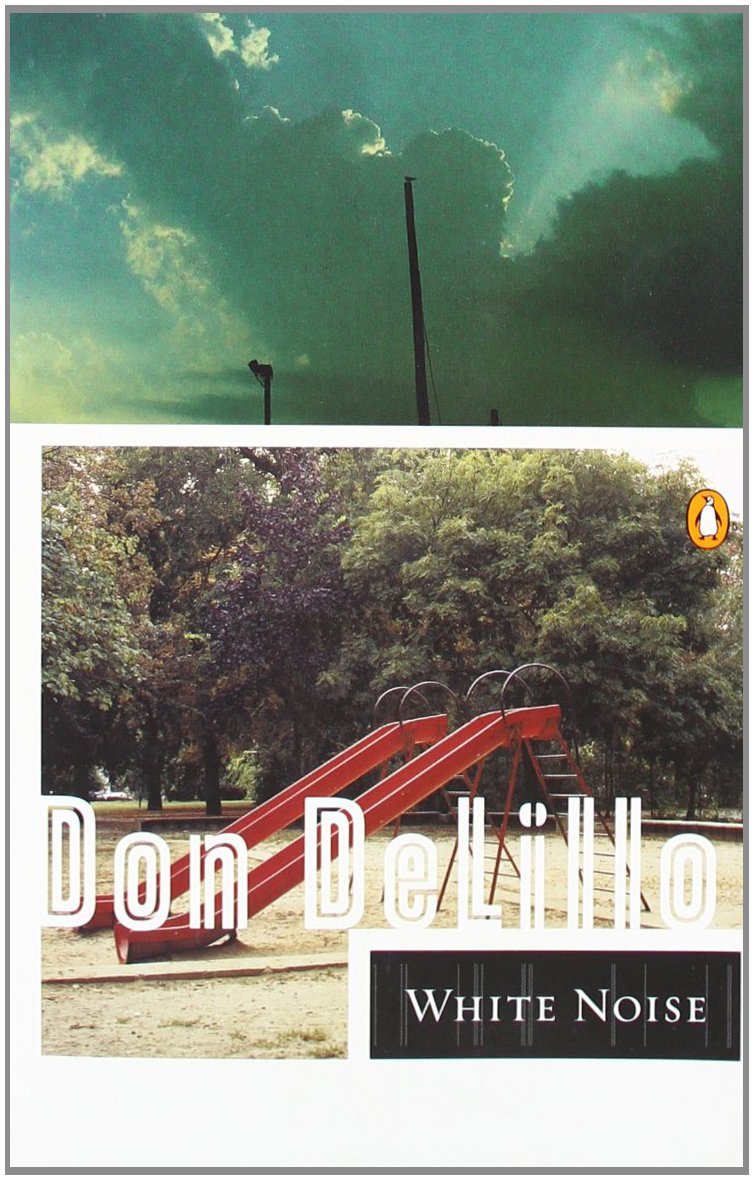
Postmodernism • Pale Fire by Vladimir Nabokov -- as one of the most respected and influential American writers, Nabokov should be represented here. More people are familiar with Lolita, due to its controversial subject matter (which is also a reason not to recommend it for the Quest), but within academia, Pale Fire has come to be celebrated as his masterpiece. • The Crying of Lot 49 by Thomas Pynchon -- perhaps the paradigmatic postmodern novel. • White Noise by Don DeLillo -- postmodern theory and philosophy brought to bear in an absurdist, postmodern satire of intellectualism and 1980s American culture. Probably the second-most-important postmodern novel, behind Lot 49. • The Bluest Eye by Toni Morrison -- the author's first novel, still one of her most important and powerful. • Kindred by Octavia Butler -- has experienced a huge rediscovery/resurgence in recent years, now serving as a touchstone for a lot of Black, feminist, and LGBTQ sci-fi. • The Woman Warrior by Maxine Hong Kingston -- postmodern memoir, blending autobiography with Chinese folklore.
The New Journalism These books pioneered a new style of journalism, fittingly called the New Journalism, blending traditional journalism with autobiography and literary writing. • Fear and Loathing in Las Vegas by Hunter S. Thompson • On the Road by Jack Kerouac
Drama A few highly regarded plays that are commonly taught and anthologized: • Angels in America by Tony Kushner • Glengarry Glen Ross by David Mamet • Long Day's Journey into Night by Eugene O'Neill • True West by Sam Shepard • Our Town by Thornton Wilder
Conclusion Okay, that's it. Phew! (At least, until some long-thought-lost Black Transcendental novel is discovered, published, and becomes a massive literary influence on the next generation of writers. Hey, you never know!)
To anyone who actually read all of this -- and to those who have curated and maintained this Quest -- thank you! Please feel free to comment with questions, concerns, more/alternative recommendations, and/or rotten tomatoes (though if you could avoid aiming for my head, I'd appreciate it). Let's keep reading and learning from America's literary past together on PB!