
princess_luka
| she/they | adult | I love reading (obviously), playing weird indie video games, tinkering on Linux, and spoiling my lizards.
11764 points




3.61 average · 114 reviews
Click a segment to filter

This is slow-paced, atmospheric, surreal and jarring at times, character-driven, and more unnerving than scary (with a few exceptions). If you're looking to be terrified the whole time, then this is not the book for you. If you're looking for everything to make sense all the time, then this is not the book for you. However, if you're looking for a book that you can really sink your teeth into and invite yourself to be haunted by, then you might love this as much as I did.
I can see why some people would find this underwhelming, especially if they've watched the TV show (which is only very loosely inspired by the book imo). As for me, I plan to return to Hill House every October from now on. I hope to see you there!

Thanks to NetGalley and Macmillan Children's Publishing Group for providing an ARC in exchange for a fair and honest review!
As I eagerly await the arrival of my physical copy in November, let's dive into it, shall we?
Prose: It might just be due to the change in subgenre, but the writing style of this book felt less overwrought and less repetitive than DLTFI and Hazelthorn. This largely rescued the lines truly deserving of poeticism from being drowned out in a sea of purple prose (yes, I'm reusing that phrase). Because of that, this is my favorite of CG Drews' novels in terms of prose. Their use of metaphor and imagery truly shined here.
The atmosphere was on-point and the horrors were vividly described, as usual. There was a bit more humor this time, which was amusing and not disruptive.
However, I am BEGGING CG Drews to use more periods and fewer commas. There were so many sentences that weren't given the opportunity to breathe because other sentences were squeezed in with them through the ever-present "and." I recognize that long sentences can be necessary or effective (for example, if you're trying to convey a sense of urgency or scattered thoughts), but this usually wasn't the case. The sentences just went on and on for what felt like no reason. It probably just felt more noticeable because the prose was otherwise more restrained but it was frustrating.
Characters/Relationships: Every member of the supporting cast felt complex, with their own motives and flaws. (I felt like Hazelthorn was by far the weakest book in this regard.) The core conflict of the story felt painfully realistic and nuanced. I can see interpretations on this element varying wildly--not whether it was done well, but who was wrong and who was right and to what extent and what should be done about it.
Jonathan was a very difficult protagonist for me to follow because he reminded me of my younger self in all of the worst ways, and I found myself less charitable towards him because of that. However, I think he was a very effective narrator for this story. His love interest, Scorpion, evoked such intense conflicting emotions, which felt very intentional and effective.
My only real complaint is that the relationship focuses felt unbalanced. I would have appreciated more scenes between Jonathan and Scorpion in the first half so that the development in the second half felt more believable.
Overall, I felt like the individual characters and their relationships were the most engaging among CG Drews' YA novels by far.
Plot/Themes: There was an easier story that CG Drews could have told, but they made it clear that they were not interested in telling that story. Ultimately, I think that made for a better story, even if I didn't "enjoy" it as much as what I had imagined early on. These were the most resonant and effective themes that CG Drews has ever explored in my opinion. I'm still reeling from it, in the best way.
The twists and turns were surprising but well-earned, the mysteries were intriguing, the horrors were horrific, and every scene kept my interest. It was my favorite plot so far, especially since I was so invested in the cast.
However, my mixed emotions about how the ending concludes its exploration of the core themes left me with a sour taste in my mouth. I think this will be more polarizing than their other endings. (To be clear, there are no spoilers here; I'm not implying anything about the tone of the ending, only what the ending communicated to me.)
Overall: If you loved DLTFI and Hazelthorn, then I think you'll love this too. If you've never read CG Drews' other YA novels, then I would actually recommend reading DLTFI first, even though I feel like this is a better novel. If you were disappointed by Hazelthorn's simpler cast, or DLTFI's repetitive plot, or the overwrought style of both, then I think you'll be pleasantly surprised by this one. If you have no familiarity with CG Drews' works, then I still highly recommend this if you a) love queer horror; b) don't mind flowery language; c) are ready to be emotionally challenged.
Scorpion Deep releases on October 27, 2026.

I really enjoyed this one, but it had some issues.
Prose: It was very well-written in terms of descriptions of the monsters and what they were doing to people, making it easy to visualize everything just enough to keep the fear alive. (Though, I would still love it if there was a special edition with illustrations sprinkled throughout!) It was pretty bland in terms of dialogue, even during pivotal scenes that were otherwise well-constructed. The rest of the writing worked well enough.
Plot: This story was exciting, dreadful, and claustrophobic in the best way. I truly loved learning about the Void's ecology and history through the aspiring-botanist MC's eyes. There were so many creative and compelling ecological/lore concepts that I gobbled right up. I'm excited to discuss theories with people once it's officially released. I'd definitely check out a sequel if one was written. However, there were some major plot elements that didn't make sense to me, mostly regarding characters' decision-making. Either they're stupid 17yos who shouldn't be doing any of this, or they're grown-ass adults who should be doing this much better. This is very common with YA novels, but it felt a bit worse than usual with this one. The ending was excellent though!
Pacing: The pacing was great in the beginning and the end, but the middle felt too rushed. I would have appreciated really taking the time to explore the Void in-depth, partially because I wanted to know more, and partially because the relentless nature of the horrors meant that many scenes didn't hit as hard as they could have. If the story had been about 20% longer, then it might have also eased some of the logistical issues that I had with the plot.
Characters: This was the weakest part of the book for me. Each character had strong motives and interests. However, their personalities, competency, and decision-making skills were very inconsistent. I wasn't invested in any of the relationships either. This ended up working in my favor, because I didn't like where any of the relationships ended up.
I would recommend this to people who are interested in fantasy/scifi ecology, deep lore, and deliciously creative gore. If you like these things and don't mind/enjoy typical YA tropes, then I think that you'll enjoy this even more than I did.
Thanks to NetGalley and Bindery Books for providing this ARC in exchange for a fair and honest review! What Feeds Below releases on October 6th, 2026.
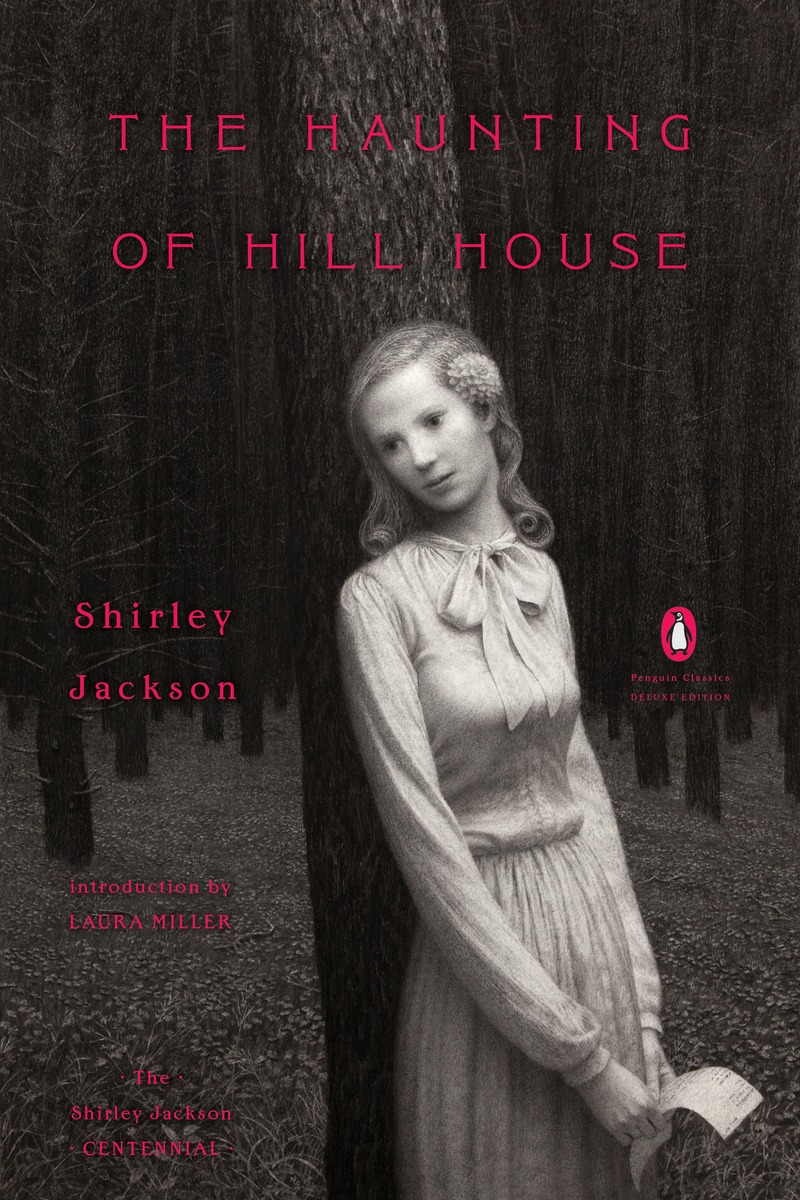
The Haunting of Hill House
Shirley Jackson

I Who Have Never Known Men
Jacqueline Harpman

A Trade of Blood (Shadow of the Leviathan, #3)
Robert Jackson Bennett


Dungeon Crawler Carl (Dungeon Crawler Carl, #1)
Matt Dinniman
princess_luka commented...


Dracula
Bram Stoker
princess_luka commented...


Hazelthorn
C.G. Drews


© 2025 Pagebound
princess_luka commented...
I think my perspective is very skewed because I first heard of this series on a tumblr post praising the Hoarder boss fight for being such a bold commentary on dehumanization in this genre. The Hoarder is obese, and mentally ill, and not English-speaking, so the predominantly white cishet dudebro audience of LitRPGs is predisposed to not care about her. Carl’s management team keeps telling him that the audience doesn’t give a shit about the elderly people so he should stop trying to help them. The post went on to talk about how the series challenges these assumptions over and over, demanding that you give a shit about the people that society wants you to look away from or laugh at.
Do I fully buy into that after reading the first three books? Not entirely. I think the tumblr post was too charitable in its interpretations. However, I do think that the series’ messages, politics, and values become clearer over time, and the ~ironic misogyny/racism/etc. fades away pretty quickly.
I feel like this series is a great way to nudge “non-political” or “moderate” dudebros a bit more to the left in a way that they don’t immediately flinch away from. Carl is the epitome of manliness, surrounded by all these impossibly sexy ladies, and he gives a damn about the people that they don’t even consider people sometimes. If that prompts even one dudebro to be more compassionate, then I’m glad for it. All that being said, I think the series has definitely made some missteps worth criticizing.