
Threadhead
🇨🇦 | Non-Fic | Some Fic | Female Authors | Crone |Smash the Patriarchy | New to PB
899 points




Threadhead commented on a post from the Pagebound Club forum
It’ll be difficult to formulate my words, and I do realise that some of it will come out as word vomit, but I’ll try my best. My issue is that I constantly keep on having an existential crisis with the thought that I have to be able to rely on myself fully financially, physically, and emotionally. My day to day life is focused around trying to make my future life as good as possible by having extremely high expectations of how I live that day. It ends up being to the point where I get so exhausted that I’ll fall asleep randomly, not necessarily because I’m doing a lot, but more because my brain is constantly on stress mode. Now I know that I cannot do anything alone and we all need to rely on each other and help each other. But it’s as if I’m always trying to prevent a catastrophe from happening. Now all this goes back to my childhood. So, I guess my question is if any of you have any book recommendations on how to heal your inner child, CPTSD (specifically related to childhood abuse and trauma), how to look after oneself, how to manage your twenties, or anything that popped into your head from all of my babbling? Thank you so much for reading my frazzled thoughts 🩷
 8
8Threadhead is interested in reading...

The Spellman Files (The Spellmans #1)
Lisa Lutz
0Threadhead is interested in reading...
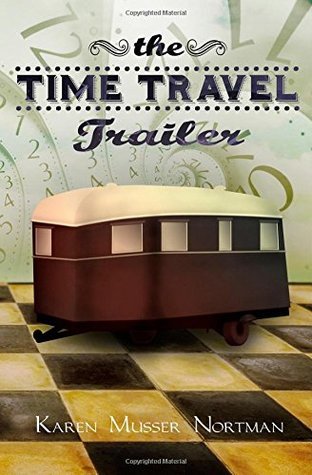
The Time Travel Trailer
Karen Musser Nortman
0Threadhead commented on a post

Threadhead made progress on...
With Her Own Hands: Women Weaving Their Stories
Nicole Nehrig
0Threadhead commented on a post from the Pagebound Club forum
I've always wondered about these celebrity book clubs, especially since the books they have chosen for the month are announced publicly by having that annoyingly hard to remove sticker on the book itself. Like, what do you do in these celebrity book clubs? Do you post your thoughts on the book on a public forum or something? Also, do you think that some of these celebrity book clubs like Reese Witherspoon's and Dua Lipa's are performative in nature to make them look like they are well-read women? I would love to know your thoughts on this.
20Threadhead commented on a post

While listening to this audiobook, I received the news notification that Trump has renamed Lake Ontario to Lake America. I had to stop the playback because while Kimmerer was talking about Carlisle, I was struck with the fact that the name of the lake - the indigenous name of the lake - is being stripped from it to satisfy the hunger of a little man with too much power. For those of you who don't know, Ontario comes from thr Iroquois word kanadario meaning "sparkling water."
1Threadhead made progress on...
The Private Lives of Spies and The Exquisite Art of Getting Even: Stories of Espionage and Revenge
Alexander McCall Smith
0Threadhead commented on a post
Threadhead commented on a post

IDK how I feel about all the characters and POV changes. I am, however, loving the descriptions. Enough that you can get a feeling for the moment, but not too much that you get lost.
2Threadhead made progress on...
The Private Lives of Spies and The Exquisite Art of Getting Even: Stories of Espionage and Revenge
Alexander McCall Smith
0Threadhead started reading...
The Private Lives of Spies and The Exquisite Art of Getting Even: Stories of Espionage and Revenge
Alexander McCall Smith
0Threadhead finished a book

Organic Appliqué: Creative Hand-Stitching, Ideas and Techniques
Kathy Doughty
0Threadhead TBR'd a book
The Private Lives of Spies and The Exquisite Art of Getting Even: Stories of Espionage and Revenge
Alexander McCall Smith
0Threadhead commented on a post
Threadhead made progress on...
Organic Appliqué: Creative Hand-Stitching, Ideas and Techniques
Kathy Doughty
0Threadhead wrote a review...
TL:DR I wish the story was about Marcellus as the main character, and he was also the narrator of what happened to his friend Tova. If it was written that way it might have been one of my favourite all time books.
Worth the read just for Marcellus 🐙. The chapters from his perspective are gold. I loved them so much.
I have some problems with the plot and the pacing. The plot is very predictable and slow to develop, even dragging at times.
My biggest frustration was that the story begins with the impression that there are two main characters, an older woman and an octopus. It begins so well and the buy in to this idea was huge for me. But as the story progresses the octopus Marcellus fades away as a main character and the book doesn’t seem to know whose story it is telling, Cameron’s or Tova’s. I realize it is both but this is where the omniscient pov fails for me I think. It definitely develops into a story that isn’t about Marcellus, he becomes a tertiary character at best until near the end when he re-emerges as a heart of the story type of character. Marcellus’ chapters are written in first person which really works.
Overall I liked the book but it felt like it was 50% about Cameron, 40% about Tova and 10% about Marcellus. It should have been more like 40% Marcellus, 40% Tova and 20% Cameron.
0Threadhead completed their yearly reading goal of 25 books!
Threadhead's 2026 Reading Challenge



 0
0Threadhead finished a book
Remarkably Bright Creatures
Shelby Van Pelt
0Post from the Remarkably Bright Creatures forum