
crystal.jane
lover. wanderer. dreamer.
254 points




crystal.jane commented on a post
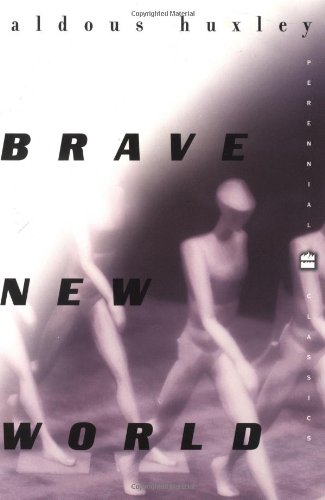
“Bokanovsky’s Process is one of the major instruments of social stability.”
A parallel to modern day capitalism: poverty is synthetically maintained to allow the rich to stay where they are.
 1
1Post from the Brave New World forum
“Bokanovsky’s Process is one of the major instruments of social stability.”
A parallel to modern day capitalism: poverty is synthetically maintained to allow the rich to stay where they are.
1Post from the Brave New World forum
“Les utopies apparaissent comme bien plus réalisables qu'on ne le croyait autrefois. Et nous nous trouvons actuellement devant une question bien autrement angoissante: Comment éviter leur realisation définitive? Les utopies sont réalisables. La vie marche vers les utopies. Et peut-être un siècle nouveau com- mence-t-il, un siècle où les intellectuels et la classe cultivée réveront aux moyens d'éviter les utopies et de retourner à une société non utopique, moins "parfaite" et plus libre.” — Nicolas Berdiaeff
The word “utopia” is a term coined by Sir Thomas More in his samely-titled satirical essay “Utopia” a conversation between two people about this supposed perfect world. The word is a mix of the ancient Greek “ou,” ‘not,’ and “topos,” ‘place,’ thusly becoming “not a place.” The theme of utopia often explores, what is presented to readers, a perfect place. Rather than highlighting the perfection of that utopia, it provides a stark juxtaposition to our modern time.
0crystal.jane started reading...
Brave New World
Aldous Huxley
0crystal.jane finished reading and left a rating...
 0
0crystal.jane paused reading...

Fahrenheit 451
Ray Bradbury
0crystal.jane completed their yearly reading goal of 12 books!
crystal.jane's 2025 Reading Challenge


![흑막 용을 키우게 되었다 1 [Heugmag Yong-eul Kiuge Dweeossda 1] (I Raised A Black Dragon [Novel], #1)](https://images-na.ssl-images-amazon.com/images/S/compressed.photo.goodreads.com/books/1587569006i/53244811.jpg) 0
0crystal.jane set their yearly reading goal to 12
crystal.jane's 2025 Reading Challenge
0crystal.jane DNF'd a book

The Maid's Secret (Molly the Maid, #3)
Nita Prose
0crystal.jane DNF'd a book
The Night Ends with Fire (The Night Ends with Fire, #1)
K.X. Song
0crystal.jane commented on a post
“It was a pleasure to burn.” Such a short opening sentence with an enormous magnitude! Bradbury is meticulous in writing this in the perspective of Montag, who is part of the 451 task force in burning books. Through his perspective, he creates the associations of burning books with power, control, dominance, destruction, something that these book burners, including Montag, internally crave (i.e., a binary of those with power vs without power).
But, these desires, and such a rhetoric, is only a tact to control those people (often with a superiority/inferior complex and/or lack of critical thinking). Thus, the only people truly in power are the ones pushing the book burning from above, while everyone else, including the book burners, is being controlled.
2Post from the Three Days in June forum
I’m not used to reading more modern contemporary works like these!
0
crystal.jane started reading...
Three Days in June
Anne Tyler
0Post from the Fahrenheit 451 forum
“It was a pleasure to burn.” Such a short opening sentence with an enormous magnitude! Bradbury is meticulous in writing this in the perspective of Montag, who is part of the 451 task force in burning books. Through his perspective, he creates the associations of burning books with power, control, dominance, destruction, something that these book burners, including Montag, internally crave (i.e., a binary of those with power vs without power).
But, these desires, and such a rhetoric, is only a tact to control those people (often with a superiority/inferior complex and/or lack of critical thinking). Thus, the only people truly in power are the ones pushing the book burning from above, while everyone else, including the book burners, is being controlled.
2crystal.jane commented on a post
Hugh Hefner (Playboy?!) was the first to publish Fahrenheit 451!!
3
© 2025 Pagebound