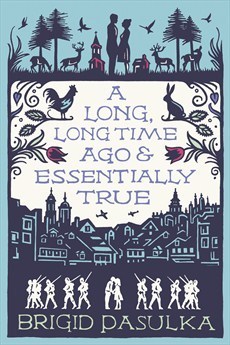
I haven't figured out all of the stories the women come from, but I'm curious... Are all of these fairytales German and/or based on the Grimm's fairy tales? Because I have two theories for Will: 1) Will is also from a fairy tale and wants to help others like him, or 2) He is a reference to the Grimm brothers, or another fairy tale collector.
If it's number 1, I don't have a guess of who he could be. I don't even know a fairy tale where the man is a protagonist or isn't a villain. Maybe he is a background or unnamed character? Unless Will's story is a gender swap or general twisty twist.
If the second, I think that's incredibly clever. I think even one of the Grimm brothers is named William (could be wrong). Maybe by having this group therapy Will is helping to rewrite or reexamine their stories, like many literary analysis and retellings do.
Anyways, let me know your thoughts about Will! No future hints or answers, please.
I think this is exactly it. Anna has been a part of high society her whole life, so she cannot give that up. But she also can't give up her first real and passionate love. Clearly, these two wants can't happen because of social norms. Giving up on love keeps her in a loveless marriage with someone she cant relate to and respect, and giving up on society makes her an outcast in all her spheres. She would never be allowed in again. And potentially lead to a poorer life. Being indecisive - and how to survive this - is Anna's arc, and part of how the overall plot of the novel moves during the times when it feels like she might finally decide. I also think it's interesting (yay, it's always a man's world) that for the most part, Oblonsky and Vronsky can have both worlds. It might be awkward and they may need to wait things out, but it seems like they can still move around in society, work and attend parties and the opera, etc. They can be out in public when Anna has to debate if she can even walk down a street.
I'm having trouble with Anna's motivations. I'm having a hard time understanding her decisions and her seemingly contradictory thoughts. She left her husband and child for Vronsky, willingly, and knowing what it would do to her son and herself but doesn't want a divorce even though Karenin gave his consent, Vronsky wants it; as he talks of marrying her, and some of her friends (specifically Betsy) are expecting it but Anna still refuses. Meaning not only can she not marry Vronsky but also it prevents Karenin from remarrying as well, if he ever decides to.
What does she want? I genuinely don't understand her thoughts. I know that "times were different" and divorce is complicated especially back then, and I won't claim to understand or be an expert in Russian society and class systems but she just seems so contradictory. Is that part of her character arc? To provide confusion? Totally fine if that's the case. I'd love to know what others think.
She's driving me batty!
sillybilly commented...
I think this is exactly it. Anna has been a part of high society her whole life, so she cannot give that up. But she also can't give up her first real and passionate love. Clearly, these two wants can't happen because of social norms. Giving up on love keeps her in a loveless marriage with someone she cant relate to and respect, and giving up on society makes her an outcast in all her spheres. She would never be allowed in again. And potentially lead to a poorer life. Being indecisive - and how to survive this - is Anna's arc, and part of how the overall plot of the novel moves during the times when it feels like she might finally decide. I also think it's interesting (yay, it's always a man's world) that for the most part, Oblonsky and Vronsky can have both worlds. It might be awkward and they may need to wait things out, but it seems like they can still move around in society, work and attend parties and the opera, etc. They can be out in public when Anna has to debate if she can even walk down a street.