
OhMyDio
🎄🍓🧑🎄Merry Berry 😍Beauty-Besotted 🍄Florafluencer 🛠️Reclaiming Luddite 🚶♀️Striving for Radical Softness ✂️Dismantling My Entire Critical Apparatus 🌲🧚🥐Just A Curved Hunk of Bread🥐🧚🌲
99133 points








October 2026





3.88 average · 1139 reviews
Click a segment to filter
If ever there was a book that was worth the effort it requires, it's this one.
I first tried to read this in 2023 as my bedtime ebook read. I couldn't settle into it and eventually DNF'd with the intention to return because trying to read this at sleepy time was just not possible. I tried again earlier this year with audiobook, but that also didn't work for me - while the audiobook narrator was doing a great job I just couldn't track the nuances of what was going on. I decided to purchase a copy, and finally - the third time was the charm. With paperback in hand I finally settled in and enjoyed the ride more than I think I'll be able to articulate.
The Spear Cuts Through Water is a tremendous work of art. Jimenez asks you to trust him and I am ecstatic to report that doing so pays off in spades. This tale is non-linear, generational, and sweeping - while also being tender, gentle, intimate, and emotional. Our protagonists are layered and complex, the world vivid and imaginative, and the stakes as high as they can be. All of the moving and competing priorities work in tandem to establish a rich story that has something for everyone. Action? We've got oodles. Social commentary? Abounding. Love? Blossoming and endearingly sweet. Fantasy? We've got gods, bestowed powers, ancient beings, fate being challenged, and more!
I can't recommend this enough. It immediately joined my My Taste section. I will be thinking about this for a long long time and heartily recommending it everywhere I can!

"I don't know where we will be in the future, but my journeys through the Amazon have taught me to embrace uncertainty with calm, control, and order, just as Sergio once told me; to surrender the ego, take courage, and accept that not all is doomed. The journey hasn't been easy, and there is still so much left to do as my quest elevate indigenous knowledge within modern science goes on. ... I dream that these pages invite us to explore a different mindset, an indigenous cosmovision that will inspire us to forge a future that we can be proud of - a reality I have already found in the deepest corners of the jungle. The ancient wisdom of our ancestors teaches us that nature and people are a singular, intertwined entity, and through reconnection, there is a restored joy and balance."
Wow wow wow, what an incredible book! Dr. Espinoza does an great job of introducing us to the Amazon. While she doesn't go into too much depth on any one topic, the consistent through line is how important Indigenous wisdom is. With heaping portions of respect and reverence she walks us through the local flora and fauna, the customs of various Amazonian tribes, her personal connection to these places and peoples, and weaves in where science meets spiritual. I loved this.
All but one chapter open with a profile of an Amazonian plant, detailing it's common and indigenous names, common/medicinal/spiritual uses, and some basic scientific facts. The one chapter that doesn't feature a plant instead details the primary subject of the chapter, the stingless bee. For the most part these plants then feature prominently, or importantly, in the chapters content, but I did start to feel that ebb away as we got towards the end. Not a big deal, but it was noticeable.
Reading this inspired a lot of questions in me and I sincerely hope Dr. Espinoza continues to write more - this was easy to read and follow, gripping and touching - and also harrowing as she recounts several stories of danger. Sprinkled throughout is also discussion of supernatural forces, with a small sampling of Amazonian myths and legends and folklore. This is also a mild/medium memoir - the Amazon is the focus and the star, but she shares a lot of stories from her childhood, and the whole book is framed through her expeditions into the jungle. She also shares her experiences going through some rituals involving mind altering substances, which felt very personal to me!
I guess, basically, my biggest complaint is that the book is so interesting I just wanted her to keep talking about the things she was bringing up, instead of introducing it, lightly discussing, and then moving on. It seems like the goal of the book is to get you hooked on how cool and important the Amazon is, so it makes sense that she stays surface level most of the time, and boyhowdy did it work - but I definitely crave some deeper dives into almost everything she brought up. 😅
Small CW warnings - there is an encounter with boiling mud early on that leads to pretty serious injury that is described in medium detail, and there is a recounting of a jaguar being killed in self defense, again in moderate detail. (it is not a celebratory event, at all, to be clear - everyone is gutted that it happened.)
Definitely a high recommendation from me.

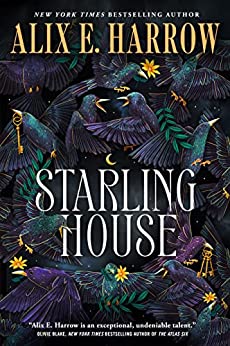
2024 Update: I reread this and it totally held up. I was a bit more annoyed by the adults lying about critical information, and in turn the kids lying about critical information, but overall this is an interesting take on modern vampirism and I'm excited that books 2 and 3 are actually available now. Our main cast of characters is also just so fun and sweet; I love these kids.
One thing that stood out to me more this time that I did not think about at all the first time, is how very American-centric this story is. That's not necessarily a fault, because we're experiencing this through the understanding of a 12 year old and we all know how great public education in America is regarding what happens elsewhere; but I spent a lot of time wondering why everyone was so sure vampires were gone when they were a global phenomenon. We don't get much information one way or another, but it was definitely on my radar that this whole societal move away from precautions felt precarious at best.


I dunno about you all, but when I see someone earn this badge I think about it like they've been selected to adopt their very own lil venus flytrap monster! And then I can't help but think about her like she's a pokemon, and when you've fed and trained her enough she'll evolve into her next form (silver, gold, etc.) BUT THEN I'm like, wait! What's her name??? 😍
So, what are you naming her?? (or what will you name her if you're still working toward the honor of taking one home yourself!)
For my sweet angel baby I'm tempted to be nerdy and name her Diona in honor of the genus name (Dionaea) or maybe honor the legacy and call her Audrey? But that feels too cliche. I'm totally on the fence. What're you picking? 👀

Super excited to share that Chonkosaurus has a whole article written about him, which you can read here: link.
In case you don't want to click through, here's a pic:
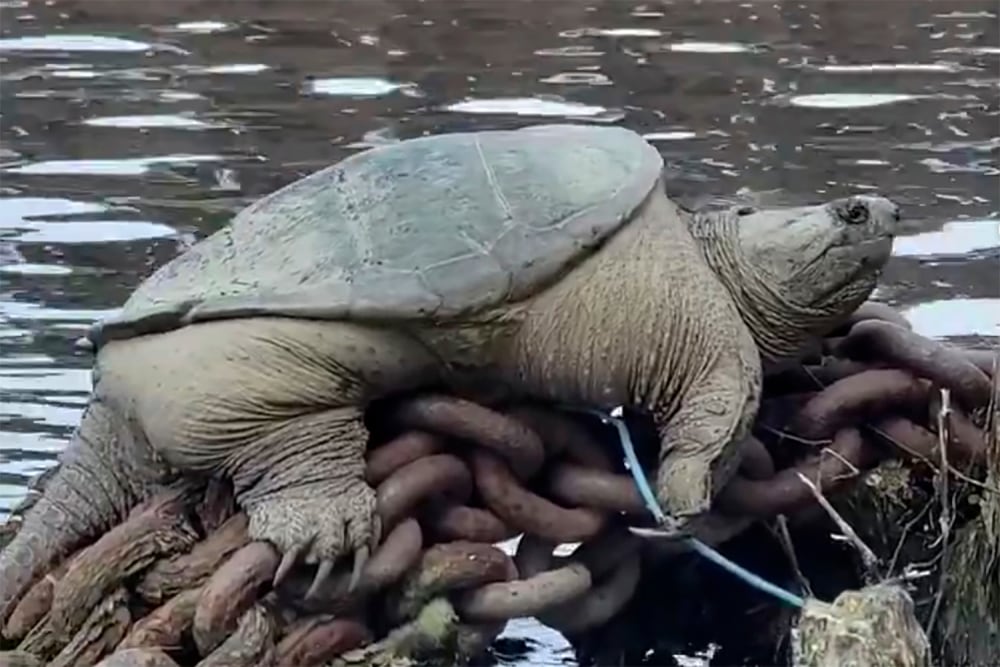
However, I do encourage you to click through because there's a video Santore took of Chonkosaurus, which includes him yelling out,
"You look good! I'm really proud of you! You been eatin' healthy? You ever heard of "liquid salad?" 😂😂😂

The Sound of a Wild Snail Eating
Elisabeth Tova Bailey
"With only 32 adult teeth, which had to last the rest of my life, I found myself experiencing tooth envy toward my gastropod companion. It seemed far more sensible to belong to a species that had evolved natural tooth replacement than to belong to one that had developed the dental profession."
first of all, hilarious commentary on the dental industry, second - snails have several thousand teeth!! in 8 rows!! pointing inward!! its so delightfully weird to me that they have teeth.

Do you keep yours the same or do you change it based on your mood/current genre kick/ just cause you feel like it?
I like so many of the avatars, though we need more audiobook ones IMHO; so I tend to mix it up.
OhMyDio commented...
ill be speed running a champion badge in December 2026, if anyone wants to join me!!
i should have put my picks in this comment to begin with, editing to add the five i will be doing: the christmas catch kiss her once for me make the season bright mistletoe and mishigas the most wonderful crime of the year
would love for you to join me even if you chose a different five! I'll be starting either the weekend after thanksgiving or on december 1st, depending on how library holds/the seasonal cheer land

OhMyDio commented...
For my own joy I'm going to update this every month with stats I collect via a personal spreadsheet. Get ready to get nerdy. 🤓📊📈
YTD, Jan - May Books finished: 115 Total # of pages: 15,542 Total # of hours: 490 usd$$ saved with library: $2,000.40
Misc Stats: Percent of reading via Library: 93% Percent of authors were new to me: 77% Percent were non-American: 43% Percent BIPOC: 54% Percent Women, Trans, and Non-binary: 69% Read with my eyes: 51% Read with my ears: 49% New Badges Earned: 28 Badges Leveled Up: 23
Notes: • This comment will be edited with the YTD values, with a new comment for each month's specific stats • Books are added for the month they are finished in, regardless of how much was read previously • I track these things because I think it's fun. It also prompts me to be intentional with my reading. • My spreadsheet tracks a lot more, but I'm still building out the formulas to calculate that information, so what is included in these will evolve over time.
last updated 6/18/26



© 2025 Pagebound
OhMyDio commented...
i am the croissant, the croissant is me