
mythos
swiss 🇨🇭 classics and history undergrad ❤️ classics, non-fic, fantasy, queer lit 🏳️🌈 english, german, french. chronic book hopper📚 discord @myraculously
4894 points








3.77 average · 128 reviews
Click a segment to filter

I don’t even know how I’m supposed to review this book. How are you supposed to describe the experience of reading Of Mice and Men for the first time?
The writing is incredible, the dialogue amazing. It feels real. The symbolism, the descriptions, the foreshadowing, nothing is without meaning. You know exactly how it’s going to end and you can’t do anything about it, you just have to sit and stare while capitalism takes its course.
This book never stops having something the say. Capitalism and the mistreatment and dehumanisation of the marginalised (disabled people, POC, women, the working-class, etc.). how it robs you of all hope, though having hope is the only way you can live a life other than fucking, drinking, and working. How it isolates everyone from each other (few men travel in pairs), how emotional bonds are disregarded in favour of utility and practicality. How they are robbed of their agency. How within the marginalised groups there is a hierarchy and how they can be complicit in perpetuating the power of the rich, able, white men. How this complicity in turn gives them a feeling of power in an attempt to raise themselves out of their powerlessness, to establish control. How solidarity gives hope and power to free yourself from the machine. How a lack of understanding and empathy for one another will eventually just lead to everyone’s downfall. The futility of the “American Dream” and the impossibility of a free life under capitalism.
It’s so much, so so much, but it’s so important. It’s so horrible and heartbreaking and cruel, but it’s so real. God.




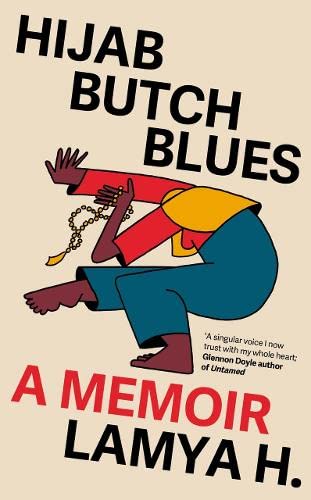
Hijab Butch Blues
Lamya H.
But what I've been noticing about people I haven't invited into my queerness is that it introduces a barrier between us. What do I talk to these people about? How do I share feelings and intimacies without revealing this huge part of myself? Who am I without this queerness that now pervades my life, my politics, my everything?
I couldn't have put it better myself. Queerness isn't superficial, something without which you would still be the same person, something that only affects your sexual preferences or your gender identity. Queerness often deeply affects one in so many ways, influencing one's taste in music, films, books, art, one's politics, fears, joys, even things such as one's speech and mannerisms. There are so many times where I can't tell someone what book I'm reading or what movies I've recently watched because I'm not out to them, and I can definitely feel that there is a wall between us because I can't share even these simple every-day things with them. Queerness isn't just one small part of one's identity, it truly permeates someone's entire identity, and not being able to share it makes it incredibly hard to have authentic relationships. I truly wish straight people would understand this more instead of being like "Ugh why do you make being gay your entire personality 🙄"

I'm thinking of changing my username to include one nickname but if I translate it to English is weird. The nickname is in Portuguese, Pintainho, but translated literally means Chick, an animal I know, but the story behind is funny and I find it cute. Also thinking about using my real name. It's not I don't like it, I just normally prefer using Minnie. Anyway, I wanted to ask what's the meaning behind your username? And if you had to change it to something different but also meaningful what would it be? Edit: Changed from mimilovesreading to pintainho.reads 😌

© 2025 Pagebound
mythos commented...
i wanted to combine an element of my real name ("my-") and my love for classics, so "mythos" was an obvious choice for me (it's not available on any older platforms though 😭)