avatar

ranaofvoles

(rana - they/them) kindred spirits are not so scarce as i used to think. it’s splendid to find out there are so many of them in the world.

7399 points

0% overlap
Queer Horror
Intro to Poetry
Poetic Stories
My Taste
Anne of Green Gables
The Salt Grows Heavy
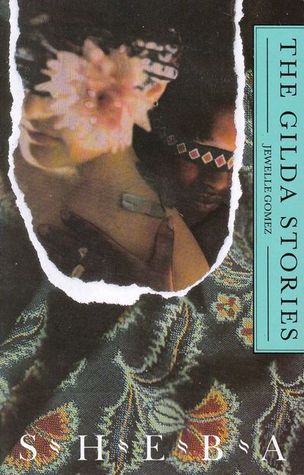
The Gilda Stories
White Tears/Brown Scars: How White Feminism Betrays Women of Color
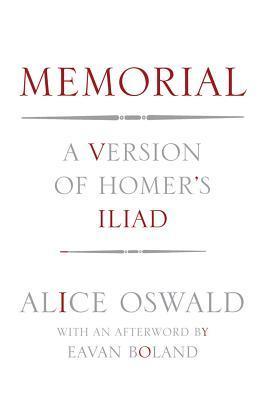
Memorial: A Version of Homer's Iliad
Reading...
Eugene Onegin
30%
Six of Crows
31%
Reservoir Bitches
15%
Caucasia
32%
Book and Dagger: How Scholars and Librarians Became the Unlikely Spies of World War II
5%
Dracula
17%
Refusing Compulsory Sexuality: A Black Asexual Lens on Our Sex-Obsessed Culture
8%
The Long Walk
20%
avatar

ranaofvoles commented...

5h

  • Thoughts from 3%
    30
    20
  • avatar

    ranaofvoles commented...

    3d

    this is in the book, the specific line was "Do as you're told, and this will be over, ja?"

    that's just like. lemme send you a vm on discord cause it just doesn't work for dutch LOL

    there's a lot of dutch influences on the book since apparently ketterdam is inspired by amsterdam (ketterdam doesn't make sense as a name as i've said, cause there's not a river ketter in SoC for a dam to have been built??)

    and it's killing me because it's so poorly researched.. she has this problem for most cultures as far as i've heard

    avatar

    ranaofvoles commented...

    4d

    every time i read a little i roll my eyes. a dutch person wouldnt interject their english sentence w something like ‘ja,’ that’s decidedly a german trait (at the very least i’ve met germans and not dutch people who’ve done that). in translation it is not just important to translate, but to understand why and if those words would be used.

    avatar

    ranaofvoles commented...

    6d

    omg yay!!

    avatar

    amman started reading...

    1w

    The Hundred Years' War on Palestine: A History of Settler-Colonial Conquest and Resistance, 1917-2017

    The Hundred Years' War on Palestine: A History of Settler-Colonial Conquest and Resistance, 1917-2017

    Rashid Khalidi

    A landmark history of one hundred years of war waged against the Palestinians from the foremost US historian of the Middle East, told through pivotal events and family history In 1899, Yusuf Diya al-Khalidi, mayor of Jerusalem, alarmed by the Zionist call to create a Jewish national home in Palestine, wrote a letter aimed at Theodore Herzl: the country had an indigenous people who would not easily accept their own displacement. He warned of the perils ahead, ending his note, “in the name of God, let Palestine be left alone.” Thus Rashid Khalidi, al-Khalidi’s great-great-nephew, begins this sweeping history, the first general account of the conflict told from an explicitly Palestinian perspective. Drawing on a wealth of untapped archival materials and the reports of generations of family members—mayors, judges, scholars, diplomats, and journalists—The Hundred Years' War on Palestine upends accepted interpretations of the conflict, which tend, at best, to describe a tragic clash between two peoples with claims to the same territory. Instead, Khalidi traces a hundred years of colonial war on the Palestinians, waged first by the Zionist movement and then Israel, but backed by Britain and the United States, the great powers of the age. He highlights the key episodes in this colonial campaign, from the 1917 Balfour Declaration to the destruction of Palestine in 1948, from Israel’s 1982 invasion of Lebanon to the endless and futile peace process. Original, authoritative, and important, The Hundred Years' War on Palestine is not a chronicle of victimization, nor does it whitewash the mistakes of Palestinian leaders or deny the emergence of national movements on both sides. In reevaluating the forces arrayed against the Palestinians, it offers an illuminating new view of a conflict that continues to this day.

    4
    avatar

    ranaofvoles started reading...

    1w

    Refusing Compulsory Sexuality: A Black Asexual Lens on Our Sex-Obsessed Culture

    Refusing Compulsory Sexuality: A Black Asexual Lens on Our Sex-Obsessed Culture

    Sherronda J. Brown

    For readers of Ace and Belly of the Beast: A Black queer feminist exploration of asexuality—and an incisive interrogation of the sex-obsessed culture that invisibilizes and ignores asexual and A-spec identity. Everything you know about sex and asexuality is (probably) wrong. The notion that everyone wants sex—and that we all have to have it—is false. It's intertwined with our ideas about capitalism, race, gender, and queerness. And it impacts the most marginalized among us. For asexual folks, it means that ace and A-spec identity is often defined by a queerness that's not queer enough, seen through a lens of perceived lack of pleasure, connection, joy, maturity, and even humanity. In this exploration of what it means to be Black and asexual in America today, Sherronda J. Brown offers new perspectives on asexuality. She takes an incisive look at how anti-Blackness, white supremacy, patriarchy, heteronormativity, and capitalism enact harm against asexual people, contextualizing acephobia within a racial framework in the first book of its kind. Brown advocates for the "A" in LGBTQIA+, affirming that to be asexual is to be queer—despite the gatekeeping and denial that often says otherwise. With chapters on desire, f*ckability, utility, refusal, and possibilities, Refusing Compulsory Sexuality discusses topics of deep relevance to ace and a-spec communities. It centers the Black asexual experience—and demands visibility in a world that pathologizes and denies asexuality, denigrates queerness, and specifically sexualizes Black people. A necessary and unapologetic reclamation, Refusing Compulsory Sexuality is smart, timely, and an essential read for asexuals, aromantics, queer readers, and anyone looking to better understand sexual politics in America.

    0
    avatar

    ranaofvoles commented...

    1w

    this is so good god bless cassandra khaw for getting me out of my helen of troy 1993 induced reading slump

    avatar

    ranaofvoles commented...

    1w

    omg this one has been catching my eye cant wait to hear your thoughts

    avatar

    amman started reading...

    1w

    The Hundred Years' War on Palestine: A History of Settler-Colonial Conquest and Resistance, 1917-2017

    The Hundred Years' War on Palestine: A History of Settler-Colonial Conquest and Resistance, 1917-2017

    Rashid Khalidi

    A landmark history of one hundred years of war waged against the Palestinians from the foremost US historian of the Middle East, told through pivotal events and family history In 1899, Yusuf Diya al-Khalidi, mayor of Jerusalem, alarmed by the Zionist call to create a Jewish national home in Palestine, wrote a letter aimed at Theodore Herzl: the country had an indigenous people who would not easily accept their own displacement. He warned of the perils ahead, ending his note, “in the name of God, let Palestine be left alone.” Thus Rashid Khalidi, al-Khalidi’s great-great-nephew, begins this sweeping history, the first general account of the conflict told from an explicitly Palestinian perspective. Drawing on a wealth of untapped archival materials and the reports of generations of family members—mayors, judges, scholars, diplomats, and journalists—The Hundred Years' War on Palestine upends accepted interpretations of the conflict, which tend, at best, to describe a tragic clash between two peoples with claims to the same territory. Instead, Khalidi traces a hundred years of colonial war on the Palestinians, waged first by the Zionist movement and then Israel, but backed by Britain and the United States, the great powers of the age. He highlights the key episodes in this colonial campaign, from the 1917 Balfour Declaration to the destruction of Palestine in 1948, from Israel’s 1982 invasion of Lebanon to the endless and futile peace process. Original, authoritative, and important, The Hundred Years' War on Palestine is not a chronicle of victimization, nor does it whitewash the mistakes of Palestinian leaders or deny the emergence of national movements on both sides. In reevaluating the forces arrayed against the Palestinians, it offers an illuminating new view of a conflict that continues to this day.

    4