
arananas
Here to discuss books with other people who love reading ✌️ Main genres are horror 🖤 & non-fiction but I'll give any interesting book a try
1843 points







arananas commented on a post from the Pagebound Club forum
Just a library card check, remember that just getting a library card lets your state and county know that your library is necessary and helps them get funding. Also a reminder that there all kinds of creative spaces and language learning apps you can access with your card💞. It’s free so why not!
 76
76arananas commented on a post from the Pagebound Club forum
For me 3.6-3.4 stars are the limit. Anything below that I refuse to read. I'm probably being picky but I just don't want to end up in a reading slump. What about you guys?
40arananas commented on arananas's update
arananas started reading...
Pride and Prejudice
Jane Austen
1arananas started reading...
Pride and Prejudice
Jane Austen
1arananas finished a book

Mutual Aid: Building Solidarity in This Crisis (And the Next)
Dean Spade
0arananas commented on a post

"Al principio creí que eras un héroe. Luego, un cobarde. Al cabo de los años, un egoísta. Finalmente, sólo eras mi padre // At the start, I thought you were a hero. Then, a coward. As years passed, a selfish man. In the end, you were just my father"
Yeah make me cry why don't you 🥀
2arananas commented on a post from the Pagebound Club forum
Just got done reading our wives under the sea and that book had me in tears at the ending! Love lit fic but would love to hear your favorite audiobooks ❤️
9arananas commented on Forchetta's update

arananas wrote a review...
This was creepier than I expected and I quite enjoyed it! It's a short and easy read, and I liked it more than Poe's original. There were even a couple of scenes that freaked me out a little. When I went to sleep yesterday I kept thinking the sound of melting snow in our vents sounded like big crawling bugs, so yeah 😂 There was one small thing about the ending that didn't 100% convince me, but it was a fun, spooky read and I'll be checking out more by the author.
0arananas finished a book
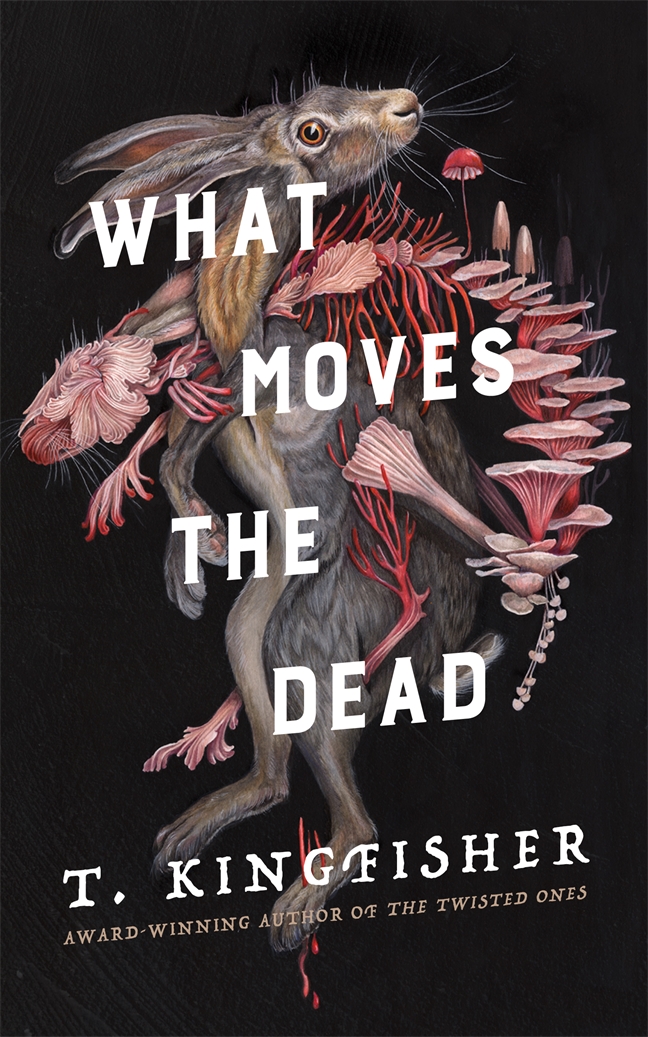
What Moves the Dead (Sworn Soldier, #1)
T. Kingfisher
0arananas commented on a post from the Pagebound Club forum
When I first thought to pose this question, I was thinking about that ethereal, dream-like, almost unachievable love (off the top of my head, Aragorn & Arwen in the books, but even the way it’s depicted in the Peter Jackson movies). However! I want to expand it to just your plain favourite, from any genre.
Dream-like or more grounded, tragic or joyous, fleeting or eternal. I’ll even accept delusional or imagined love, because I secretly love reading about that kind even if it’s not exactly what we think of when we think of love.
Tell me tell me!
29arananas commented on a post from the Pagebound Club forum
Time to choose your favorite child.
Update: Creating list of your answers, currently at 100 titles📚
257arananas commented on a post from the Pagebound Club forum
I just started reading T. Kingfisher’s A House With Good Bones. I have been in a little mini reading slump because of persistent migraines this last week. I immediately went to a Kingfisher novel when the migraines stopped and it made me realize that T. Kingfisher has become my unofficial reading slump buster. Her books almost always capture my attention. She has a remarkable skill of daring you not to keep reading. It might be characters or settings or description. Her words jump off the page and grab a hold of me pulling me onto whatever weird rollercoaster ride she is taking us on. It is marvelous. Her books are also the perfect size for a reading slump. They go from fairly short to average so you can pick what your brain is ready to deal with.
What I am interested in is if any of my Pagebound community has an author or book that is their unofficial slump buster? What makes the book or author your slump buster?
26arananas commented on a post from the Pagebound Club forum
I had to go back into mine and update a few days where I read but forgot to log, and that brought my streak up to 59! I love how the colour of the flame changes as you log more days!
124arananas commented on Literary.leveret's review of Thyme Travellers: An Anthology of Palestinian Speculative Fiction

This collection is fantastic, there are so many stories I tabbed and want to revisit. But a quick list of the stories that stood out the most to me (such hard choices):
• “Down Under” by Jumaana Abdu • “Generation Chip” by Nadia Afifi • “In the Future, We can Go Back Home” by Sara Solara • “Gaza Luna” by Samah Serour Fadil • “The Centre of the Universe” by Nadia Shammas
5Post from the What Moves the Dead (Sworn Soldier, #1) forum
arananas commented on a post