
heathersdesk
Lover of fantasy, sci-fi, history, cats, Mormonism, Shakespeare, and possessing a chaos of knowledge on nearly every subject. Mixed race. Not sorry. She/Her 🇺🇲
17147 points





heathersdesk TBR'd a book

Andromeda
E.S. McLeod
 0
0heathersdesk TBR'd a book

Futureland: Nine Stories of an Imminent World
Walter Mosley
0heathersdesk commented on a post
Because I just picture Cousin Alver's hands like
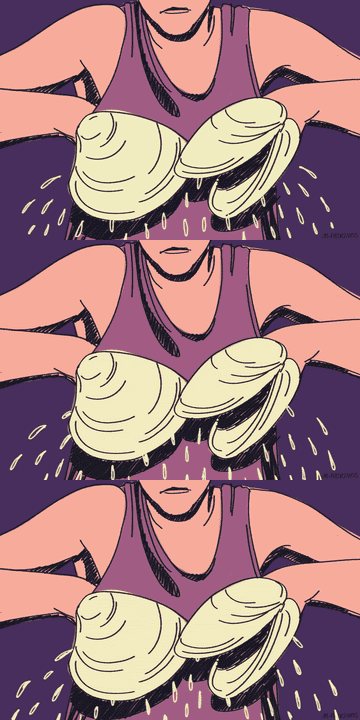
"I WILL NOT HAVE SOMEONE WITH CLAMMY HANDS WIELD MY SWORD"
6heathersdesk commented on a post
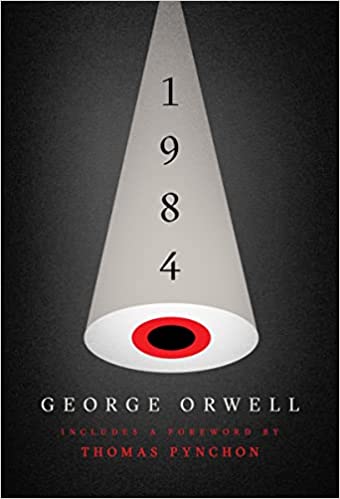
Y’all is life currently imitating art, or is fascism that predictable 😅😅😅
7heathersdesk commented on a post
heathersdesk commented on a post from the Pagebound Club forum
Just a bit of fun! I sometimes forget to select the user tab on phone, and on web sometimes I search for people to go and see what cool things they've been reading but I get a bit lazy
Because of this, I've accidentally landed on Jimmy Kimmels's The Serious Goose way too many times to count when going to check out what @SeriousGoose is up to. Or I decide to go see @daydreamday and end up staring at Daydream (Maple Hills, #3) by Hannah Grace wondering why I clicked on it without thinking 😆 There are other people like @yourartistfriend where I have never been lost though!
SO when you search your name (or username) under the book search, does a book come up? What is it?
Mine is Avalon by Anya Seton - which is one of many books with 'Avalon' in the title. But I still haven't read it.
P.S. If you haven't checked out @ayzrules's Pagebound User Book Cameo list, its fun and semi-related to this.
156heathersdesk commented on heathersdesk's update

heathersdesk TBR'd a book

Witch Queen Rising
Savannah Stephens
0heathersdesk commented on a List
We Hate Jason Fan Club
If there's a fan club for people who hate Jason of the Argonauts from Greek mythology, I'm the president. If there's one person alive who hates Jason, it's me. If no one alive hates Jason, it's because I'm dead.
5


heathersdesk commented on a List
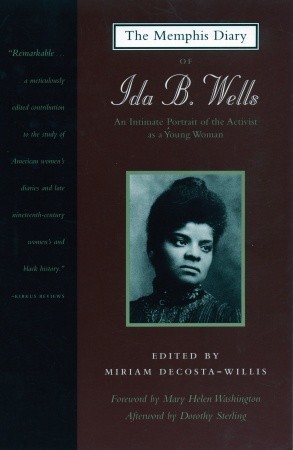
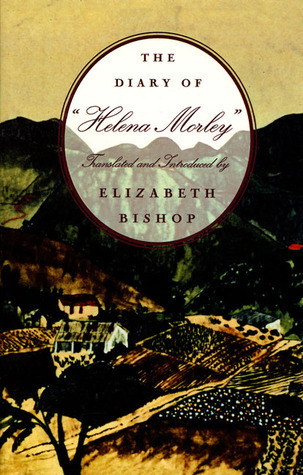
Dear Diary: Journals from the Black Diaspora
Reading diaries that aren't yours, in celebration of the diaries that are yours. This list covers diaries from black diarists around the world. Recommendations welcome.
4


heathersdesk commented on heathersdesk's update
heathersdesk wrote a review...
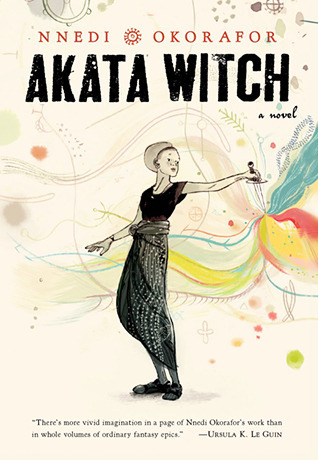
A magic system lacking connection to the larger world within the story compels a narrative that lacks depth and resonance as a result.
I thoroughly enjoyed the characters and wanted to see them succeed, and many of the decisions they make are true to who they are as teenagers. However, the adults lack any kind of logic or coherence from proper character development. Why are these adults concerned with nothing but corporal punishment? What are their motivations outside of beating and punishing children? I couldn't tell you. They're keeping secrets, they're making decisions that don't make any sense, and they're leaving to children the problems they should be solving. And while that is true to life, it makes for a story that isn't as enjoyable to read as it should be. Many children at 13 begin to develop the notion that all the adults are out to get them, which is authentic and real as a character choice for them. Adult motivations should be more complex than that, and that goes completely unexplored here. But rather than something like Lemony Snicket, where adults are lambasted in satire for not acting like real people, this just feels a bit sloppy and incomplete. We had page count for a tedious soccer game, but we didn't have time to get to know any of these adults on a deeper level?
This is a book for children though. Why does that matter? Because the adults and their desires make up the scaffolding of the world as it is to these children. Why are they like this? What choices did they make that have made them this way? The only adult character I truly have a sense of in that way is Sunny's father, and he is entirely unsympathetic because he needed more development than what he got when he acts the way he does.
This also affects the delivery of the magic system. The ones responsible for explaining the magic system are the adults, but they don't explain anything! Everything is a secret, no one can ask any questions, and the only sources of knowledge are half-baked answers from other teenagers. It feels more like a cult or a gang than a well-developed magic system.
There are so many promising elements here. The cultural tension between the African born in Nigeria vs African Americans and the colorism that Sunny experiences as an albino person are all elements I've never seen explored before in a fantasy novel. I do care about Sunny and want to know what happens to her. But I need more from the world around her than the paper doll characters I'm dealing with. It's making me feel conflicted about continuing. I probably will to see if things improve, especially since my impression from the titles is that Sunny and everyone around her will age up from here. Maybe as she becomes more aware, I will be too as a reader. And if that doesn't happen, I'll just chalk it up to this one being for the kids only. And that's okay. There are many things here I would've loved as a young reader, and not every book for young readers translates well to adults because they're not for us.
0heathersdesk finished a book
Akata Witch (The Nsibidi Scripts, #1)
Nnedi Okorafor
0Post from the Akata Witch (The Nsibidi Scripts, #1) forum
heathersdesk commented on a post from the Pagebound Club forum
This isn't going to come out as well as I want it to, but I'm going to do my best.
It has come to my attention that there is some confusion about my Black Fantasy, Sci-Fi, and Speculative Fiction list. Apparently, there was an understanding that only Black authors are included in that list, that I was specifically curating the list for that purpose, and some dismay when it turned out this wasn't the case. I understand that this is a conversation that could take place on the forum for that list. But because it's one of the most popular lists on Pagebound and what I have to say applies outside of the readers on that list, I wanted to open this conversation up to the wider community.
Black people are not a monolith. They exist in communities all over the world. Sometimes they're in community primarily with other Black African descendants, whether in diaspora or not. Sometimes they're in communities where they're heavily segregated, even within the Black community itself. And sometimes, racial admixture has been going on for so long, no one is "purely" Black or "just Black" anymore, because they're not purely anything else either! (Yes, race is a human construct. We're talking about how that construct is understood, not whether or not any of this has merit.)
Some examples of what I mean:
In South Africa, there are both Black and Coloured designations, with Coloured people being a distinct group of mixed race people. Those terms are not used interchangeably. These racial designations developed as part of racial attitudes and legal designations in South Africa, which are completely distinct from how racial designations developed here in the United States.
As a second example: Brazil. Every family who has been in Brazil long enough becomes mixed race eventually. Under the contructs of race in the United States, most folks in Brazil would be considered Black, very few of them would be considered White despite their lighter skin color. Many light skinned Brazilians come to the United States and are treated as Black for the first time in their lives. How do I know? Because I lived in Brazil for a year. I met many Brazilians who ended up moving to the US and having that experience. And for me, being in Brazil was the first time I'd ever seen myself being the default as a mixed race person. Brazil was the only place I've ever lived where I was recognized for exactly who/what I was, and was fully embraced for it anyway. That has never happened for me in the United States, not even in my own family. It completely changed my life.
There are communities of Black people in the United States who mixed heavily with Native tribes and Indigenous communities (note: I use tribes vs. communities meaningfully here because not every indigenous person is a recognized member of a tribe, and tribes don't determine or define indigenous identity). People in these communities may consider themselves to be both Black and Native, or Black and Indigenous. And when we get into the Caribbean (where my family is from) and Latin America, that becomes even more difficult because then there can be a third layer on top of that with "Hispanic" and "Latin" identities. They may identify in a wide variety of ways, all of which are accurate, and Black makes up only a portion of who they are.
I explain that so what I'm going to say next can make sense for exactly how I mean it.
I am not interested in determining and policing who or what a Black author is. What that means changes depending on what community you're talking about, what country you're in, and what culture YOU were raised in. I'm not interested in perpetuating the myth that only people YOU recognize as Black, wherever you live in the world, can write good fantasy, sci-fi, and speculative fiction. I'm not interested in trying to determine for mixed race authors whether they're Black enough to qualify for a list like mine. And I'm not interested in making this determination for others that I am then expected to justify to anyone in a public forum.
What this expectation is asking of me, for all the authors on a list like this one to be Black, is to engage in a globally complex racial parsing of human beings that I personally find very distasteful. I don't want to be responsible for that. I am interested in curating "representations of the Black experience" in fantasy, sci-fi, and speculative fiction. Regardless of how the author got there themselves, they created Black characters and stories in this genre. The vast majority of the books I find are recommended by Black readers who loved them and recommended them to audiences of (primarily) other Black readers.
That is my most important criteria. That is the purpose for which I created the list. It's not for White people who are trying to complete some diversity reading social media challenge, or to assuage their own guilt because of whatever national holiday is compelling them read books by Black authors for a short period of time. It's for Black readers to find books they will (hopefully) love that make them feel seen and valued for exactly who they are. I didn't experience that for the first time until I was an adult and I know how important it is. I know what it does to a person when they don't have that.
If you are interested in elevating Black authors specifically, in whichever genre, I applaud your efforts, especially when you make those efforts yourself instead of expecting someone else to do it for you. It's not a simple thing, especially on a global scale, which you only figure out when you've made the attempt yourself. And what's more, I hope we can also see better now as a community that the goal of increasing readership for Black authors can be accomplished in a lot of different ways, including with book lists whose primary question isn't "What is the racial background of the authors who wrote these books?"
But if you disagree and you want book lists that are specific only to Black authors you recognize, please make your own lists. Open yourself to the criticism and questioning you give to others. And prepare to spend a lot of time Googling author photos and looking at author bios that don't tell you other people's racial backgrounds because, predictably, an author's race is not the first/only thing they want you to know about them.
Thanks, heathersdesk
41Post from the Pagebound Club forum
This isn't going to come out as well as I want it to, but I'm going to do my best.
It has come to my attention that there is some confusion about my Black Fantasy, Sci-Fi, and Speculative Fiction list. Apparently, there was an understanding that only Black authors are included in that list, that I was specifically curating the list for that purpose, and some dismay when it turned out this wasn't the case. I understand that this is a conversation that could take place on the forum for that list. But because it's one of the most popular lists on Pagebound and what I have to say applies outside of the readers on that list, I wanted to open this conversation up to the wider community.
Black people are not a monolith. They exist in communities all over the world. Sometimes they're in community primarily with other Black African descendants, whether in diaspora or not. Sometimes they're in communities where they're heavily segregated, even within the Black community itself. And sometimes, racial admixture has been going on for so long, no one is "purely" Black or "just Black" anymore, because they're not purely anything else either! (Yes, race is a human construct. We're talking about how that construct is understood, not whether or not any of this has merit.)
Some examples of what I mean:
In South Africa, there are both Black and Coloured designations, with Coloured people being a distinct group of mixed race people. Those terms are not used interchangeably. These racial designations developed as part of racial attitudes and legal designations in South Africa, which are completely distinct from how racial designations developed here in the United States.
As a second example: Brazil. Every family who has been in Brazil long enough becomes mixed race eventually. Under the contructs of race in the United States, most folks in Brazil would be considered Black, very few of them would be considered White despite their lighter skin color. Many light skinned Brazilians come to the United States and are treated as Black for the first time in their lives. How do I know? Because I lived in Brazil for a year. I met many Brazilians who ended up moving to the US and having that experience. And for me, being in Brazil was the first time I'd ever seen myself being the default as a mixed race person. Brazil was the only place I've ever lived where I was recognized for exactly who/what I was, and was fully embraced for it anyway. That has never happened for me in the United States, not even in my own family. It completely changed my life.
There are communities of Black people in the United States who mixed heavily with Native tribes and Indigenous communities (note: I use tribes vs. communities meaningfully here because not every indigenous person is a recognized member of a tribe, and tribes don't determine or define indigenous identity). People in these communities may consider themselves to be both Black and Native, or Black and Indigenous. And when we get into the Caribbean (where my family is from) and Latin America, that becomes even more difficult because then there can be a third layer on top of that with "Hispanic" and "Latin" identities. They may identify in a wide variety of ways, all of which are accurate, and Black makes up only a portion of who they are.
I explain that so what I'm going to say next can make sense for exactly how I mean it.
I am not interested in determining and policing who or what a Black author is. What that means changes depending on what community you're talking about, what country you're in, and what culture YOU were raised in. I'm not interested in perpetuating the myth that only people YOU recognize as Black, wherever you live in the world, can write good fantasy, sci-fi, and speculative fiction. I'm not interested in trying to determine for mixed race authors whether they're Black enough to qualify for a list like mine. And I'm not interested in making this determination for others that I am then expected to justify to anyone in a public forum.
What this expectation is asking of me, for all the authors on a list like this one to be Black, is to engage in a globally complex racial parsing of human beings that I personally find very distasteful. I don't want to be responsible for that. I am interested in curating "representations of the Black experience" in fantasy, sci-fi, and speculative fiction. Regardless of how the author got there themselves, they created Black characters and stories in this genre. The vast majority of the books I find are recommended by Black readers who loved them and recommended them to audiences of (primarily) other Black readers.
That is my most important criteria. That is the purpose for which I created the list. It's not for White people who are trying to complete some diversity reading social media challenge, or to assuage their own guilt because of whatever national holiday is compelling them read books by Black authors for a short period of time. It's for Black readers to find books they will (hopefully) love that make them feel seen and valued for exactly who they are. I didn't experience that for the first time until I was an adult and I know how important it is. I know what it does to a person when they don't have that.
If you are interested in elevating Black authors specifically, in whichever genre, I applaud your efforts, especially when you make those efforts yourself instead of expecting someone else to do it for you. It's not a simple thing, especially on a global scale, which you only figure out when you've made the attempt yourself. And what's more, I hope we can also see better now as a community that the goal of increasing readership for Black authors can be accomplished in a lot of different ways, including with book lists whose primary question isn't "What is the racial background of the authors who wrote these books?"
But if you disagree and you want book lists that are specific only to Black authors you recognize, please make your own lists. Open yourself to the criticism and questioning you give to others. And prepare to spend a lot of time Googling author photos and looking at author bios that don't tell you other people's racial backgrounds because, predictably, an author's race is not the first/only thing they want you to know about them.
Thanks, heathersdesk
41heathersdesk commented on a List
The ACAB Library
Laws are threats made by the dominant socio-economic ethnic group in a given nation. It’s just a promise of violence that’s enacted and police are basically an occupying army, you know what I mean? You guys wanna make some bacon?
Created by a surviving family member of a police-sanctioned lynching.
2