
amanda_the_tangerine
26yo citrus, full of GMOs ☆ Proud mother to my beautiful Clara, first name Kobo ☆ 🇻🇪🇪🇸 She/her ☆ litfic/mystery/nonfic/anything violent ☆ "The space between me and me is you. This is a mystery"
14503 points


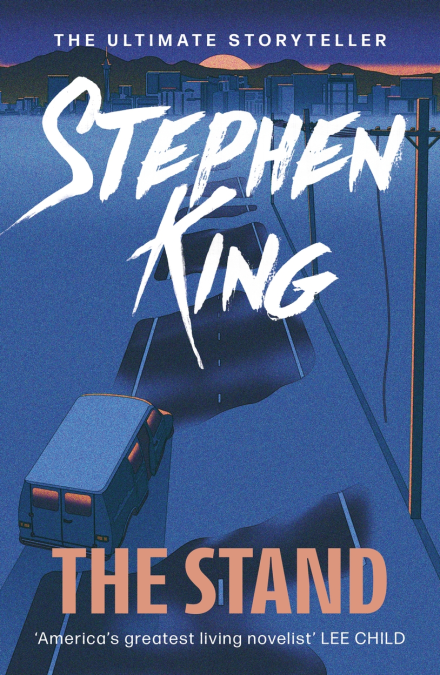

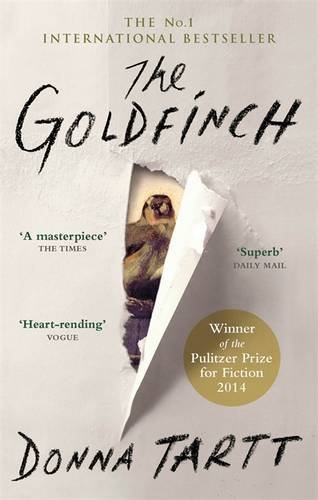


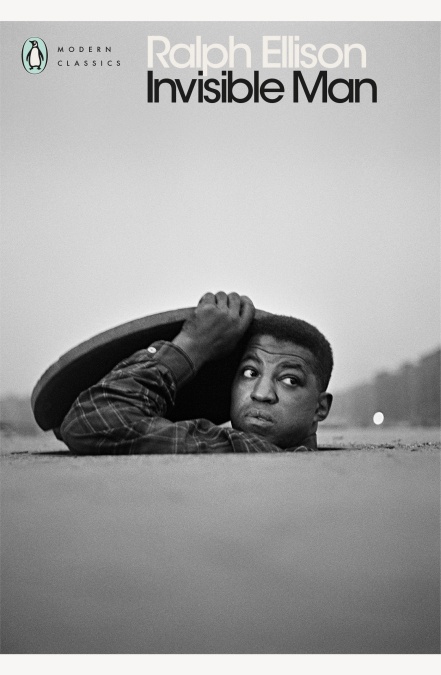


October 2026


4.32 average · 58 reviews
Click a segment to filter

This book reminds me of the time when I was a kid and my grandma would leave me for a bit at her friend’s apartment, and she would let me sit in the window with my legs dangling from in between the window’s bars, and from that view at a moderate height above the world, I would loudly proclaim I love that dog! I love the buildings! I love the puddle! I love the trees! I love the cars! I love it!
That’s what it felt like reading this, like discovering that little girl again. And it has been a while since I’ve felt that way. When I first started reading this book, I thought Well? Where are the notes on wonder? This guy is just telling me how much he loves falcons and pants and his children. My bad. I had forgotten what wonder even is. This book reminded it to me.
Maybe the greatest miracle is memory. Think about that this morning, quietly, as you watch the world filter and tremble and beam
This compilation of essays was truly a gift to read. Doyle’s prose is described in the foreword as one that ”made timid readers feel as though they’d been thrown into a kayak and sent careening down a literary equivalent of Idaho’s Payette River during spring runoff”, and it is absolutely correct. Doyle dives headfirst into his ideas, every word a memory, and, just like memories, changing shaping bulging contracting and falling off the face of the earth only to be resurrected once again in a new form. The words go tumbling out of his brain and out of his hands, flipping over and under, they go pitter-pattering and swirling into a long river that becomes a song which itself sings of endless days and warm blanket goodnights; each comma a falcon’s talon and each ampersand a curly lock of hair. The parentheses expand and inflate like a balloon full of words, while the audience looks on, shocked and in horror, betting on when it’s going to pop and what sound will it make when it does. It is all wonderfull, wonderfull, wonderfilled, wonderoverflowed, my cup runneth over.
I am absorbed by the way that we all speak one language bur use different tones and shades and volumes and timbres and pronunciations and emphases in order to bend the language in as many ways as there are speakers of the language. (I didn’t omit any commas in that sentence. He just didn’t write any.)
For the nature lovers, the bird lovers, the family lovers, the sunrise and sunset lovers, the holding hands lovers, the God and the god and the universe lovers, the memories coming back lovers, the pain in between a smile and a smile in between the pain lovers, the fish behind the stone and the mystery behind the world lovers. For the teary-eyed lovers of the world, and those who want to love it more, I recommend this book.
The moist soil, the laboring beetles, the unwritten poem Of the lost leaves, the duff, the thin spidery bones of old Twigs. Once in a while we all stopped sprinting and just Stared at what was there all around us, the wealth of dirt, The sudden green feather about to adorn its second wild Animal, the tender next minute waiting for us to emerge.
Warning: This review might be a bit shit, but I can't review this book in any objective or critical way. It's one of those books we all have. I can only say what it does to me.
I first finished this book a little over a year ago. It was the first day of February, and I had read the book in two days. I remember finishing it on my bus on the way to work. It was a Saturday, so I worked in the morning. The air was cold, and every road, building, and tree was tinted blue by the morning dawn, the sun not yet high in the sky. The world was quiet.
I arrived at my stop, I got down, I walked a few paces, for privacy, and then I sobbed.
Much like the protagonist in this novel, ironically, I, too, walked through an empty world that morning. I saw no one living or dead. In my—thankfully—long way to work, I wept, and I wept, and then the day arrived.
I do not believe I cried only because of the novel, but because of what the novel unlocked in me. From all the recognition and all the memories it brought forward. Me finally experiencing my own loss. If you cry about one thing, you cry about all things.
I want to try and define what this novel is, so maybe I'll start by saying what it's not.
The Review
This is not a typical zombie story. There is gore, so content warning about that. But you won't find any thrill or true horror here. This is a meditation on the nature of grief told through a story told through a zombie. But the zombies are not even the most important part. There is also the crow, the stump, the hunger, the cardigan, the trees, the moon, the stone, the beach, the silence. For some of these, the author will tell you what they are, but for others, you can choose to make sense of them in whichever way you prefer. "Every metaphor presents itself as what was there all along"
It is also not highlighter bait, even if it might appear that way at first. Upon first glance, it could strike you as a bunch of deep-sounding quotes taped together loosely through dubious plot, moving the protagonist to and fro until they land on the stage for their next tragic line. It's disjointed sometimes and spare in others, like a bunch of broken thoughts flying in the wind during a walk. I've highlighted this book more than all other books I've ever read combined. And yet, it all comes together. The parts talk to each other. I can feel the real pain and the real grief and the real human heart behind it all. Barely anything happens in the book, let me say it plainly. And yet the emotional world is so vast. As vast as you want it to be, as your own longing is, even.
It is also not immediately understandable. It's one of those stories you can read a million different ways. You can find connections, references, and hidden and not-so-hidden meanings. Moments that call out to you, or moments that remind you of your dad, your mom, your cousins, your long-dead grandma, your friends, or your country. The whole world can be found in it because grief does, indeed, fill the whole world, and you can find it even in as gentle an image as that of a tree, borne down with fruit. None of these interpretations, however, are real. Well, some of them are. The feelings behind them are.
And I found myself trying to understand it all, on both reads. I can connect some things to other things. I can find meaning in metaphors. I can find similarities to The Divine Comedy, to my own experiences, to things I've read that I don't remember where I read them anymore. It's all there if you look for it. And the thing is that, the protagonist tries to do so, too. We try to find meaning in this story, and we find that the protagonist is doing just the same. She wants meaning, depth. An end after what lasts forever. She wants to find a reason for all of this pain, and we search for it, too. Holding hands, we ask this world together, "Why?". But it doesn't answer, or maybe it does, but it's not the answer we want. The meaning is elusive.
What's behind this whole book, however, is the true nature of longing. Of saying goodbye a million times and knowing you will have to do it a million times more. The true heart of this book is a feeling we all have, and we'll all continue to have, if we're lucky enough to love something to the point of suffering it this much. The book is a long journey through yourself and each other, through the empty world of hope. Through the ruins, the abandoned cities, the forests, the world just beginning to fall asleep. She walks through the stages of grief like a walk through the country. She finds things, let's go of things, experiences changes, big and small, interior and exterior. It is funny at times; the laugh surprises you in the middle of the funeral. It is also hopeful at times, but you have to look for it. Even here, there is a light.
Grief has many names in this book. We can find it under every rock, in every object, in every person and animal, but that's the best we can do. The open hand of those who walk this same path with you—however, whoever—is the most meaning you'll ever find.
Final Thoughts
On my first read, I read this in two days. Like the protagonist, I was hungry. I was empty. This read, though, took me 22 days. It was a calmer experience. I could never read this book for more than 10 minutes without putting it down and listening to the emotions it stirred in me. I listened to my own crow as I went on this journey.
I could never read for more than 10 minutes at a time, so I savored it. I sipped this book, little by little, like the glass of wine I never had with you.
I listen to my heart like I can't listen to you. Because you're not here anymore, because I'm scared your voice has changed with age, because in every word I wish you were saying something else. I sipped this book like a glass of tears—like seawater—and it reminded me of you.

Esta reseña está escrita en: / This review is written in:
- Español
- English
Advertencias al final / TWs at the end
La reseña: Español
“Su… patrón, —añadió con visible reticencia— sólo sabe de mí que soy un mulato, que desciendo de esclavos de su familia. Al verme debió preguntarse: “¿Cómo es que éste anda suelto por ahí?”. El ignora que poseo un grado universitario, que hablo varios idiomas y que he publicado un libro sobre enfermedades tropicales. Le he robado algo que le pertenece: mi vida, mi destino.”
Cumboto, un cuento de siete leguas, escrito por Ramón Díaz Sánchez y galardonado con el premio William Faulkner de novela en 1964, es un relato ficticio que se da casi enteramente en las siete leguas que conforman la finca de la familia Lamarca, hogar y lugar de nacimiento de Natividad, un hombre negro nacido de esclavos de la familia y, también, el narrador de nuestra historia. Natividad, junto con el hijo del dueño de la finca, Federico Lamarca, crecen juntos en un tiempo de cambio social en el país —muy poco tiempo después de la abolición de la esclavitud en Venezuela— un tiempo en el cuál las viejas costumbres se pelean con los nuevos paradigmas de la república.
Al principio de leer esta historia, pensé que sería un libro centrado en el punto de vista individual de un hombre esclavo y sus experiencias en una casa colonial. Y diría que ciertamente esa es la base de la historia, pero también es mucho más. Lo que se ve en este corto libro es un ejemplo pequeño de un trauma nacional, de una marca del mal en el país. Los recuerdos lejanos y no tan lejanos de las masacres a la mano de los esclavistas se sienten en cada página del libro, en cada cuento, leyenda, e historia presenciada por Natividad. Al mismo tiempo, la narrativa se rehúsa a ser una historia genérica de esclavo contra esclavizador, si no que se atreve a indagar más. Nos hace cuestionar los lazos más profundos cuando se forman en cautiverio, a cuestionar el racismo institucional, y el internalizado, así como nos invita a reflexionar sobre como la precariedad y la violencia de la esclavitud puede marcar el pensamiento de generaciones enteras, de países enteros. Como una enfermedad congénita, la marca de la esclavitud vive y se siente dentro de los corazones de los hijos de las víctimas, y de los victimarios.
El personaje de Natividad es una persona compleja que no se adapta a ninguna caja en donde se pudiera querer meter. No es una víctima perfecta, porque él también victimiza (en particular, a una joven aborigen, en una escena horrible que ejemplifica el trato del nuevo país hacia los nativos originales y hacia las mujeres), y no es una figura en donde descargar nuestras ideas sobre como debería pensar y actuar una persona en su situación. Al contrario, la disonancia cognitiva y el racismo internalizado son partes claves de la narración, ya que Natividad sufre la peculiar situación de solo tener un amigo, el hijo del hombre que es su dueño, y solo tener un hogar que haya conocido, el hogar de la familia para la que sirve. Natividad en estas páginas nos muestra un narrador en medio de una crisis de identidad, de lealtad, y de moral; retratando a través de los años todas las formas en las que su vida y la vida del joven Federico Lamarca se interceptan, entrelazan, y parten la una de la otra. Los dos juntos en un matrimonio heredado, los dos solos en sus memorias.
Lo que yo pude ver en este libro, con sus tan pocas 184 páginas, es una historia que sirve como microcosmos explicativo para entender los momentos iniciales de un país entero. En una época marcada por el cambio social y la inestabilidad política, los residentes negros, blancos y mestizos de Cumboto se enamoran, se desprecian, matan, bailan, viven y sueñan entre las coqueras, asentando las bases para una futura cultura y población venezolana —mestiza, pero no libre de las viejas costumbres, las viejas enfermedades del pensamiento racista. Mientras que la republica avanza, Cumboto nos hace recordar los huesos que siempre estarán debajo de las carreteras, y que nunca debemos olvidar.
Advertencias para este libro: Escenas explícitas de agresión sexual, violencia general y discriminatoria, homicidio, racismo, guerra y personas inocentes afectadas por dicha guerra, recuerdos de esclavitud.
The review: English
’Your… master,’ —he added with visible reluctance—'only knows that I am a mulatto, that I descend from his family’s slaves. When he saw me, he must have wondered: “How is it that this one is walking around free?” He ignores that I hold a university degree, that I speak several languages, and that I have published a book on tropical diseases. I have stolen something that belongs to him: my life, my destiny.’
Cumboto, un cuento de siete leguas [Cumboto, A Tale of Seven Leagues], written by Ramón Díaz Sánchez and winner of the William Faulkner Novel Award in 1964, is a fictional narrative set almost entirely within the seven leagues that make up the Lamarca family estate, home and birthplace of Natividad, a Black man born to the family’s slaves and, also, the narrator of our story. Natividad and the estate owner’s son, Federico Lamarca, grow up together during a time of social change in the country — very shortly after the abolition of slavery in Venezuela— a time when old customs clashed with the republic's new paradigms.
When I first began reading this story, I expected a book centered on the individual perspective of an enslaved man and his experiences in a colonial household. I would say that that is certainly the foundation of the story, but it is also much more. What we see in this short book is a small example of a national trauma, a mark of evil on the country. The distant and not-so-distant memories of the massacres at the hands of slave owners are felt on every page, in every tale, legend, and story witnessed by Natividad. At the same time, the narrative refuses to be a generic story of slave versus slaveholder, daring instead to delve deeper. It makes us question the deepest bonds when formed in captivity, to question institutional and internalized racism, and invites us to reflect on how the precariousness and violence of slavery can mark the thinking of entire generations, of entire countries. Like a congenital disease, the mark of slavery lives on and is felt in the hearts of the children of both victims, and perpetrators.
Natividad is a complex character who defies easy categorization. He is not a perfect victim, because he also victimizes others (in particular, a young Indigenous woman, in a horrific scene that exemplifies the new country's treatment of its original native inhabitants and of women), and he is not a figure onto whom we can project our own ideas about how someone in his situation should think and act. On the contrary, cognitive dissonance and internalized racism are key elements of his narrative, as Natividad suffers the peculiar situation of having only one friend, the son of the man who owns him, and only one home he has ever known, the home of the family he serves. In these pages, Natividad presents us with a narrator in the midst of a crisis of identity, loyalty, and morality; portraying, over the years, all the ways in which his life and the life of the young Federico Lamarca intersect, intertwine, and diverge from one another. The two together in an inherited marriage, the two alone in their memories.
What I gleaned from this book, with its mere 184 pages, is a story that serves as an explanatory microcosm for understanding the early days of an entire nation. In an era marked by social change and political instability, the black, white, and mixed-race residents of Cumboto fall in love, despise each other, kill, dance, live, and dream among the coconut trees, laying the foundations for a future Venezuelan culture and population—mestiza, yet not free from the old customs, the old ills of racist thought. As the republic advances, Cumboto reminds us of the bones that will always lie beneath the roads, bones we must never forget.
TW for this book: Explicit scenes of sexual assault, general and discriminatory violence, homicide, racism, war and innocent people being affected by said war, memories of slavery.


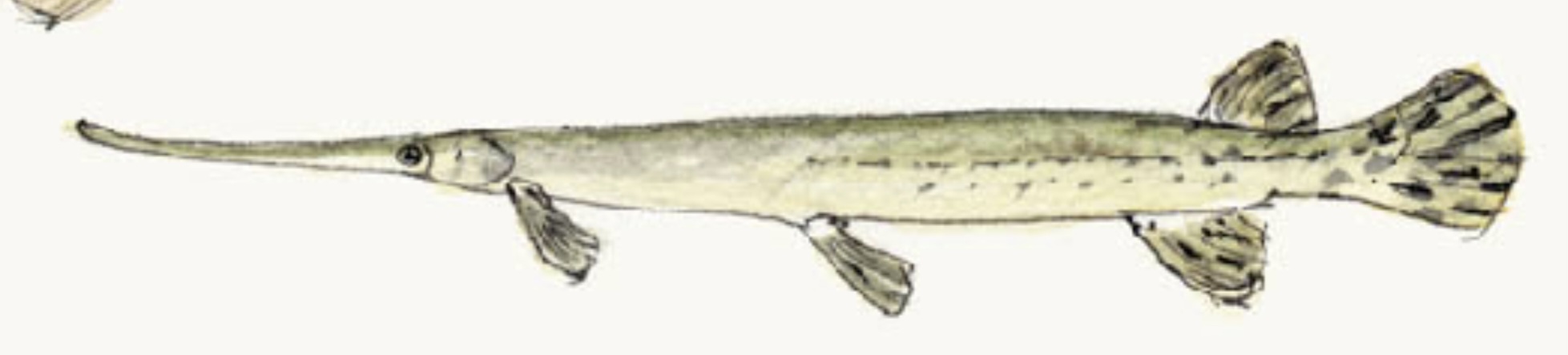
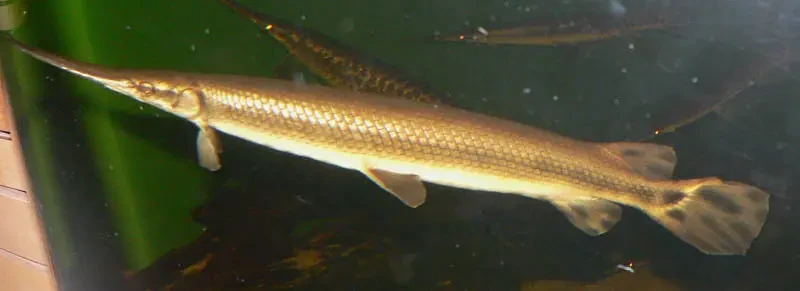
A poem for this silly little guy, the Longnose Gar (Lepisosteus osseus), who I loved the moment I saw him in one of the illustrations.
○
Longnose gar Breaking the water like a scar Spot his spots in the river His eye flashes like silver Under the watery sky A longnosed shooting star crosses, and hides Along the Mississippi he dreams In the pesticides, his tail sweeps Above the fin's bow, under the mooneye gleam I follow the drumming of the river and I find you here
Dear killer of the night Butterfly fins, golden sunlight Ditch the ditch, little rough fish And play in the summer waters, near the milkweed
○
The Longnose Gar can be found in the Mississippi river system, alongside fishes like the Amia calva (Bowfin), the Aplodinotus grunniens (Drum), and the Hiodon spp (Mooneye). The Longnose Gar is considered an apex predator in their aquatic habit, and they mostly eat small fish, insects, and small crustaceans. They also mostly feed at night. This is my humble (because I don't know anything about poetry) tribute to him 🥰. Source
This question came to me as I was reading an old, used copy of The Turn of the Screw by Henry James. It is an old spanish edition, printed in 1971 by Salvat Editores and Alianza Editorial, that I bought second-hand with the pages almost falling off the spine (I only mention this because I renovated it myself and I'm quite proud of it 😌)
While I was reading, I noticed that there was a passage underlined in pencil. This is that quote (imagine this but in spanish lmao):
I learnt something – at first certainly – that had not been one of the teachings of my small smothered life; learnt to be amused, and even amusing, and not to think for the morrow.
This quote is something that I would not have ever remarked upon, if not for the fact that someone in the past thought that it was worthy of being highlighted, and it made me wonder: who highlighted this? A certain García Rojas signed their name on the first page of the book, along with "Madrid - 1 Marzo - 1976" in what looks like faded blue ink. Did they highlight the quote? Was it someone else before or after? And for whoever it was, what did that quote mean to them? Did they find it pretty and so decided to underline it, or did they somehow connect with it? What was the life they were living, if they felt a connection to this quote?
I decided to look for more (with a mighty care to not spoil myself), and I also found this quote highlighted:
I’ve been living with the miserable truth, and now it has only too much closed round me.
The english text invokes feelings of anxiety and fear, but in this spanish edition, "too much closed round me" is translated as defeated me, so the quote in spanish lends itself to be interpreted in a more anguished and sad way. How does this quote connect with the other one? What was the reason the reader felt so drawn to them? They were both underlined in pencil, so I assume they're both by the same person, but what if they aren't?
I love asking myself these questions because I love to think about the lives of the people whose hands have been in the same objects I have, and how their state of mind could've impacted their reading. I also love that there is no answer to them, I'm drawn to the endless possibilities of this insolvable mystery!
So my question for this post is: Have you ever found any highlighted or underlined quote in a second-hand book you bought, or took from a library? And if so, what was it? Did they leave any notes? Have you thought about why those quotes specifically affected a past reader of the same book? Do you have any theories?
I would love to know all of the quotes you guys have found!

It was hard to think around Frank’s flamingo, who was still stuck on the snuggle idea, and besides that, was pretty sure that the way to her heart was through dancing. If there was one thing Frank knew, it was that he was completely making a hash of this introduction and that bobbing his head and flapping his elbows was very unlikely to improve matters.
Yes, this is my man, and I will stand by him.
amanda_the_tangerine commented...
Big juicy life update from the tangerine tree: I just did the presentation for my thesis yesterday with my fellow thesis partner and guys, guess fucking what, I AM OFICIALLY GRADUATEDDDDDDRAAAAAAAAAAAHHHHHHHH
 All my exams are done, my internship is done, my thesis is done, I’M done bitch.
 I am officially, truly, undoubtably, and legally, not dumb everybody, or at least not in the academic sense (because I still don’t know how to orient myself on the street).
And you know that all academic titles in Spain are signed by the King, so that means that the KING himself, mister FELIPE THE SIXTH, has ratified me in front of the whole country as a person who does, indeed, know how to add, subtract, divide, and even multiply. And if you dare to presume otherwise you WILL be banned from Mallorca, Minorica, and Mediumorca, for the next 67 years.
I am officially, truly, undoubtably, and legally, not dumb everybody, or at least not in the academic sense (because I still don’t know how to orient myself on the street).
And you know that all academic titles in Spain are signed by the King, so that means that the KING himself, mister FELIPE THE SIXTH, has ratified me in front of the whole country as a person who does, indeed, know how to add, subtract, divide, and even multiply. And if you dare to presume otherwise you WILL be banned from Mallorca, Minorica, and Mediumorca, for the next 67 years.
 And in case you want to know, I’m graduating with a degree in Accounting and Finance right now (yeah I know, I couldn’t find a degree that would teach me how to become a modern forest entity that looms over a town and grabs people by the ankles at night, so I had to go with my second passion babes, but being an Accounting Auditor is practically the same thing).
 Now all that’s left is to have my graduation ceremony, and spend 15 days with my family while they’re here for my graduation; so we’ll be going places, getting tanned (getting sunburned), and in general celebrating my new freedom until I have to go back to work again 💀, at which point I pray and hope that I can pick up my reading habit back from where I left it so I can catch up with all you guys 😀.
 And that’s my update! How have you been? What have you been doing? Tell me all. First thing I noticed is that the whole TC program has been removed holy cannoli, I can’t leave this place for too long or I miss every damn thing fr.
Pd: I have to pause this book since I couldn’t finish it before my due date 😩😩.
amanda_the_tangerine paused reading...
15w
The Master and Margarita
Mikhail Bulgakov
The first complete, annotated English Translation of Mikhail Bulgakov's comic masterpiece. An audacious revision of the stories of Faust and Pontius Pilate, The Master and Margarita is recognized as one of the essential classics of modern Russian literature. The novel's vision of Soviet life in the 1930s is so ferociously accurate that it could not be published during its author's lifetime and appeared only in a censored edition in the 1960s. Its truths are so enduring that its language has become part of the common Russian speech. One hot spring, the devil arrives in Moscow, accompanied by a retinue that includes a beautiful naked witch and an immense talking black cat with a fondness for chess and vodka. The visitors quickly wreak havoc in a city that refuses to believe in either God or Satan. But they also bring peace to two unhappy Muscovites: one is the Master, a writer pilloried for daring to write a novel about Christ and Pontius Pilate; the other is Margarita, who loves the Master so deeply that she is willing literally to go to hell for him. What ensues is a novel of inexhaustible energy, humor, and philosophical depth, a work whose nuances emerge for the first time in Diana Burgin's and Katherine Tiernan O'Connor's splendid English version.
amanda_the_tangerine commented...
Used books are superior to new ones. Hear me out:
✅️ Better price, more affordable ✅️ Fun mementos you can find in them from people of the past ✅️ Comes pre-anotated by other people (built-in buddy read) ✅️ If they're a bit broken, you can give them a new life by renovating them (built-in 2x1 hobby: reading + diy activity) ✅️ Comes with the library smell ✅️ Old editions of books don't come with annoying false stickers advertising the new Netflix adaptation ✅️ Because they're already old and worn, you feel less stressed about keeping them in pristine conditions ✅️ Eco-friendly
The only downside is you don't give any money to the author or publishers, but with all the money you save by buying used books, you can buy a new copy of a book you loved to support who wrote it, if you wish to do so.

Hello PB beauties!
I want to know your literary “hear me out”!
This is anything book related that may be an unpopular opinion or even controversial 😏 just remember to keep the comments kind!
Some examples are (but are not limited to):
- character traits
- tropes
- kinks
- author prose
- narrator POV
- where and when you read
The sky is the limit and I want to hear them all 🙂↕️🙂↕️
amanda_the_tangerine commented...
How my profile + showcase is looking like right now (I need to read more books fr)


© 2025 Pagebound