
honeydijon
♐️🏳️🌈🐈⬛🐶📚🎨 fiction faves: litfic, horror, magical realism also into nonfic, esp memoirs! 29 | neurodivergent | she/her | I like to yap & write reviews ✍️ 18+ plz
23601 points




October 2026



3.79 average · 422 reviews
Click a segment to filter

If you’ve ever been walking in to work and thought, “I wish a car would hit me so I could have some paid time off,” this book is for you 😌
Darkly funny and uncomfortably relatable at times, Discontent is an excellent one-sitting litfic portrait of modern life in a capitalistic society.
“Wouldn't it be nice just standing there, not moving, feeling the sun on your face and the earth at your feet?”
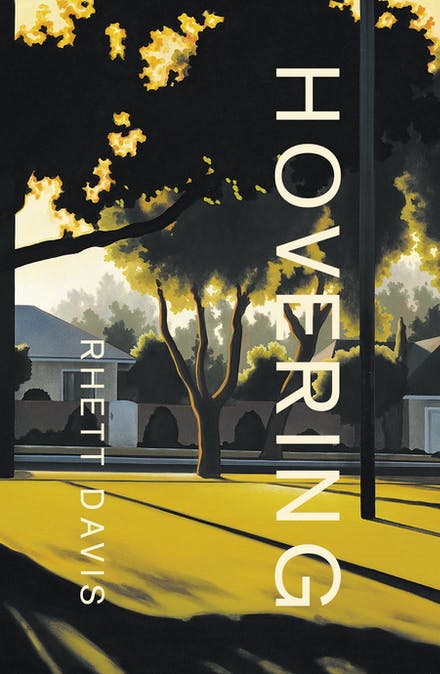
Have you ever been so immediately seized by a synopsis that you were more than just interested in reading the book, you felt compelled to read it, you knew you had to? That is how I felt about Arborescence. I suppose you could say it rooted itself in my mind.
I was enraptured by Arborescence; I didn’t want to put it down and eagerly read it throughout the course of a single evening. I could have read twice as many more pages set in the world Davis created. This novel was dazzling.
Davis showed restraint in his writing: there is an understated quality to the prose, a subtlety that speaks volumes. Tension is interwoven with optimism; optimism is countered by realism; realism is autopsied by verdant, hopeful hands. This novel is an examination of AI, capitalism, climate change, consumerism, death, life, rebirth; a portrait of anthropology and nature, an inquiry into what it means to be human. It is an expedition into the forest unseen by tree-focused eyes. It is perhaps one of the most frighteningly relevant books I have ever read. It is perhaps also one of the most peaceful.
There is a bounty of themes to ponder with Arborescence. I could say so much more, but I wouldn’t want to spoil the epiphanic experience that is reading this book. I cannot recommend it enough. If you enjoy the literary and speculative with unnerving undertones spliced with ecofiction and commentary on capitalism, I think you will love this book.
I would love to see more readers dig in to Arborescence.
. . . .
Note: from my searches, this book seems to only be available in Australia and the UK at this time. However, my local indie bookstore in the US was able to order it for me. If you are interested in this book but are struggling to find it as I was — there isn’t even an available ebook or audiobook in the US — definitely check with your nearest book store to see if they can order it! ‼️ ETA: the ebook at least appears to be available in Europe via Kobo!!

I think Polly Barton actually wrote this book specifically for me. 😌😌
I got What Am I, A Deer? from Book of the Month’s collection The Offset, the tagline for which is “Not for everyone. That’s the point.” With its experimental grammar, philosophy-laced passages, absence of chapters, meandering yet poignant loquacity, uncomfortably familiar existentialism, and shameless stream-of-consciousness, Barton’s debut novel is like literary olives or blue cheese: certainly not for everyone, but damn do I love olives and blue cheese.
This is a no-plot-just-vibes book, a foray into a ”vertiginous subconscious realm” (p71) where you may find inscrutable parts of yourself excavated. What does it mean to be real, to feel things? Who am I? Where do I belong? I savored every one of the 240 pages of meditations on existence, experience, obsession, heteronormativity, identity, heritage, translation, meaning, and relationships. Ultimately, I felt this novel was a tribute to being — and actually feeling — alive. The themes are the plot, and executed in such a way that there is still a sense of the narrative arc.
Karaoke is a central aspect of the book, bolstered by the lyrics interlaced throughout the narrative. The author’s fearlessness with format was a delight to read. This is a book that simultaneously stands on its own and is imbued with references; even the title is a reference, which does not go unexplained within the story, but which inherits richness if you have seen the video it comes from. I kept thinking of this iconic clip of Lady Gaga: “unafraid to reference or not reference”. That’s this book. A unique treat, even for the weird girl litfic aficionado.
This novel is an olive stuffed with blue cheese, and I ate the whole jar.


Acceptance (Southern Reach, #3)
Jeff VanderMeer

Worry Doll
Laura McPhee-Browne
I really like this example the author used to illustrate how the brain can create physical responses based upon thoughts alone here on pp37-38:
I want you to close your eyes (gotcha... now you can't read) and vividly imagine biting into a juicy, sour lemon. Really go for it — see the bright yellow skin as you slice it open.
Watch the juice drip down. Now take a big bite. Feel that intense sourness hitting your tongue, making your face scrunch up. Your mouth is watering right now, isn’t it? Your taste buds are tingling, maybe you’re even making that sour face?
”Is your mouth watering?” I ask Sarah.
”Yeah, it is," she says, surprised.
"Is there an actual lemon in your mouth?"
"No."
That's how powerful the mind-body connection can be.
Our brains will create a physical response to something that isn't actually there. That's exactly what happens with OCD.
The key insight here is that just because you feel it, that doesn't mean it's true. Physical sensations are powerful, but they're not always accurate indicators of reality.
I thought this was a simple, clear, effective way to convey how OCD can transform a thought into a physical response without external stimuli! It can cause something very real to happen in the body. (This can also apply to generalized anxiety.) Not only is this a good device for helping those of us who live with OCD to understand what’s happening between our brains and bodies, but it’s also helpful in creating understanding in the people around us.
Who else’s mouth watered when thinking about the lemon? 🙋♀️

acidicchaos finished a book
10w

Pounded by Produce
G.M. Fairy
A tale of veggies tempted to break their vows. Fleeing a tumultuous past, Emily finds refuge at a kitchen job in a quiet countryside parish. Robert and Laurent are two best friends with a bond that has crossed lines throughout their history, but now walk the straight and narrow, giving their lives to their parish as priests. One magical night under the harvest moon, Robert and Laurent experience a bizarre. They wake up as a tomato and cucumber. Emily brings these ripe and juicy vegetables into the kitchen, but instead of preparing a meal, she uses them for other, more pressing needs. Emily awakens something in the priests, who, from then on, spend their days as humans and their nights in their vegetable forms. The three find themself in a steamy entanglement, unable to deny their primal desires. Will they fight their urges or break their vows and alter the course of their lives forever? From the best-selling author of Get In My Swamp comes a veggie love story filled with angst and lust.
honeydijon commented...


Why is there so much Jesus in my eel book???
honeydijon commented...


I’ve been getting up before the butt crack of dawn
Already a very strong start

© 2025 Pagebound
honeydijon commented...