
sailorsoftgirl
ellie (she/they) • local library gremlin (aka librarian) • fantasy and southern gothic enthusiast, but willing to try anything at least once • reading is political!! • junebug 🪲🌅💚
27975 points




4.13 average · 569 reviews
Click a segment to filter

- F^ck the rich.
- Everyone in this book needs therapy.
- I want to go camping.

"The heart is so tired of beating herself up, she wants to stop it still, but also she wants the blood to return, wants to bring in the thrill and wind of the ride, the fast pull of life driving underneath her. What the heart wants? The heart wants her horses back."
God, if this collection didn't encapsulate the struggle between moving forward and being good and kind versus the rage and the emptiness and the fear that we feel... wanting to be wild and curious and unafraid to make mistakes, but clinging to the comfortable... killing things because we love them too much and hold them too close.

Lookout Mountain, TN: come for the fine antiques, stay for the waterboarding ghosts.


Hey y'all! Just wanted to bring your attention to three free library cards you can sign up for to access new materials through Libby/OverDrive.
The first is available through the Queer Liberation Library. QLL aims to connect LGBTQ+ people with literature, information, and resources that celebrate the unique and empowering diversity of the queer community. With a QLL digital library card, users can access over 500 titles. You can sign up through this link.
The second card is available from the Literature Translation Institute of Korea and provides access to the Digital Library of Korean Literature, the world’s only multilingual archive of Korean literature and related contents. The collection includes Korean literature, journals, magazines, DVDs, and more translated into 51 languages. After signing up, you'll simply sign into Libby/OverDrive with the email and password you used for your account. Sign up here.
Finally, the third card is available through the Japan Foundation. This organization aims to promote international awareness and mutual understanding between Japan and the U.S. through cultural exchange. To apply, simply fill out the form on their site (linked here). Applicants must be 14 years or older. Confirmation emails are sent every Wednesday evening, containing instructions on how to log in to the system and begin borrowing eBooks.
UPDATE UPDATE UPDATE I wanted to take a moment to add the information and resources others have shared in the comment.
Per @crybabybea, you can obtain a free account from the folks at the Organization of Autism Research at this link.
Via @Loyaute, the Seattle Public Library offers access to a collection of eBooks and audiobooks to teens and young adults ages 13 to 26 living anywhere in the U.S. through their Books Unbanned program, which can be accessed here. According to @courtwriteshalfdraft, Brooklyn Public Library and Boston Public Library also offer cards through this program which can be found here and here respectively. Additionally, I discovered that San Diego Public Library and LA County Library also participate in this program and can be accessed at these links: SD and LA.
@chelssicle has provided a link to the Canadian version of the Japan Foundation card linked here.
Thanks to @mmyth for sharing about Los Angeles Public Library's Read Freely program which provides access to a selection of the most challenged books reported to the American Library Association available to anyone in the United States age 13+. Info can be found here.
The Quatrefoil Library offers it's membership to all individuals and households who support the mission and goals of the library; you do not have to have a permanent address to receive a Library card. Keep in mind that membership applications are processed by volunteers, so it may take a little time for you to get your card.
As a note, while some of these services indicate they are only available in the U.S. or Canada, some have had success obtaining an account.
Happy reading!!

The Odyssey
Homer
With the release of Christopher Nolan’s take on the epic adventure, many readers are picking up a copy of The Odyssey, some for the first time. But before they can embark with Odysseus on his journey, a crucial question must be answered: which translation is right for me? As there are over sixty English translations of Homer's epic, this question is not an easy one. So to help readers navigate the process, I’ve decided to provide an overview of the six translations I've read to help y’all decide which option fits best with your reading style and/or what you want from the text.
 E.V. Rieu
I’m kicking things off with a translation I feel people are less likely to have come across. In 1946, Penguin published it’s first ever Penguin Classic, introducing The Odyssey to a wide audience than ever before. Written in prose rather than verse, Rieu’s translation reads like a novel. For many, this removes a barrier in the form of poetic meter that many may struggle with, electing instead to simply tell the story. As a result, I don’t find it to be the most dramatic or vibrant version, but it is one that is easier to finish.
 Richmond Lattimore
Released in 1965, Richmond Lattimore’s translation is often favored in academic circles. Lattimore approached his translation in a way so as to remain as structurally close to the Greek as possible. His work contains a six-beat line which closely echoes the original Homeric rhythm with which the story would have been recited. It also retains the repetitive phrases which would have been used by the original storytellers to help them recall what comes next – think the "wine-dark sea" and "rosy-fingered dawn."
Overall, I find Lattimore’s word choice to be very precise, favoring literalness over any sort of poetic license. It can definitely feel a bit slow, dry, or dense at times, but if you’re looking for accuracy over theatricality, Lattimore might be your guy.
 Robert Fitzgerald
Though Lattimore’s version is beloved by academics, Fitzgerald’s translation is often cited as the literary standard. His work has a beautiful, lyrical quality that emphasizes the story as a work of poetry. It’s also incredibly atmospheric, with lines that bring to life the rolling of the sea and the heroic actions Odysseus takes.
The tradeoff, however, is that modern readers may find the language dated and the pace a bit slow. Also, keep in mind that Fitzgerald uses ‘Greek-style’ spellings of names, e.g., Akhilleus = Achilles. Still, Fitzgerald’s translation has a beautiful, reflective, and musical quality. If you love gorgeous, epic language in your stories, Fitzgerald might be right for you.
 Robert Fagles
If this isn’t your first time reading The Odyssey, it’s pretty likely you may already be familiar with Robert Fagles. Fagles’ translation was release in the 1990s and since then its become one of the most commonly assigned translations, especially in high school English classes. This is because Fagles takes a more contemporary, free-verse approach, emphasizing accessibility as well as the narrative quality and drama of the story, giving it an almost cinematic quality. If you’re looking for a grand, sweeping epic, Fagles is right up your alley. Though keep in mind this isn’t the best option if you’re concerned with structural fidelity.
 Stanley Lombardo
In 2000, Lombardo published a version of The Odyssey for the new millennium that is, in my opinion, very emblematic of the time. His translation is written in a contemporary American style that is punchy, raw, and fast.
Lombardo chooses to do away with all the poetic ornamentation and provides instead a very stripped-down, blunt text that was written with performance in mind, and as a result, I find it works well for reading aloud or as an option for audiobooks. While some readers might find the choice of language a bit too casual for an epic poem, if you’re looking for something lively and lean, this may be the choice for you.
Emily Wilson
Lastly, we come to Emily Wilson’s 2017 translation. In approaching the text, Wilson chose to provide a relatively sparse, straightforward translation of the text while simultaneously rhythmic quality and poetic purpose of the original. And personally, I think she succeeded. I find that the translation is accessible to modern audiences who don't have to struggle with vocabulary and syntax to understand a story that was always intended for a general audience. Wilson’s translation also doesn't sugar coat the realities of Odysseus' world and trusts modern audiences to be able to grapple with this while reading, providing a great deal of context for readers who may or may not be familiar with ancient Greek society.
That being said, her translation isn't going to be for everyone. If you struggle with iambic pentameter, you probably won't enjoy it quite as much. And if you're looking for a grand, sweeping narrative version of the text, you'd probably like another translation more.
To wrap things up, I wanted to provide some direct comparisons to help you narrow down which translation to select. In the examples below, you can see how each author mentioned approaches the opening lines of the story. I’ve also provided the ancient Greek in case anyone is interested. Hopefully this information has been helpful and you’re able to identify the version that’s right for you. As always, I’m happy to answer any questions. I wish you luck on taking on this journey. It’s definitely worth it!
Odyssey Book 1, Invocation
ἄνδρα μοι ἔννεπε, μοῦσα, πολύτροπον, ὃς μάλα πολλὰ πλάγχθη, ἐπεὶ Τροίης ἱερὸν πτολίεθρον ἔπερσεν: πολλῶν δ᾽ ἀνθρώπων ἴδεν ἄστεα καὶ νόον ἔγνω, πολλὰ δ᾽ ὅ γ᾽ ἐν πόντῳ πάθεν ἄλγεα ὃν κατὰ θυμόν, ἀρνύμενος ἥν τε ψυχὴν καὶ νόστον ἑταίρων. ἀλλ᾽ οὐδ᾽ ὣς ἑτάρους ἐρρύσατο, ἱέμενός περ: αὐτῶν γὰρ σφετέρῃσιν ἀτασθαλίῃσιν ὄλοντο, νήπιοι, οἳ κατὰ βοῦς Ὑπερίονος Ἠελίοιο ἤσθιον: αὐτὰρ ὁ τοῖσιν ἀφείλετο νόστιμον ἦμαρ. τῶν ἁμόθεν γε, θεά, θύγατερ Διός, εἰπὲ καὶ ἡμῖν.
Rieu
The hero of the tale which I beg the Muse to help me tell is that resourceful man who roamed the wide world after he had sacked the holy citadel of Troy. He saw the cities of many peoples and he learnt their ways. He suffered many hardships on the high seas in his struggles to preserve his life and bring his comrades home. But he failed to save those comrades, in spite of all his efforts. It was their own sin that brought them to their doom, for in their folly they devoured the oxen of Hyperion the Sun, and the god saw to it that they should never return. This is the tale I pray the divine Muse to unfold to us. Begin it, goddess, at whatever point you will.
Lattimore
Tell me, Muse, of the man of many ways, who was driven far journeys, after he had sacked Troy's sacred citadel. Many were they whose cities he saw, whose minds he learned of, many the pains he suffered in his spirit on the wide sea, struggling for his own life and the homecoming of his companions. Even so he could not save his companions, hard though he strove to; they were destroyed by their own wild recklessness, fools, who devoured the oxen of Helios, the Sun God, and he took away the day of their homecoming. From some point Here, goddess, daughter of Zeus, speak, and begin our story.
Fitzgerald
Sing in me, Muse, and through me tell the story of that man skilled in all ways of contending, the wanderer, harried for years on end, after he plundered the stronghold on the proud height of Troy. He saw the townlands and learned the minds of many distant men, and weathered many bitter nights and days in his deep heart at sea, while he fought only to save his life, to bring his shipmates home. But not by will nor valor could he save them, for their own recklessness destroyed them all — children and fools, they killed and feasted on the cattle of Lord Hêlios, the Sun, and he who moves all day through the heaven took from their eyes the dawn of their return. Of these adventures, Muse, daughter of Zeus, Tell us in our time, lift the great song again.
Fagles
Sing to me of the man, Muse, the man of twists and turns driven time and again off course, once he had plundered the hallowed heights of Troy. Many cities of men he saw and learned their minds, many pains he suffered, heartsick on the open sea, fighting to save his life and bring his comrades home. But he could not save them from disaster, hard as he strove – the recklessness of their own ways destroyed them all, the blind fools, they devoured the cattle of the Sun and the Sungod wiped from sign the day of their return. Launch out on his story, Muse, daughter of Zeus, Start from where you will—sing for our time too.
Lombardo
Speak, Memory— Of the cunning hero, The wanderer, blown off course time and again After he plundered Troy's sacred heights. Speak Of all the cities he saw, the minds he grasped, The suffering deep in his heart at sea As he struggled to survive and bring his men home But he could not save them, hard as he tried— The fools—destroyed by their own recklessness When they ate the oxen of Hyperion the Sun, And that god snuffed out their day of return. Of these things, Speak, Immortal One, And tell the tale once more in our time.
Wilson
Tell me about a complicated man. Muse, tell me how he wandered and was lost when he had wrecked the holy town of Troy, and where he went, and who he met, the pain he suffered in the storms at sea, and how he worked to save his life and bring his men back home. He failed to keep them safe; poor fools, they ate the Sun God's cattle, and the god kept them from home. Now goddess, child of Zeus, tell the old story for our modern times. Find the beginning.
First off, apologies for the dissertation-style title (and the length of this post). While effective in expressing my ire, I didn't think rage-induced, keyboard smashing would be helpful for anyone who comes across this trying to figure out what I'm talking about. Anyway, I wanted to come here and sort of rant but also explain because I feel like if anyone would care about this news, it would be you lovely people.
You may have recently seen news about a study commissioned by the Authors Guild and the Association of American Publishers. The item in question, “An Empirical Study of the Impact of Library E-Lending on the Book Economy”, is a 72-page report which claims that libraries are undermining the commercial marketplace through eBook licensing agreements, reducing the already dwindling profits for authors and destabilizing the publishing industry. I've linked the study above if you want to read it for yourself. Personally, I don't want to send the report anymore traffic, but I understand that people may want to do their own due diligence, so I've left it up to y'all. However, if you don't mind spoilers, I'm here to tell you the ending: it's all bullshit.
First, the report was conducted by Secretariat Advisors, who present themselves as a "global independent expert services and litigation consulting firm that specializes in expert witness testimony, economic damages, forensic accounting, and dispute resolution." Now, yes, having an independent third-party conduct any such research is an important part of maintaining objectivity. However, given their reported credentials (i.e., economic damages), it seems to me that the Authors Guild and Association of American Publishers went into this with a particular mindset - one that I would argue screams "we're experiencing financial losses and we want someone to blame."
Second, for having a team of PhD level economists attached to this report, they sure don't understand how to read data. I want to preface this by saying I am not an economist. I'm also not a statistician. But I did spend nearly 10 years conducting qualitative research in a professional setting, including data modeling and interpretation. And using this knowledge to read the report, I found that it misinterprets data in order back up their claim that “decreases in library e-book prices or certain other changes to licensing terms, as required in recent state legislative initiatives" have harmed the market. For instance, the report compares library eBook collections and print sales, stating that while print sales have stayed steady, library eBook collections have increased. They chart this in the figure below.

As others online have pointed out, the authors don't establish how large the library market is, so there's no way to know if these two metrics are correlated other than "books." The chart also tracks e-book collection size (aka how many copies libraries hold) but not circulation (how many times people are checking them out). Thus a library could potentially grow its digital collection (i.e., buy more digital books) without seeing any increase in use. So even setting aside the missing correlation with print sales, the chart doesn't show borrowing behavior at all. If in stead, they had compared commercial digital book sales with library digital loans, or the relative amount of money spent in each category, they might find a dip if people were choosing to borrowing from library collections rather than purchasing them independently.
Instead, they present a line of reasoning which explores what would have happened if a past event or circumstance had been different: “The key policy question is not whether or not we continued to sell basically the same amount of books while library ebook collections, which make up an unknown amount of the market, increased, but rather how much money we COULD have made if libraries simply had not purchased these titles!” In other words, "Imagine how much more money we could have made if libraries didn't have eBooks! It's all their fault!"
Using this "logic" (I feel like even with the quotes I'm being generous) alongside other shaky claims, the authors then argue against placing government controls on the distribution, purchase, and pricing of e-books and audiobooks in library channels, as these controls would reduce the amount libraries have to pay to license such materials and allow them to increase their collection size with their current (already dismal) budgets. Instead, they suggest the governments should provide more funding to libraries so they can pay current prices (or more as the costs increase with inflation and changing market value).
Third, there is another fundamental flaw with the logic of this report, which is concerning given how many times the authors use the word "expert" on their website: Publishing and books are not a zero-sum market.
What is a zero-sum market, you ask? A zero-sum, or subtractive market, is one in which consuming a good decreases or eliminates demand for related goods; additionally that consumption may remove it from the market. For instance, if you buy a house from one realtor, another realtor loses out. It's a win-lose situation. But books are a non-zero-sum, or additive, market: one person buying or reading a book does not diminish the opportunities for others, nor does a reader's consumption of one book reduce their desire to buy more. We all know this to be true. It doesn't matter how many books we read or buy, we're always going to want more.
All this being said, suggesting that libraries are negatively impacting book sales is not only ridiculous, in my opinion, it's malicious. This report isn't trying to protect authors or editors or any of the folks who play a role in the creation of a book. It's misinformation and lobbying, paid for and designed to oppose potential legislation. Because if publishers were really interested in understanding the impact of the digital library market on retail sales, they would work more closely with libraries and vendors to conduct a meaningful, truly independent study that could positively inform the future for libraries, authors, and publishers. Instead, they've turned libraries into a scapegoat for their corporate greed.

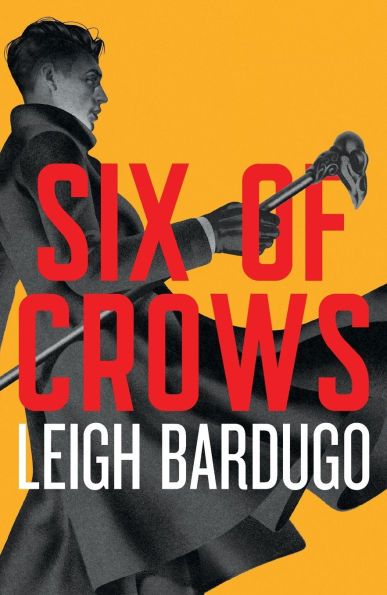
Six of Crows (Six of Crows, #1)
Leigh Bardugo
This is not YA!! Apart from all the characters being oddly young there is nothing that reads as YA here to me.
sailorsoftgirl commented...


The Dance Tree
Kiran Millwood Hargrave
We’re about due for a dancing plague. We haven’t had a dancing plague in far too long.
sailorsoftgirl commented...
Pirates stole the metric system from the U.S.

Happy first day of fall or spring, PBs! Whichever hemisphere you're in, I hope you're enjoying some seasonally appropriate weather.
It is time once again for Tuesday Trivia and Tidbits, the fun tradition started by @acidicchaos. Here's your chance to share something interesting you've learned about the world or yourself from your reading, whether it's fiction, non-fiction, or a Wikipedia rabbithole you fell down.
I'm currently reading Bite by Bill Schutt, and I learned that we're not actually sure which creature first evolved teeth, or how teeth evolved! The problem is that they probably evolved in the ancestors of sharks, which like their current sharky descendants, had skeletons made of cartilage instead of bone, which of course does not fossilize very well.
What have you learned this week? I always love reading everyone's replies :)


© 2025 Pagebound
sailorsoftgirl commented...
Welcome to the hill I will die on: a large portion of books placed in and marketed as YA are there because they were written by women.